















Legends of the Cañari, in English, tell the story of the people who lived in Cuenca before the Inca
By historic accounts, the Cañari civilization was active in what today are Azuay and Cañar Provinces for as much as a thousand years before they were conquered by the Inca in the late 1400s. Many of the ceremonial sites credited to the Incas, such as Pumapungo, Cojitambo and Ingapirca, were built originally by the Cañari.
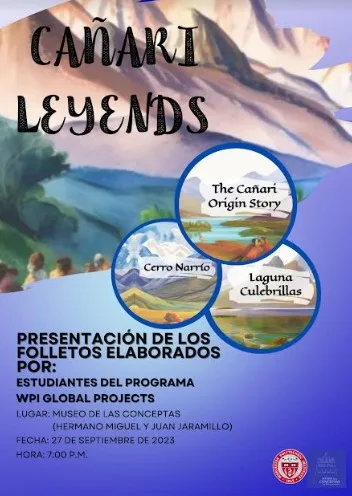 Like the people of other indigenous cultures, the Cañari had many stories they passed down through generations, and many of them have survived the Inca and European conquest. Three of those stories will be presented Wednesday, Sept. 27 at 7 p.m. – in English – at the Museo de las Conceptas on Calle Hermano Miguel at Juan Jaramillo.
The fact that the presentation, titled Leyendas Cañari, is offered in English is the result of a joint project of Worcester Polytechnic Institute (Worcester, Massachusetts, USA) and the Programa Inclusivo Multicultural Originario Kañari in Cañar Province, aimed at teaching English to school children. A team from the two institutions interviewed local cultural experts to gather Cañar legends, then translated and adapted them to English.
The legends to be presented Wednesday are the Cañari Origin Story, Cerro Narrio and Laguna Culebrillas. Coordinator of the project from Worcester Polytechnic, Professor Gary Pollice, will be one of the presenters.