













Emotional Cuenca protest results in resumption of dialysis service; Noboa is the 3rd most popular president; Ex-Correista announces presidential run
Following hours of protest at government headquarters on Parque Calderon, the Social Security Institute and Health Ministry announced Thursday night it will make short-term payments to maintain dialysis treatment for local kidney disease patients.
A crowd of about 100, mostly patients, their family and friends, gathered early Thursday at the government building and the Parque Calderon glorieta, carrying signs, chanting and burning tires in Calle Simon Bolivar. Protesters demanded the government pay its debt to private dialysis centers to avoid service interruptions.
Twice during the protests, several dozen demonstrators blocked passage of the tranvia on Calle Gran Colombia, suspending service for periods of 30 and 45 minutes. At one point, police used tear gas to disperse the crowd.
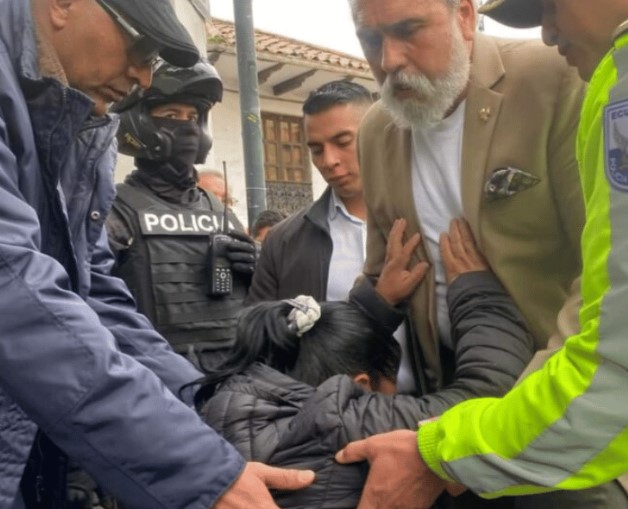
A woman begs Azuay Governor Santiago Malo Thursday to maintain IESS and public health dialysis service for her daughter who suffers kidney failure. Later, the government announced an agreement with private providers to continue service.
Late in the afternoon, Azuay Governor Santiago Malo came out of his office to say he was working on a plan to allow private dialysis centers to maintain service to patients. “I understand this is a critical need and that lives depend on it, and we are in talks with Quito as we speak,” he told the crowd.
During his comments, a woman dropped to her knees in front of Malo, begging him to act immediately so her daughter’s treatment would not end.
A radio news reporter quoted the woman as telling the governor, “She is all I have in my life, please do not let her die.”
Malo interrupted a meeting with Ecuador Economy and Transport Ministers Juan Carlos Vega and Roberto Luque to meet the demonstrators.
Hours later, IESS management and the Health Ministry in Quito issued a statement that it had reached an agreement with area dialysis providers to maintain service that had been scheduled to end Friday. The government agreed to pay $6.1 million next week to providers who have gone three months, and more, without payment. In addition, it said it would pay an additional $30 million in arrears in September and October.
On Wednesday, the Ecuador Association of Dialysis Centers said it had no choice but end to services to IESS and public health patients due to lack of payment. “All dialysis services in Zone 6 will end at 5 p.m. Thursday,” association spokeswoman Cristina Freire said. “IESS and the Ministry of Health have ignored our requests for payment and we are unable to continue it.” She added that in two cases, lack of government payment has resulted in dialysis center employees going unpaid.
Freire said that the end of dialysis service would affect 10,000 patients in Zone 6 — Azuay, Cañar and Morona Santiago Provinces.
Following the announcement that dialysis service would continue, hundreds of posts on local WhatsApp and Facebook sites appeared thanking the woman who begged Malo on the steps of the government building. “God bless the dear lady who was bold enough to confront the governor,” one WhatsApp post read. “It is a shame that we are required to prostrate ourselves in front of authority to get the services we pay for and that we deserve.”
Center-left candidate enters presidential race
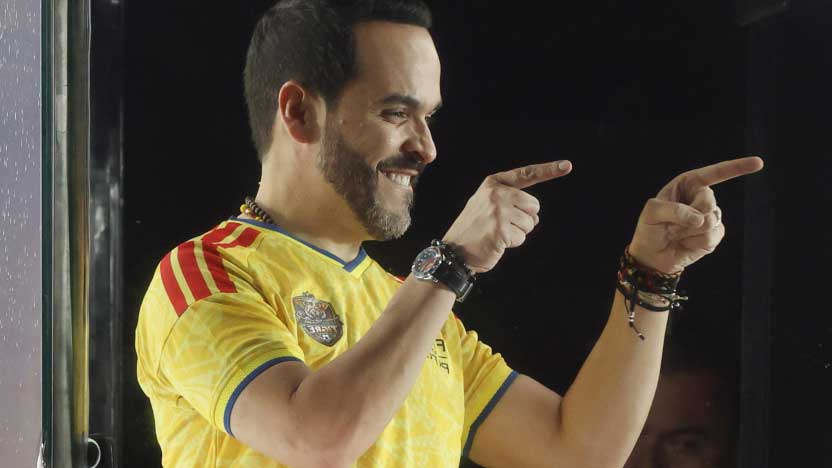
Carlos Rabascall announced Wednesday he will represent the Democratic Left party as its presidential candidate in the February 2025 election. In April, Rabascall, who left the Citizens Revolution party last year, said he was considering entering the race but had yet to decide on a party affiliation.
In his announcement, Rabascall said that Ecuador needed a leftist alternative to Citizens Revolution. “My intention is to focus on the social issues that Ecuadorians care about, not to engage in unproductive fights and controversies that serve the selfish interests of individual politicians,” he said in an interview. “My old party has transformed into a personality cult and has forgotten the themes and issues it was founded on.”
Rabascall, 63, a commercial engineer and businessman, was the vice-presidential candidate for the Correista movement in the 2021 election.
Noboa is third most popular South American president
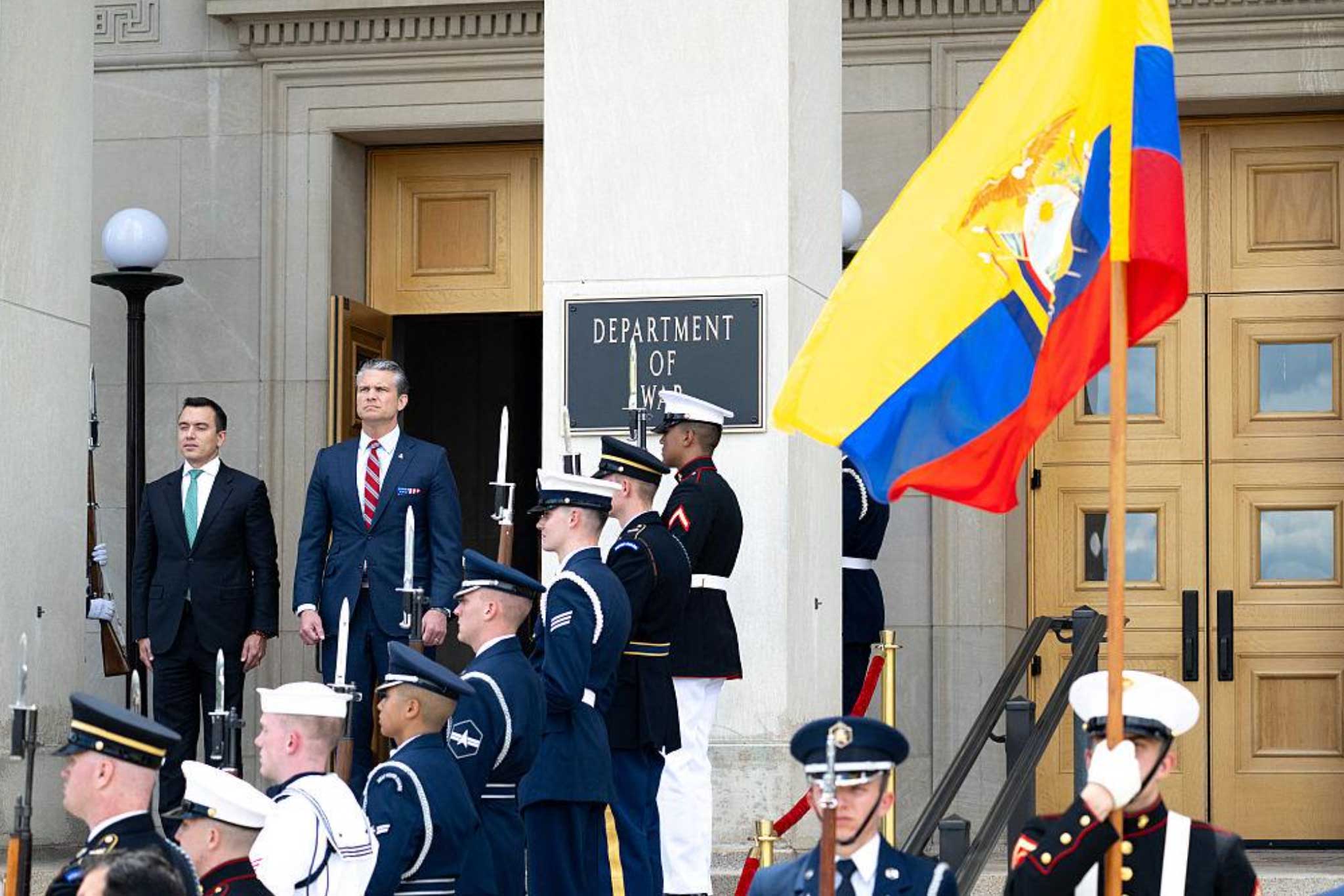
Despite a recent drop in his popularity, Ecuador President Daniel Noboa remains one of the most popular presidents in South America. According to the CB polling service, Noboa trails only Brazilian and Argentinian presidents Luiz Inácio Lula Da Silva and Javier Milei in public support. Noboa has the support of 51.5% of poll respondents, behind 53.6% for Lula and 52.1% for Milei.
The poll showed Colombian Gustavo Petro at 32.3%, Peruvian President Dina Boluarte at 32.5%, and Chilean President Gabriel Boric at 36.3%, with the least public support among South American leaders.