












Once an expat hotspot and tourist mecca, the ‘Pearl of the Caribbean’ is now a symbol of economic collapse
By Hans Bartell
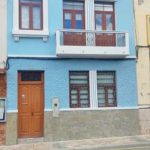
One of the five stars that used to adorn the facade of the Margarita hotel on the Venezuelan paradise island of the same name has fallen off. Not that there are any guests to notice.
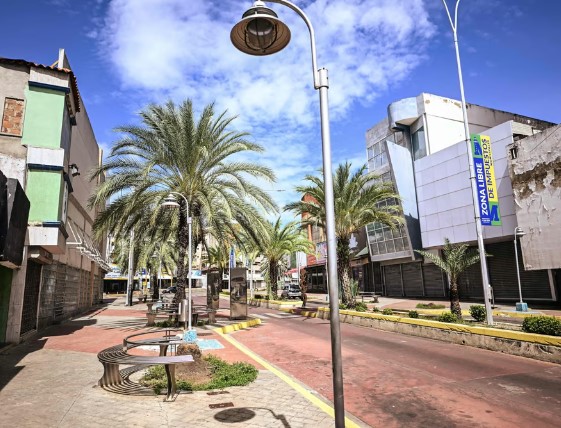
A street lined with closed businesses on Margarita Island. Venezuela’s GDP has dropped 80 per cent over the last decade.
The hotel is abandoned, its peeling facade a symbol of the decline of an island once dubbed the “Pearl of the Caribbean” that has been robbed of its shine by a severe economic crisis.
A short drive away by car, a herd of cows grazes in front of another vacant former five-star hostelry, Lagunamar. It looks as if an earthquake ripped through here, tearing the roof off a poolside pavilion, tossing lamps and toilets around the garden and leaving mounds of rubble.
The damage is, in fact, the work of vandals, who steal scrap metal to sell at a profit or to build shacks. Margarita, a major source of pearls in the 15th and 16th centuries, used to be a playground for American tourists, drawn to its palm-fringed white-sand beaches and turquoise waters.
Thirty years ago, Newsweek magazine called the island the “hottest ticket for international expats,” noting that more than 8,000 North Americans and Europeans called Margarita home.
But Venezuela’s economic collapse, high crime rates and growing international isolation in the wake of bitterly disputed elections have caught up with the island of 500,000 people. The expats and most of the tourists are gone and signs of decline are everywhere.
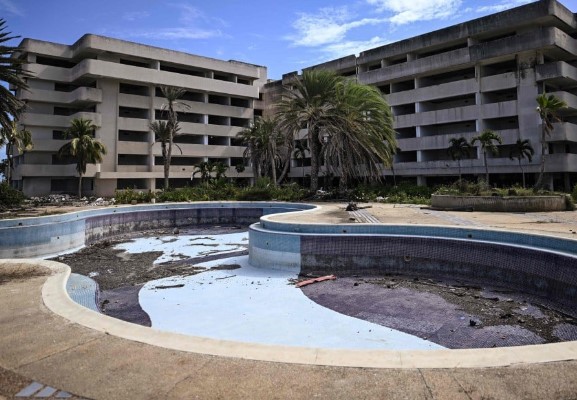
A former 5-star resort sits abandoned and crumbling.
Several clothes and souvenir shops along the main shopping drag, Santiago Marino, stand empty.
And power outages are frequent. An explosion in November at a gas facility in the nearby state of Monagas led to blackouts of up to 20 hours at a time. “This is not the Margarita of the past,” Jose Padobani, a 26-year-old barman, says.
An 80 per cent drop in GDP over a decade of increasingly repressive rule by strongman president Nicolas Maduro between 2013 and 2023 pushed more than seven million Venezuelans – almost a quarter of the population – to seek a better life elsewhere.
Many had hoped to return after the July 2024 elections, in which polls showed an easy win for the opposition. But those hopes were shattered when Maduro claimed victory – despite results published by the opposition showing their man, Edmundo Gonzalez Urrutia, winning by a landslide.
“All my friends have left, but I don’t want to leave,” says Juan Caiman, a 44-year-old furniture maker, whose Colombian father immigrated to Venezuela in the 1980s to escape the violence unleashed by drug kingpin Pablo Escobar.
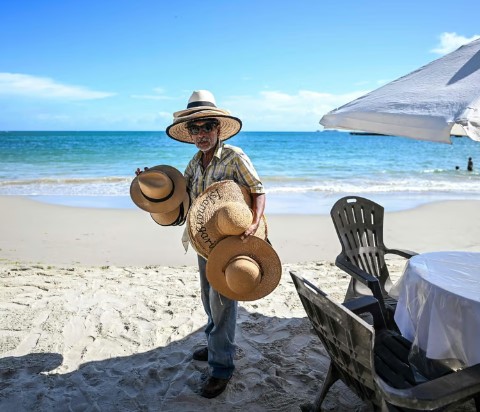
A hat vendor works at Pampatar Beach on Margarita Island. The beautiful sand and waters remain despite the economic troubles its people face.
Caiman, who makes luxury furniture in a workshop near the abandoned Margarita hotel, is one of a group of businesspeople determined to tough it out on the island.
Fadwa Hage, 55, owner of an adjacent sports shop on Santiago Marino, says those who had stayed behind did so to protect their businesses from looting.
But she also sees tentative signs of a recovery. “This year, just on this one block, three new businesses have already opened,” she says. “We have beaches, mountains and lots of activities in which to invest.”
In the near absence of Western tourists, the government has launched campaigns to attract visitors from Venezuela ally Russia, Cuba and Poland.
Some 40,000 Russians have visited Margarita since 2023, according to official figures, lured by all-inclusive packages, including limitless alcohol, in hotels with generators that keep the lights and air conditioning on.
Signs posted around the island welcome visitors in Russian, Turkish, Polish and Chinese, and kitesurfing lessons are also offered in those languages.
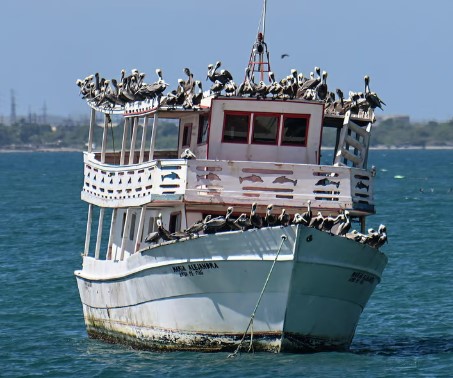
Pelicans perch on a former tourist boat at a Margarita beach.
But many islanders complain they are not benefiting from the new revenue streams. “We depend on Venezuelan tourists because Russian tourists don’t spend a thing,” Demetria, a masseuse who has been offering treatments on the beach for 16 years, says.
Peter, a 44-year-old Russian IT specialist who was on his first visit to Venezuela this year, says he was surprised to find hotels, shops and restaurants abandoned. “It’s as if they were built for 10 times more tourists,” he says.
In the low-income neighbourhood of Las Maritas, Crismar Lopez uses two candles and the torch on her mobile phone to illuminate the kitchen where she makes hot dogs to sell on the street for US$1.50 a pair.
The recent power cuts put Lopez and her husband out of business for two weeks because they could not refrigerate food. But the 47-year-old mother of three says she is used to muddling through. “Venezuelans are masters in the art of coping,” she says.
_________________
Credit: Agence France-Presse



Hogar Esperanza News
Fabianos Pizzeria News

The Cuenca Dispatch

Week of September 20
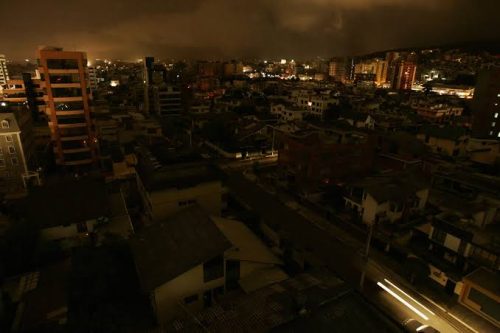
Ecuador turns to industrial power cuts to protect Mazar and keep homes from going dark.

Ecuador raises its 2026 growth forecast, but El Niño could spoil the outlook next year.
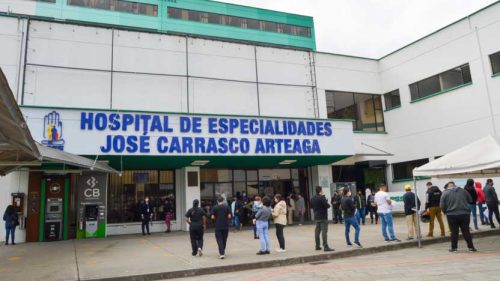
Cuenca retirees challenge medical and therapy changes at IESS senior center.
Fund Grace News