










Discover the essence of Ecuador on this secluded coffee farm and lodge in Imbabura province
By Stephen Vargha
One may be surprised to learn that three greenhorns from the United States are producing some of the best coffee in Ecuador as well as having a secluded and beautiful getaway.
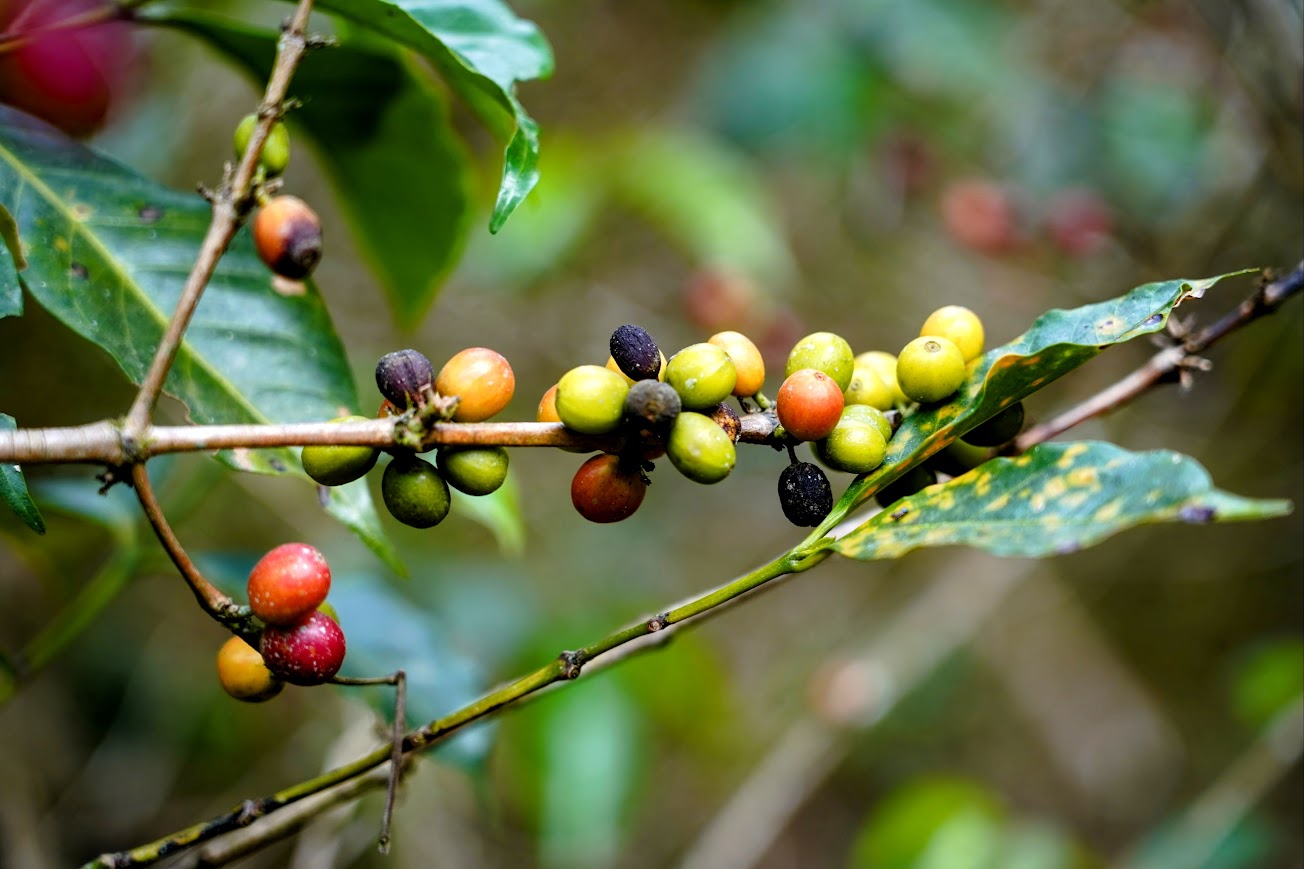
All of the plants at Riolindo Coffee farm are Arabica coffee. Originating from Ethiopia, Arabica beans are often considered superior in taste.
“People would be shocked to realize how little thought we put into it before we bought it,” said Janet Narum. “We weren’t really worried about the fact that we didn’t know a lot about coffee.”
The 67-year-old Washington state native never intended to produce high quality coffee in the remote region of Imbabura province, about 10 hours north of Cuenca.
She graduated from Washington State University with a degree in English and got her master’s online in her fifties in the Administration of Justice and Security.
Her career certainly does not indicate a path to Ecuador. Narum was the Program Director from 1980 to 1996 at Pioneer United Methodist Church, a large church in Walla Walla, Washington.
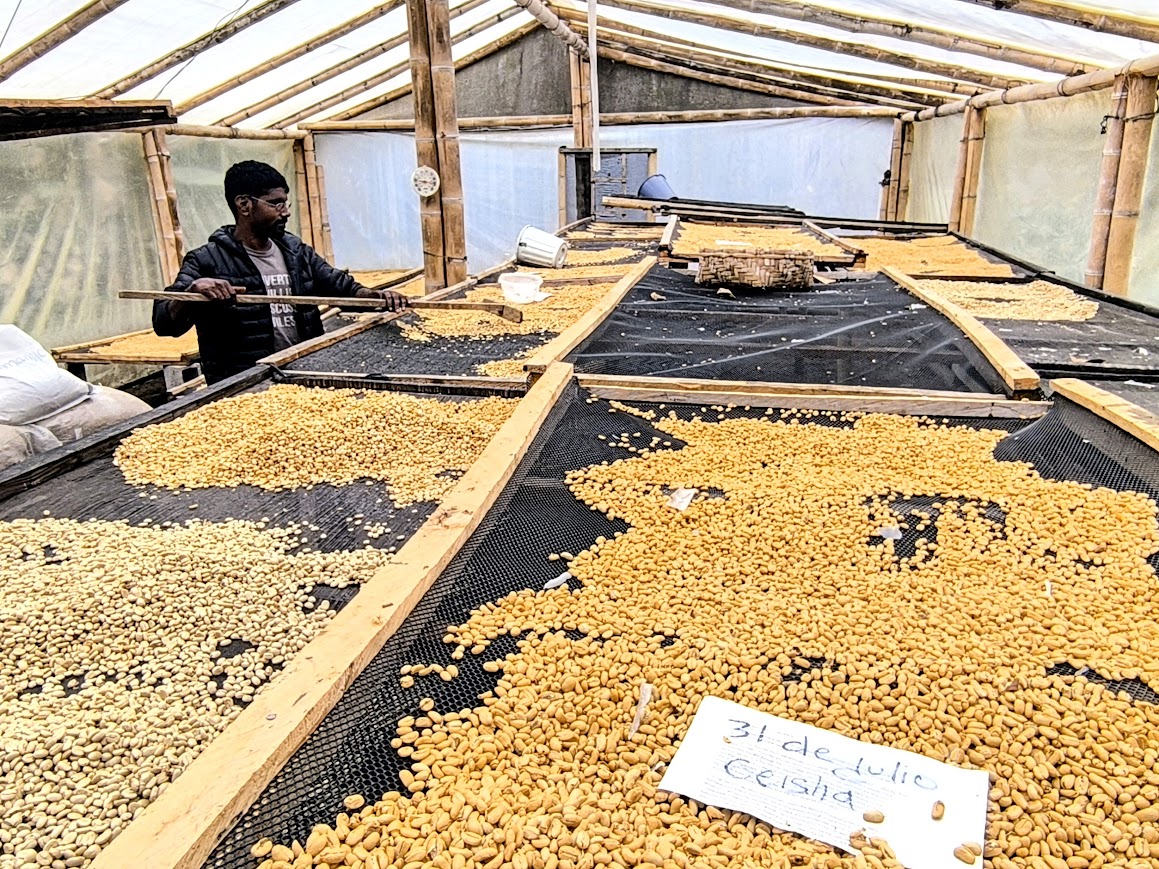
As the cherries (coffee beans) dry, they are raked or turned by hand to ensure even drying. It can take up to four weeks before the cherries are dried sufficiently.
Maybe her time from 1996 to 2003 as an instructor for Reentry Walla Walla Community College at Washington State Penitentiary would. Her class created “The Convict Cookbook.” The charity project by the convicts has 4.3 stars on Amazon and was mentioned on CNN and The Today Show.
“Our biggest concern was if there was enough wildlife to keep Kevin and Kirk happy and to attract the kind of visitors that we hoped for,” said Narum. “From the beginning we hoped that people would find the essence of Ecuador and for us that is both wildlife and rich amazing coffee.”
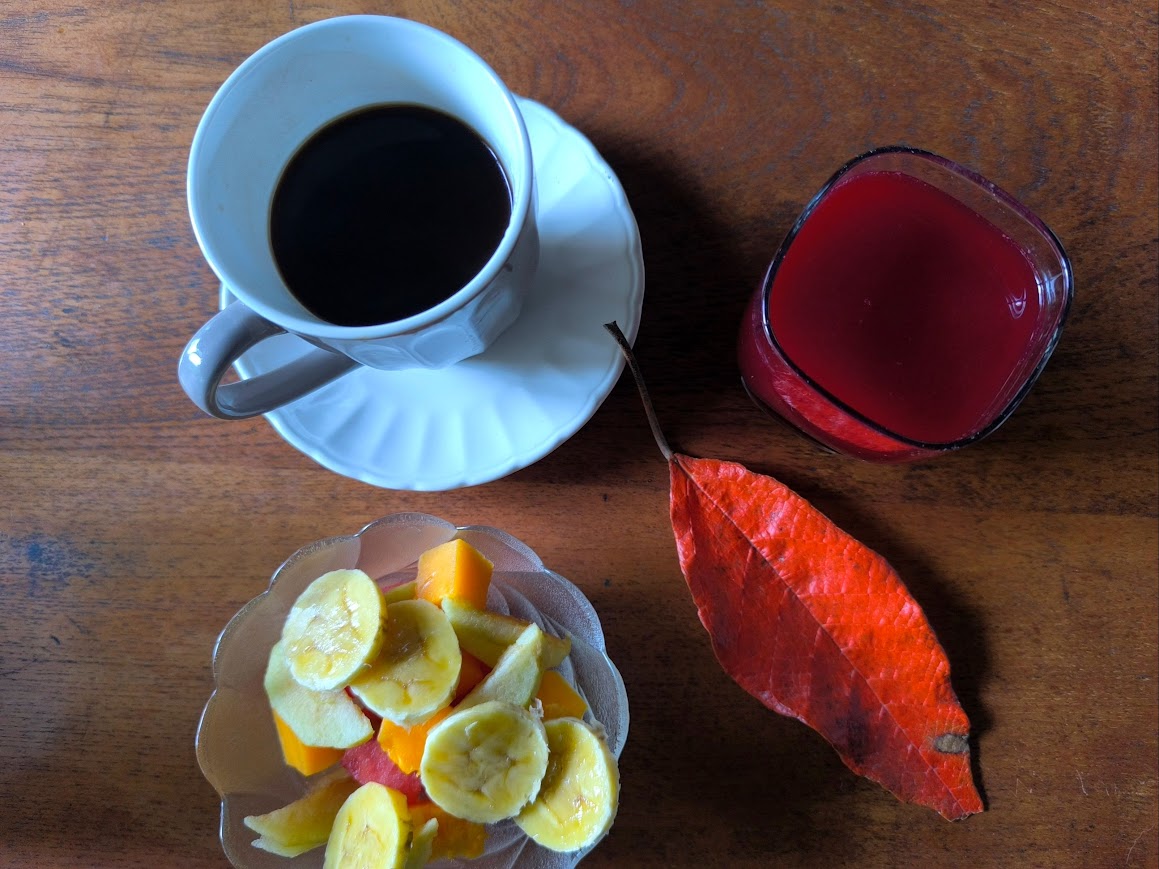
Despite the drought in Africa raising prices worldwide, Riolindo has been selling their coffee for the same affordable price for three years.
Narum is referring to her two adopted adult sons. When Narum turned 30, she and her ex-husband, Rick, had to make a decision to have their own children or to adopt.
“We both loved the idea of giving a home to someone that was already on this earth and Rick wanted boys! We contacted an adoption agency and said we would take any brothers anywhere in the world who needed a home, but we were hoping for children under the age of five,” said Narum.
An agency offered them twins who were nearly three years old from India. Both of them had suffered extreme malnutrition.

Riolindo sells its coffee to its guests as well as at the Thursday Farmers Market in Cotacachi (Imbabura province).
Elu (Kevin) was 17 pounds and Vadu (Kirk) was 19 pounds. Narum kept their original names as middle names.
“They could barely walk when they arrived due to malnutrition,” said Narum. “But both became good cross-country runners in high school! They love all kinds of athletics, especially pickleball these days.”
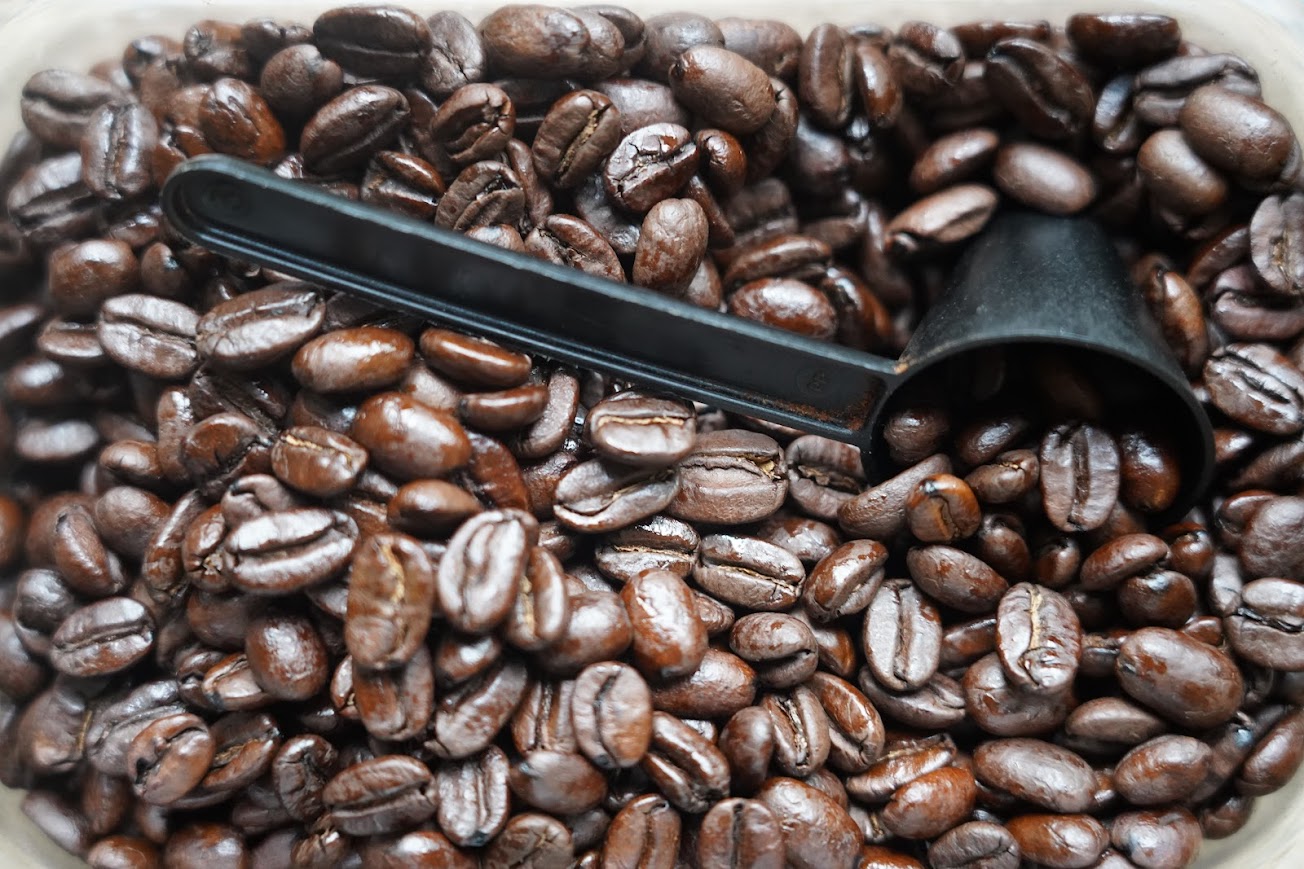
To roast coffee, raw coffee beans are dropped into a rotating drum. The drum is pre-heated to a temperature of around 240°F / 115°C.
Kevin graduated from Whitworth University with a degree in biology and went on to work at the Cincinnati Zoo, and numerous conservation and wildlife programs in Florida, Mississippi, Missouri, and Montana.
Kirk worked for the Milton-Freewater School District and the Department of Public Safety Standards and Training in Oregon, where he became the supervisor of the custodians and later loved being a landscaper.
All of this experience melded together in 2017 when Narum came to Ecuador with a friend to hike the Quilotoa Loop, a ring-shaped trail that connects remote villages in the high Andes, in Cotopaxi province.
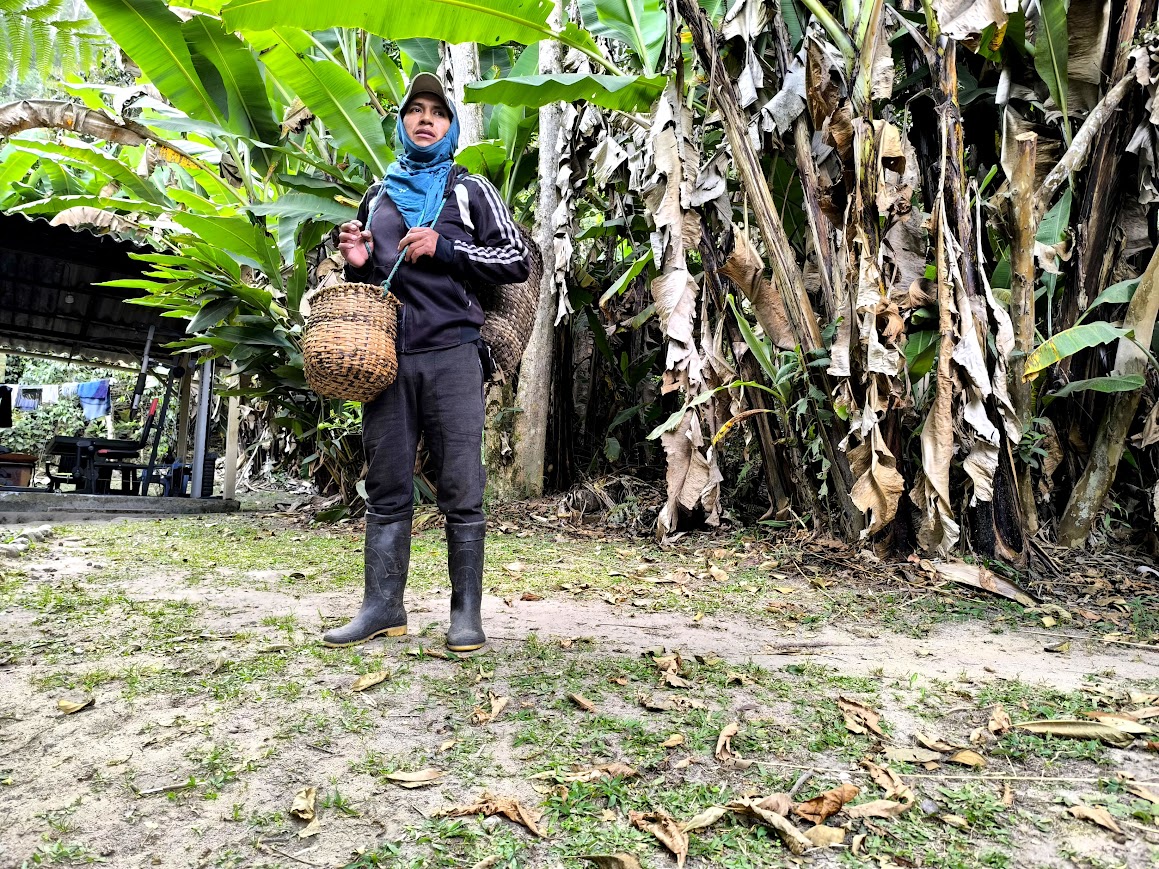
Oscar Rodriguez, the youngest of the three Rodriguez brothers, is one of the caretakers of the farm. Everything is handpicked.
“I loved my job in the U.S. and hadn’t considered retiring until I came to Ecuador and realized I could do it quite economically and start a new adventure,” said Narum. “So, I started dreaming about it and came back with my sons and my ex-husband for a canoe trip in the Amazon area.”
In 2021, the search began. Her sons came to visit with a cousin, and everyone started looking at various properties because they were very intrigued with Ecuador.
The next year, they settled on a coffee farm, just outside the small town of Seis de Julio de Cuellaje (Population: 1,946), with no knowledge of coffee.
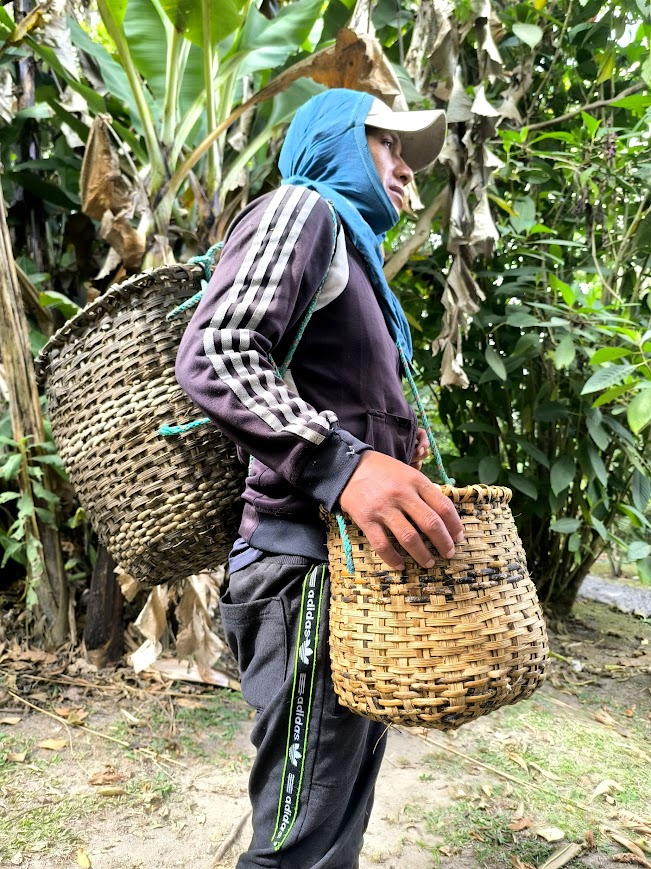
Oscar Rodriguez, who hails from Piñán, is about to handpick the ripe beans at Riolindo Coffee Farm.
“My sons were very intrigued with the wildlife and foliage everywhere,” said Narum. “Kirk moved here in July of 2021 and Kevin moved here in March of 2022.”
All three are owners, but late last year, Kevin went to work for Western Carolina University, managing an endangered frog project in Gulfport, Mississippi.
“He calls Ecuador home at this point and will be returning on vacations,” said Narum. “Kevin loves the wildlife and biodiversity here and has contributed significantly to some Ecuadorian wildlife/reptile/herpetology journals.”
The coffee farm was already called Rio Lindo, but there with other hotels that had the exact same name, so Narum put the words together to be unique.
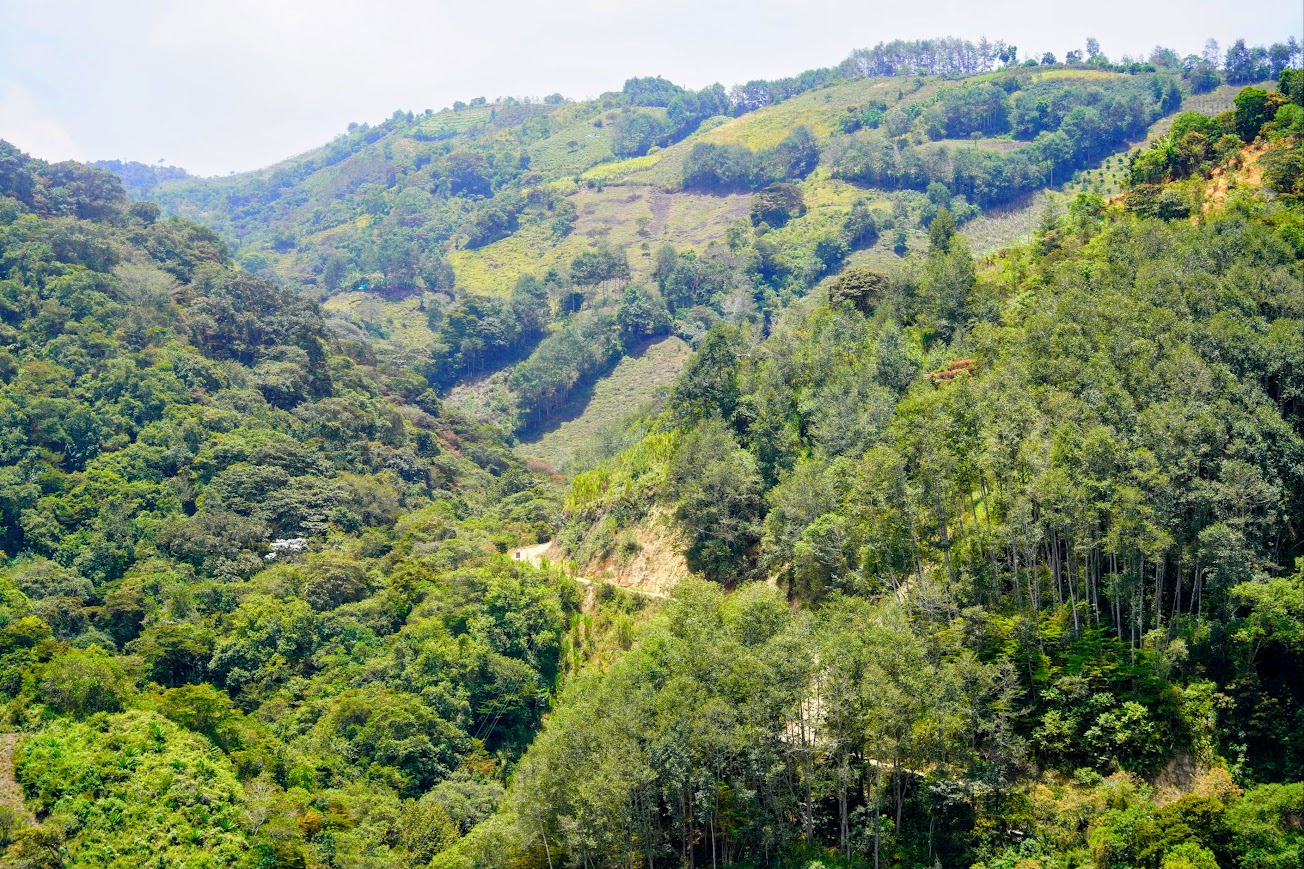
The remote road leading up the mountain to where the Andean Cock-of-the-Rock roosts in the early-morning.
“Our first visitors arrived on Mother’s Day of 2022, and we did a Mother’s Day luncheon. I think we had 12 guests,” said Narum. “Looking back on it, I don’t think we were very ready, but it was good practice for us! People seemed to have fun.”
More than a new name was needed. They improved the big lodge by adding bathrooms. With no place for people to congregate other than in their rooms, a covered patio with a fireplace was added.
“That was one of our best decisions because people congregate there a lot,” said Narum. “We have now put in a small stage that has been used on special occasions.”
One of their first guests said good access to the Christopamba River was needed, so they put in stairs and sitting areas by the remote river.
“I think Kevin and Kirk loved working down by the river more than anything,” said Narum.
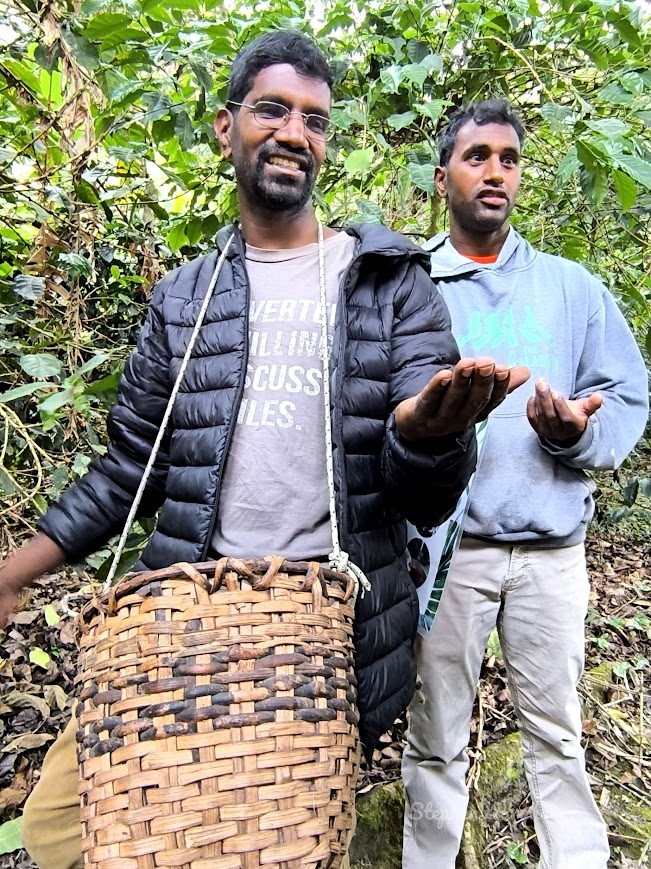
Kevin Narum (Left) and Kirk Narum (Right) leading a tour of their 17 acres / 8 hectares coffee farm.
Due to more visitors, the size of the kitchen was doubled. It is used for the breakfasts that are included in the daily rate. Dinners are extra for a nominal price. In the last few months, an outdoor kitchen for guests to use was added.
They also help maintain a pickleball court that is only about a quarter of a mile walk from the farm.
“I think it might be the most remote pickleball court in the world,” said Narum.
It’s definitely not an easy place to get to, but the last two hours over bumpy dirt roads in Intag Valley are well worth it.
“I tell people that it’s an adventure to get here,” said Narum. “I had one friend who thought taking the bus was sort of like a scene from Romancing the Stone! We had a guy from the San Juan Islands, who said his favorite part of visiting our farm was the bus adventure.”
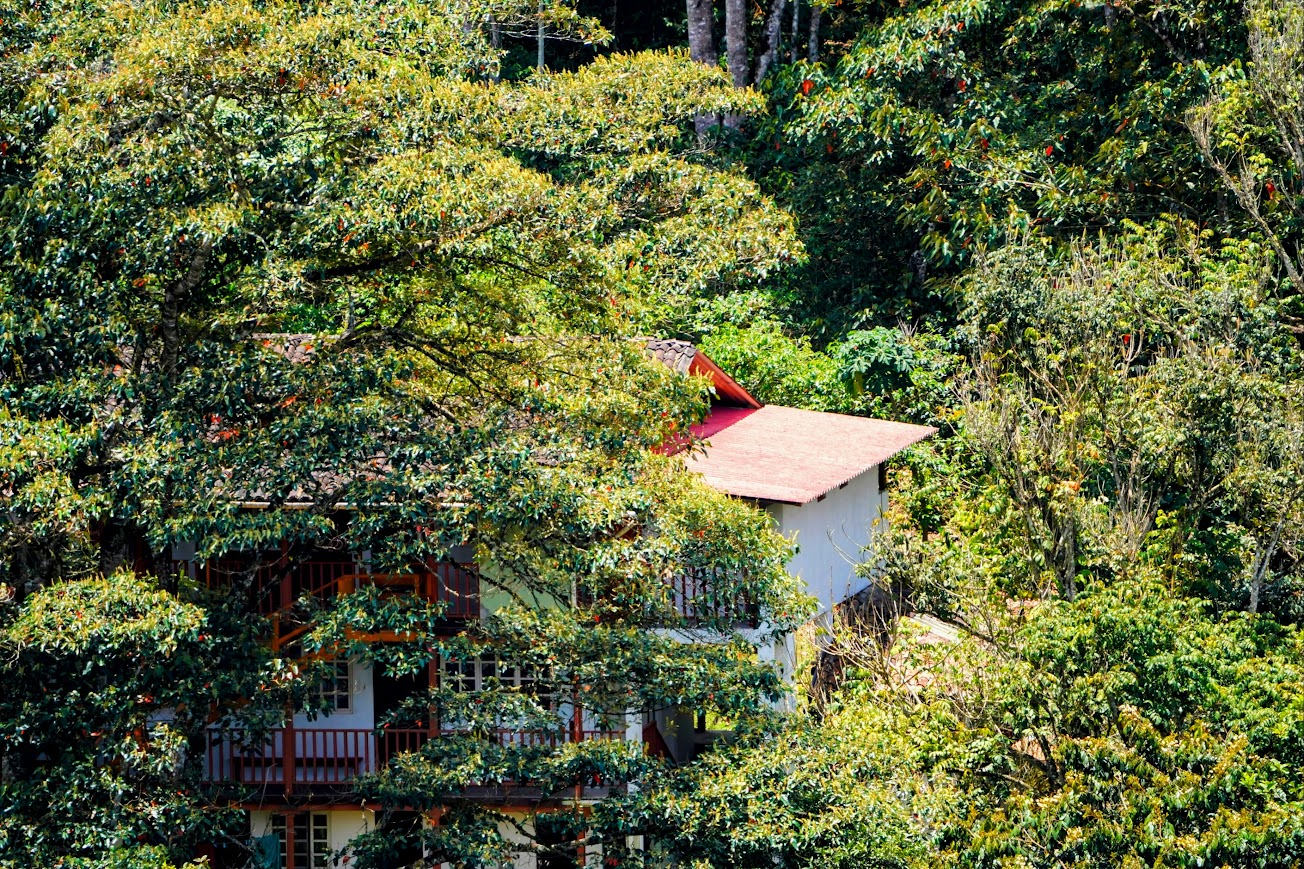
The lodges at Riolindo Coffee Farm are nestled in the lush forest of Imbabura province.
Because of its remoteness, the Andean Cock-of-the-Rock is a visitor to the farm. Riolindo will take you on a vigorous hike first thing in the morning to the bird’s lek, a communal area where male animals gather to compete for the attention of females.
This is a fairly large bird, significantly larger and chunkier than a Thrush. The bright coloration of the males makes them stand out amidst the canopy of the cloud forests while their powerful, raspy and clanky calls make them unmistakable.
Maybe the favorite among the guests is coffee. On their 17 acres / 8 hectares, they have about 1,200 trees.
All of their plants are Arabica coffee. Originating from Ethiopia, Arabica beans are often considered superior in taste.
“Most of our coffee is the ever-popular Red Typica variety,” said Narum. “We also grow Yellow Bourbon. This yellow bean coffee is a little citrusy and is named after the French island of Bourbon (now known as Réunion).”
They are also now growing Gesha coffee as it is a favorite among some of their visitors. Narum plans to triple the number of Gesha coffee trees within the next six years.
Besides the high-quality beans and the rich volcanic soil making Riolindo’s coffee so desirable is that everything is natural.
“We do not use pesticides on our organic coffee farm,” said Narum. “Some non-organic massive and mechanical farms use so many pesticides that the residues have shown up in their commercial coffee in the grocery stores.”
All of their beans are handpicked. Just like wine, handpicked beans produce higher quality coffee.
“The problem with machinery is that it often picks green coffee or damaged berries. Machinery picking definitely affects the flavor,” said Narum.
Despite the drought in Africa raising prices worldwide, Riolindo has been selling their coffee for the same price for three years: $9 for a pound of the Red Typica and Yellow Bourbon, and $10 for the Gesha.
Narum sells a lot of their coffee to her guests.
“We have one returning customer who, together with friends and family, buys at least 150 bags of our coffee a year,” said Narum. “We try to save enough coffee to be able to sell to all our hotel guests.”
Riolindo also sells coffee at the Thursday Farmers Market in Cotacachi. Since it is two hours away by bus, Narum only goes there about once a month.
Being a small farm, there is not enough for everyone.
“We have sold out every year and anticipate that we will run out of our coffee by mid-April,” said Narum.
Life has returned to normal at Riolindo as the rains have returned. The river is roaring again; everything is lush and green; and everything has returned to normal.”
“There are so many hummingbirds that they seem to be learning to share and not fighting all the time. That never happened before,” said Narum. “And in the evenings, we hear so many frogs!”
__________________
Riolindo Coffee Farm, Seis de Julio de Cuellaje, Ecuador, janet.narum@gmail.com, https://www.facebook.com/profile.php?id=100063594218185
“The Convict Cookbook,” https://www.amazon.com/Convict-Cookbook-Convicts-Washington-Penitentiary/dp/0976082500
Photos by Stephen Vargha
Stephen Vargha’s second edition of his book about Cuenca, “Una Nueva Vida – A New Life” is available at Amazon in digital and hardback formats. His award-winning blog, “Becoming Cuenca,” supplements his book with the latest information and hundreds of professional photos by him.