
















Seven countries in Latin America where human rights are taking the biggest hit
By The Conversation staff
Latin America is undergoing one of its most profound human rights crises in decades. The region’s civic space is shrinking rapidly, from mass surveillance and arbitrary arrests to political repression, enforced disappearances and impunity for state violence.
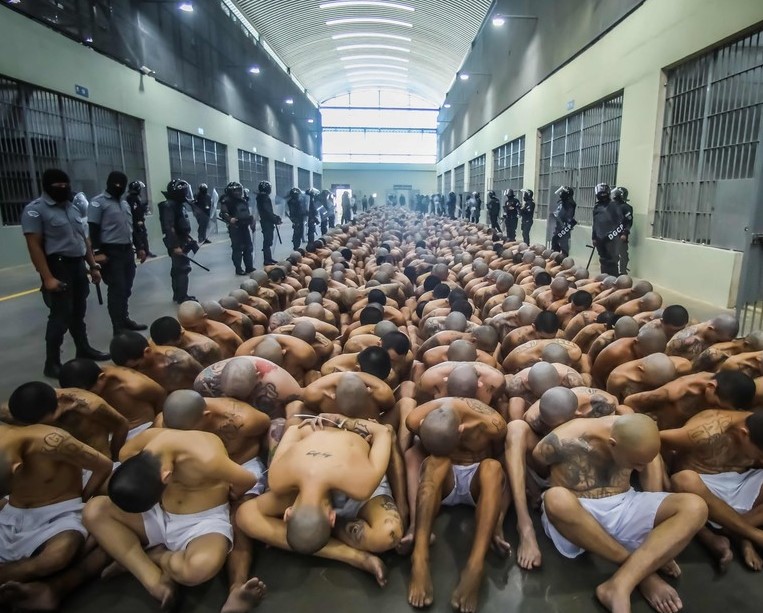
Nearly 84,000 suspected gang members have been arrested since 2022 in El Salvador, and most of them have not had their day in court.
The 2025 State of the World’s Human Rights report, released by Amnesty International, lays bare the magnitude of the challenge. Seven countries – Haiti, Nicaragua, Venezuela, Mexico, Colombia, Cuba and El Salvador – are at the epicentre of this authoritarian surge.
Donald Trump’s return to the White House in January has only deepened the problem. In a separate report published in the same week, Amnesty argues that Trump’s nationalist rhetoric and policy reversals have emboldened strongman leaders. These have undercut international accountability and accelerated rights violations across the hemisphere.
Here are the countries where the assault on human rights is being felt most acutely.
1. Haiti
Nowhere has the collapse in human rights been more visible than in Haiti. By the end of 2024, more than 700,000 people – half of them children – had been internally displaced due to spiraling gang violence and state failure.
Criminal organizations routinely engaged in killings, sexual violence and attacks on hospitals and schools. A December 2024 massacre in Cité Soleil, a densely populated part of the Haitian capital Port-au-Prince, saw at least 207 people executed by the Wharf Jérémie gang.
The justice system has all but ceased to function. Meanwhile, deportations of Haitians from the US and neighboring Dominican Republic has surged.
According to Amnesty, nearly 200,000 people were returned without due process in 2024 alone. Trump’s crackdown on migration, framed as necessary for border security, has accelerated these mass removals.
2. Nicaragua
Nicaragua’s president, Daniel Ortega, has refined authoritarianism into an efficient machine of repression. More than 5,000 civil society groups, private universities and media outlets have been closed since 2018. This included 1,500 from January to September 2024 alone.
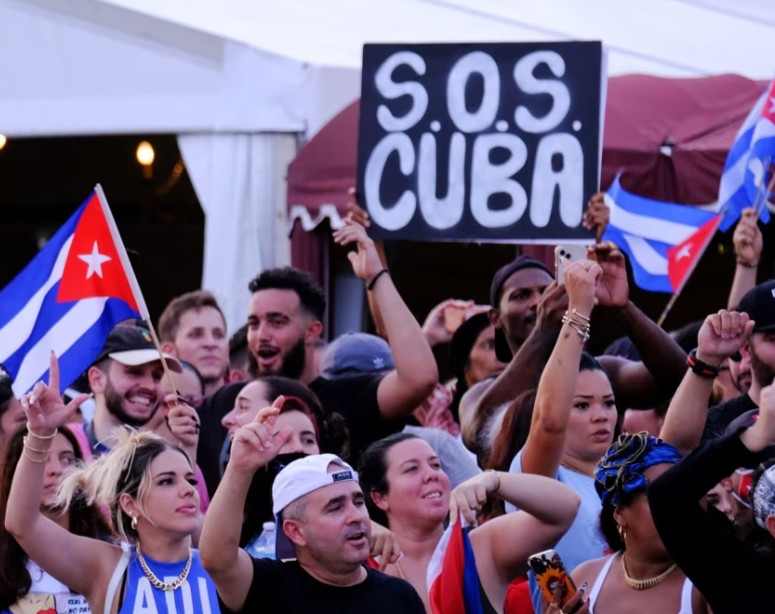
Many of those who protest against the government in Cuba are jailed without charges.
Over 400 critics have been stripped of nationality since 2023, and dozens of journalists have been forcibly disappeared or jailed. The legal status of hundreds of evangelical groups has also been revoked.
In 2024, the government criminalized dissent to the point where entire sectors of civil society have vanished. Indigenous communities, meanwhile, faced displacement and armed attacks from pro-government militias, with little international response.
3. Venezuela
Venezuela remains mired in repression. A presidential election in July 2024, which was stolen by Nicolás Maduro, was followed by the arbitrary detention and torture of protesters – including children. Independent journalists were arrested and NGOs threatened with closure.
Many Venezuelans subsequently fled the country. Persecutions and despair at the election results saw 20,000 people migrate northwards through the jungle of the Darién Gap in September 2024 alone, a 70% increase on the previous month.
In reality, the numbers are probably much higher. A poll following the election indicated that 43% of those remaining in the country were considering emigrating, but official data has not been made available. More than 7.8 million citizens have left Venezuela over the past ten years, with around 28 million people still residing there.
In June 2023, the International Criminal Court resumed its investigation into the Maduro regime for alleged crimes against humanity. But Venezuela’s government continues to obstruct justice. With Trump’s administration disinterested in multilateral mechanisms, efforts to restore democracy face steeper odds.
4. Mexico
Mexico’s public security has become dangerously militarised. A constitutional amendment in September 2024, a few days before the end of the Andrés Manuel López Obrador administration, placed the National Guard under military control. This has enabled widespread abuses including extrajudicial killings. Nine human rights defenders and four journalists were killed in 2024 alone.
López Obrador’s administration undermined press freedom at home. It also failed to protect those seeking asylum. And with Trump back in office, deportations from the US to Mexico have increased. Returnees are often placed at risk of cartel violence and exploitation.
5. Colombia
Colombia suffered Latin America’s longest running insurgency, lasting over 50 years. Despite the country’s robust institutional frameworks, peace remains elusive. In 2024, over 195,000 people were forcibly confined by armed groups, and landmines continue to endanger more than 600,000 civilians.
Child recruitment, sexual violence and targeted killings of former combatants from the Revolutionary Armed Forces of Colombia (Farc) rebel group have surged. Meanwhile, progress on implementing the 2016 peace accord remains slow.
Investigations into military-perpetrated extrajudicial killings are ongoing, but face budgetary constraints and political pushback. Trump’s withdrawal of US support for transitional justice mechanisms has further weakened international backing for Colombia’s fragile reconciliation efforts.
6. Cuba
The Cuban authorities are continuing to suppress dissent through arbitrary arrests, enforced disappearances and censorship. Over 100 people were arrested for protesting in 2024, with many forced into self-incriminating video confessions. Independent media and activists were subject to constant surveillance and harassment.
Amid economic collapse, more than 18% of the population has fled the island in two years. These mass migrations often result in perilous journeys and widespread family separations. The economic crisis has been exacerbated by US sanctions reimposed and intensified under Trump.
7. El Salvador
President Nayib Bukele’s model of mass incarceration continues to attract global attention. Nearly 84,000 people have been arrested since 2022 under a state of emergency that suspends basic rights and legal guarantees.
Surveillance, arbitrary detentions and public humiliation of detainees have become routine. Trump’s vocal admiration of Bukele’s “tough on crime” stance has lent international legitimacy to this dangerous approach.
________________
Credit: The Conversation



Hogar Esperanza News

Fabianos Pizzeria News

Fund Grace News

The Cuenca Dispatch

Week of September 20
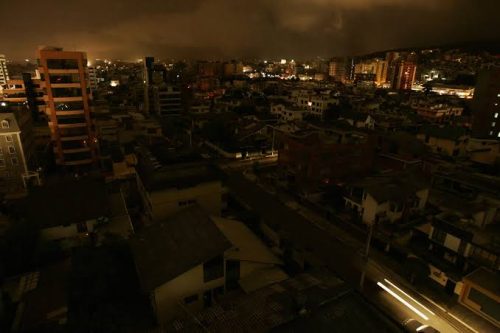
Ecuador turns to industrial power cuts to protect Mazar and keep homes from going dark.
Ecuador raises its 2026 growth forecast, but El Niño could spoil the outlook next year.
Cuenca retirees challenge medical and therapy changes at IESS senior center.