













How many expats are in Cuenca? Pick a number
I’ve lived in Cuenca long enough to know that numbers — especially when it comes to expats — are more art than science. Depending on whom you ask, there are either 2,000 foreigners living here, or 12,000, or a million and two if you include the ones who only come out on sunny days to eat ice cream. It all depends on your definition of “gringo.”
Some say the number of expats is around 8,000 to 10,000. But try confirming that. The migration office doesn’t publish coffee-table books of gringo headshots. Most estimates rely on a mix of anecdote, optimism, and sightings in the Supermaxi checkout line.
And we also don’t know how many gringos leave the city due to boredom or ill health, or take up permanent residence in a local cemetery.
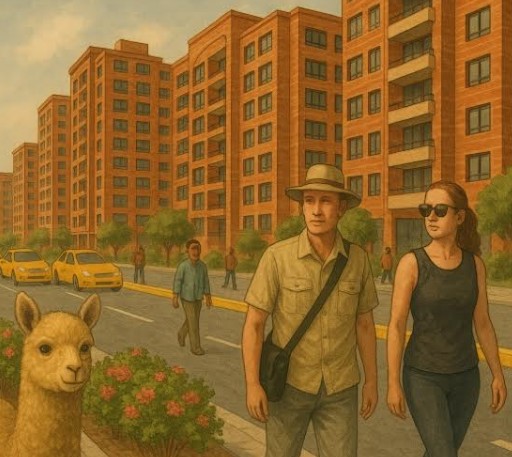 Walk around Parque Calderón on a weekday afternoon and you might spot a couple of retirees in safari hats, maybe a vegan in cargo shorts carrying an umbrella. Visit a health food store or artisanal bakery, and you might feel like you’re back in Lake Wobegon. But do these glimpses indicate the presence of thousands? Difficult to say.
There are entire apartment blocks advertised as being “near gringo amenities,” yet many gringos I know rarely leave their homes except to buy bread or see a doctor. Perhaps Cuenca’s foreign population is more like a secret society: large in number, but discreet in behavior.
Anecdotal evidence suggests that if you go by supermarket sightings, Cuenca has fewer expats than advertised. Same with the number of gringos seen in public parks, restaurants, or shopping malls.
Ecuadorians working as housekeepers and cleaners say it’s surprisingly difficult to find regular work from foreign households. That, too, doesn’t square with the supposed thousands of households, unless there are a lot of gringos whose hobbies include emptying out the basket in their bathrooms, cleaning the bowl, and scrubbing the tiling in the shower, and folding laundry.
Perhaps the numbers are inflated by counting part-timers: snowbirds from Canada, short-term renters escaping northern winters, or digital nomads just passing through. Or maybe they include Ecuadorians who’ve lived abroad and now return speaking English, giving the impression of a larger expat presence than actually exists.
One neighborhood often cited by travel journalists as a hub of foreign residents is colloquially called “Gringolandia.” But the nickname has more to do with the architecture than the ethnicity of its residents. The area is dotted with concrete tower blocks faced with tiles made to look like bricks — more North American in style than colonial Cuenca. Whether or not the buildings are full of foreigners is a separate question.
The numbers of gringos and gringas spotted and tagged in the closest Supermaxi to the area, the Feria Libre, and the nearby Batan shopping center suggest not.
Trying to count gringos in Cuenca is a bit like trying to count how many tourists visit the UK because they’re fans of the royal family. The interest is real, the influence is visible, but the numbers are maddeningly elusive and possibly nowhere near as high as the number who fly in for European soccer games or Wimbledon tennis.
Ultimately, trying to count Cuenca’s gringos is a bit like herding alpacas: theoretically possible, but why bother unless you’re making a sweater or selllng visa assistance services.
What we do know is this: the expat community here has influence beyond its numbers. It shapes local businesses, English-language media, and a chunk of the real estate market. But if you’re looking for 10,000 gringos, you may need to look harder—or accept that most of them are blending in better than you think.



Hogar Esperanza News

Property Kuralt

Fund Grace News

Property Manabi

Nice apartment banner

The Cuenca Dispatch

Week of August 23

Ecuador’s economy grew 2% during the first half of 2026 compared with the same period a year earlier, according to new Banco Central del Ecuador data.

Cuenca gets a prime view of next week’s deep partial lunar eclipse.

Ecuador’s economy grows 2% in the first half of 2026.
Fabianos Pizzeria News
