
















Gary’s economics and the condos of Cuenca
Most people in Cuenca have never heard of Gary Stevenson. He is not a president, a pop singer, or a football manager. He is a British economist who used to make his living trading interest rates for CitiBank in London. He got very good at it and very rich at it. Then when he reached the ripe old age of 30, he became disgusted with what he was doing, so he quit, wrote a bestseller, and started warning people that the housing market in much of the world has stopped behaving like a market for homes and has started behaving like a machine for extraction.
Stevenson now runs a YouTube channel called Gary’s Economics in which he usually sits at his kitchen table with a ballpoint pen and a notepad and talks about economics. Millions of people watch because he explains economics without jargon or algebra and without pretending that rising asset prices are good news for all. One of his key ideas is a relatively simple one which is that when housing becomes a financial asset before it is a human necessity, ordinary working people lose out.
 As Stevenson himself puts it “The rich get the assets, the poor get the debt, and then the poor have to pay their whole salary to the rich every year just to live in a house, and the rich use that money to buy up the rest of the assets.”
His key concept is rent extraction. Rent extraction means pulling money out of people not by making or improving anything, but by owning something they cannot do without. Housing is the most powerful example of rent extraction. If wages rise a little but rents rise a lot, the extra money does not improve anyone’s life except the owner’s. The tenant works more and the landlord collects more. Nothing of real value is created. The money is extracted.
In countries like Britain, the United States, and Canada, this process has been supercharged by hedge funds, private equity firms, and large corporations buying up housing on an industrial scale. They do this because housing is now one of the safest profit engines on earth. People must live somewhere. Rents can be raised year after year. Unlike shops or factories, housing hardly ever depreciates. Once corporate ownership expands, rents often rise far faster than earnings, not because costs rose dramatically, but because investors expect higher returns, so the tenant ends up paying the difference.
Stevenson’s argument is blunt. If housing becomes a profit machine for distant shareholders, society doesn’t work, because the future of working people becomes mathematically unbearable.
If he ever came to Cuenca, he might be puzzled at first. The city does not feel like a financial battlefield. Families sit in parks. Students rent rooms cheaply without signing away their futures. Housing here still mostly behaves like housing.
For expatriates, this is exactly why renting in Cuenca is so attractive. The city still treats housing as a place to live rather than a financial instrument. Most apartments are owned by local families, often the same families who have lived in the building for decades, so rents are set with working Cuencanos in mind, not foreign investors.
A newcomer can find a bright apartment near Parque Calderón or along the Tomebamba for a monthly rental that would not cover a parking space in San Francisco, New York, or London. Utilities are modest and the maintenance is handled by the owner, who usually lives a short ride away, answers Whatsapp messages without sending anyone through a call center, and may ask you for the loan of a step stool, a screwdriver, or a silicon squirter when he arrives.
Even the pricier neighbourhoods, like El Vergel or the newer buildings near the stadium, tend to follow the same pattern. Renting here offers stability without long contracts, a humane cost of living, and a sense that the person collecting the rent is part of the city rather than an algorithm in another country. For many retired gringos here, it feels like rediscovering how housing used to work long ago before speculation hollowed it out elsewhere.
The contrast becomes sharper when you look at the singular case of Vienna, the capital city of Austria, which has a population of about 2 million Wieners (as the inhabitants are called in German). The Austrians decided around 1920 that housing was akin to a water supply, totally necessary and much too important to leave entirely to speculators and monopolists.
The city owns and manages large blocks of mixed public housing and builds more every single year. These Wiener public housing developments are not grim brutalist towers run by slumlords. They are well designed, well maintained buildings where teachers live next to lawyers, office workers, shop assistants, and retirees. Rents remain affordable and the buildings stay in public hands. Speculation is blocked. so housing costs stay linked to local wages instead of floating ever upward like a helium balloon.
Ecuador chose another humane, but different path with its VIP housing program. The goal is to help low income families buy their first home. The state supports construction and offers favorable credit. A family gains security and dignity through ownership. After the sale, the home becomes ordinary private property which can be sold, rented, or inherited. The state then turns its attention to helping the next group of buyers get their feet on the property ladder.
Vienna builds a permanent floor under society. VIP (Vivienda de Interés Público) and VIS (Vivienda de Interés Social) housing in Ecuador builds a ladder by providing down payment support to buyers and IVA exemptions to builders. Both approaches help people. but only one prevents the ladder from eventually turning into a drawbridge.
Cuenca today still feels overall far closer to Vienna than to London or San Francisco. Yet the pressure is visible. The high-rise Gringolandia zone on the banks of the Tomebamba and gated developments on the outskirts of the city. Empty investment apartments held for resale to gringos. AirBnB towers replacing long term rentals. Foreign capital testing the market. None of this has yet ruptured the social fabric, but these are the early footprints Stevenson describes in overheated housing markets around the globe.
The danger is not that Cuenca will suddenly become unaffordable next year. The danger is that housing slowly detaches from wages while everyone tells themselves that this is development. The process does not look dramatic at first and in fact it looks like progress. It looks like rising values and modernity.
Only later does it reveal its real character. Young people have to delay starting families. Long term renters live with permanent anxiety about an impending rent raise. Entire neighborhoods tilt toward short term profit instead of long term life. Wages become irrelevant next to asset inflation.
Stevenson is not a romantic. He doesn’t suggest that markets are evil. He argues that markets follow gravity. If housing is allowed to become a safe store of wealth for the rich, that is where wealth will fall. If no counterweight exists, rent extraction becomes the default system.
Vienna chose to build that counterweight with public ownership and permanent rent stability. Ecuador chose to offer dignity through first time ownership. Both models rest on an unspoken promise that housing should not devour the people who live under its roofs.
Cuenca still has some rare qualities, like families who have lived in the same houses for decades. Renters who know who owns the building. Neighborhoods that still behave like places people inhabit rather than assets people trade. This is not guaranteed by geography, only by choices.
Stevenson would likely look at Cuenca and say that the battle has not yet been lost. But he would also say that markets do not protect kindness on their own. If housing is left to drift, it always drifts toward whoever already owns the most.
For now, the domes still catch the rays of the late afternoon sunlight, the rooftops still feel human, and the city still works at a scale that makes sense. The question is whether Cuenca wants housing to remain a place for people to live, or whether it wants it to become a place where distant investors harvest profits.
The danger is that the die is cast long before the panic ever begins.



Hogar Esperanza News

Fund Grace News

The Cuenca Dispatch

Week of September 20
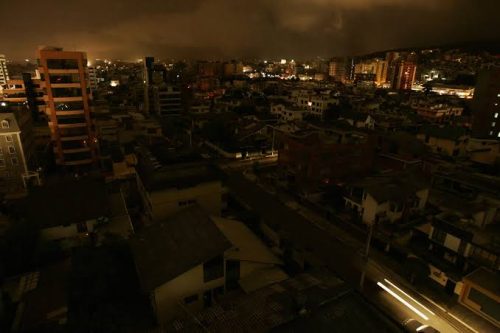
Ecuador turns to industrial power cuts to protect Mazar and keep homes from going dark.

Ecuador raises its 2026 growth forecast, but El Niño could spoil the outlook next year.
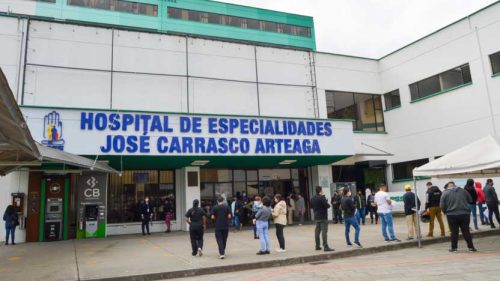
Cuenca retirees challenge medical and therapy changes at IESS senior center.
Fabianos Pizzeria News