
















Cuenca vs. Guayaquil: A Tale of Two Cities
 To follow the news about Ecuador from abroad is to experience a masterclass in cognitive dissonance.
One headline blares, “State of Emergency Declared as Violence Surges.” The next, often on the same day, glows, “World’s Best Retirement Haven Offers Unbeatable Quality of Life.” One article describes military patrols in a cartel-controlled port city. The next shows a tranquil colonial street, cobblestones glistening, as an expat sips coffee in a sun-drenched plaza.
How can both of these realities be true?
The answer is simple: they are both true, but they are not about the same place. To truly understand the safety situation in Ecuador, one must stop thinking of “Ecuador” as a single, monolithic entity. The single most important safety decision you will make is not if you move to Ecuador, but where in Ecuador you move.
There is no better way to illustrate this than by comparing the country’s two largest cities: Guayaquil and Cuenca. They may as well be on different continents.
Guayaquil: The Economic Engine and Security Epicenter
Guayaquil is the nation’s largest city, its undisputed economic engine, and home to its main port. Over 70% of all of Ecuador’s sea cargo moves through its docks. It is a sprawling, humid, tropical metropolis that functions as the financial heartbeat of the country.
But this economic power is precisely what makes it the epicenter of the country’s security crisis.
Because it is the main port, it is the primary, non-negotiable prize for international drug cartels fighting to control shipping routes to Europe and North America. This is not random street crime; this is a strategic, organized war for control of a multi-billion-dollar logistical hub. The violence there is real, pervasive, and has, in recent years, become terrifyingly public.
The U.S. State Department doesn’t mince words. Guayaquil is the only major city in Ecuador that the department explicitly names, section by section, in its highest travel advisories. The southern part of the city is under a Level 4: Do Not Travel advisory—the same level given to active war zones like Syria and Afghanistan. The northern part sits at Level 3: Reconsider Travel.
The violence is not just statistics; it defines daily life. It includes car bombs, targeted assassinations, rampant extortion of businesses, and kidnappings. Expat reports from the few who live there for business are grim: “Crime is at an all-time high,” and “going to the streets has become a riskful activity”. The Canadian government similarly warns of “gang violence across the country, including in Guayaquil.” It is a city on edge, a place where daily life for many involves constant vigilance, armored vehicles, and strict “no-go” zones.
Cuenca: The Andean Safe Haven
Cuenca exists in a different reality.
Tucked into a high-altitude valley in the southern Andes, it is geographically, culturally, and economically isolated from the coastal conflict. To get to Cuenca from Guayaquil, you must drive over a 13,000-foot mountain pass through the Cajas National Park. This massive geographic barrier does more than just separate; it insulates.
The Data: A Statistical Sanctuary
The numbers back up the feeling of safety. Cuenca is consistently rated as the safest major city in Ecuador, and among the safest in all of South America. Numbeo, a crowd-sourced data site, gives Cuenca a “moderate” crime rate, placing it on par with or even safer than many medium-sized cities in the United States. Other sources have repeatedly named it one of the two safest cities on the continent.
The Experience: A Different Daily Life
But data only tells part of the story. The lived, day-to-day experience is what matters. In Cuenca, expats “overwhelmingly report feeling safe.”
This isn’t just a feeling; it’s a visible reality. This is a city where you see elderly couples strolling the Tomebamba riverbanks after dark. You see families with young children playing in Parque de la Madre at 9 PM. You see restaurants and cafes full of people on a Tuesday night, with residents walking home afterward.
First-hand accounts consistently state, “Violent crime is relatively low,” and most “feel safe walking around the city during the day and night.” One expat, writing in February 2025, noted that their friends “all feel safe in Cuenca,” with many feeling “much safer there than they ever did in the United States.”
This sentiment is echoed constantly. The “crime” that does exist in Cuenca is overwhelmingly petty, non-violent “crime of opportunity”—a pickpocket in a crowded market or a cell phone left unattended on a restaurant table. This is a world away from the violent, organized crime that defines the coastal crisis.
The Reason: Simple Logic
The logic behind this safety is simple. Cuenca is not a strategic port. It is not on a major trafficking route. There is no logistical prize here for cartels to fight over.
Instead, you find a strong, visible police presence (including a dedicated tourism police force), a local economy built on tourism and education, and a tight-knit community culture where neighbors still look out for one another.
The Verdict: Choose Your World
You cannot read a headline about a military operation in Guayaquil and apply it to your life in Cuenca. They are two different worlds, separated by an 8,000-foot mountain pass and an entirely different social and economic reality.
The choice is not between a “dangerous” country and a “safe” one. The choice is within Ecuador. Choosing Cuenca is not ignoring the country’s problems; it is actively choosing to live in a place that is geographically, culturally, and logistically sheltered from them. It is the most important decision you will make, and it’s the one that makes all the difference.
This article is sponsored by smilehealthecuador.com.
Why settle for a ‘Do Not Travel’ zone when you can live in a ‘Must-Visit’ city? Choose Cuenca, the city that offers safety, beauty, and an amazing quality of life. And while you’re here, make a ‘Must-Do’ appointment at smilehealthecuador.com. Their state-of-the-art clinic is located in a safe, modern, and convenient part of town, ready to give you one more (big) reason to feel good, and confident, about your choice.



Hogar Esperanza News

Property Manabi Banner News

Amazon Banner News

San Clemente Banner News

Quinta Maria Banner News

Fabianos Pizzeria News

Anubis Restaurant News

Fund Grace News

The Cuenca Dispatch

Week of March 01
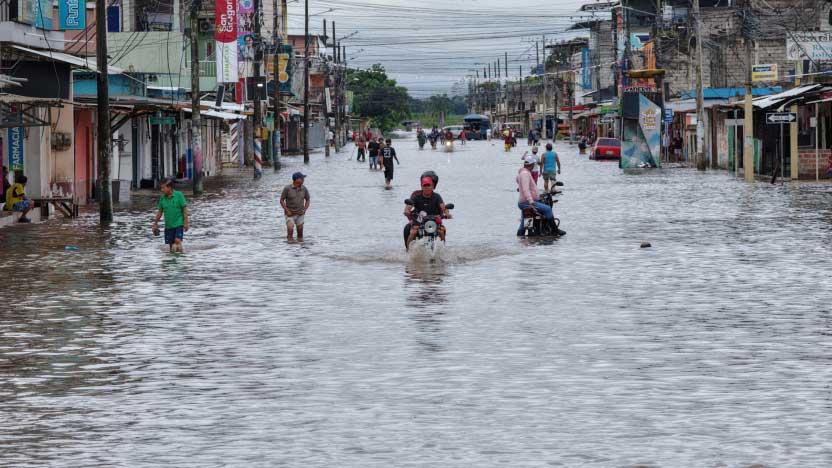
Emergency declared as winter rains batter Ecuador, damaging homes, schools and critical infrastructure.

Goleada fuel subsidy probe puts Guayaquil mayor and business network under judicial scrutiny.
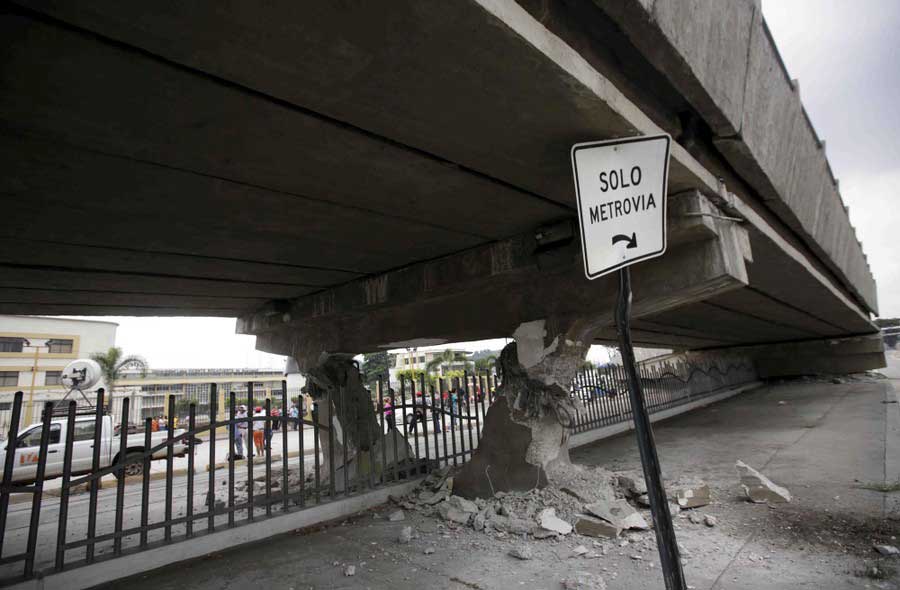
Noboa tightens spending rules on local governments amid claims of bloated payrolls.