










The city where everyone has wi-fi but nobody buys a sandwich
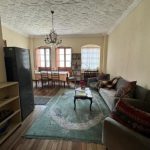
Cuenca is one of the few places left where modern life and old life still share the same room without arguing, so you can be sitting in a kitchen with a plastic dish rack, a two-burner stove, and a refrigerator that looks as if it was purchased shortly after the first moon landing, while at the same time streaming YouTube in HD on a smartphone more powerful than the computers that NASA used for that moon landing.
Nobody seems disturbed by this contradiction, and if anything the city appears to take a modest pride in it, as if Cuenca has found a way to live in the modern world without being swallowed by it.
The thought returned to me during a conversation with a middle class college-educated man who runs a print shop, the kind of place that produces the photo boards and posters that allow retired people like me to pretend we are still engaged in important artistic work, while quietly enjoying the real benefit, which is having something decent to hang on our own walls. Since another of his lines is producing handouts that largely feature the word “Promocion!” and he had just returned from lunch, I asked him a question that seemed perfectly reasonable: where is the best place to have lunch near his office?
 He paused, looked mildly perplexed, and said he did not know.
This was not because the area lacked restaurants, because there are plenty, nor because he was new to town; he has lived here all his life, and almuerzo in Cuenca is hardly a rare commodity. He did not know because he always has lunch at his father’s house.
That single sentence explained a great deal, because it contained a whole economic worldview, the kind that the US, Canada, and Britain once had and then misplaced somewhere between the rise of the sandwich bar and the invention of Pret a Manger. The modern expatriate brain assumes that if you are at work you must buy lunch, as if consumption is a civic duty owed to the surrounding economy: work, coffee, lunch, coffee again, and spend in order to keep spending. Somewhere in Silicon Valley a McDonalds operator even wanted to sue Apple Corp, because it was alleged that their subsidized office canteen was stealing business from local fast-food outlets.
In Cuenca the contract is different, because lunch is not necessarily a purchase at all; it is often a household event, built into the family system rather than automatically outsourced to commerce. In a recent hailstorm, Charlie was invited to shelter in a barbershop where the mother of the family was spooning out rice and stew from a cooler for other family members, and this was clearly a regular feature, as I saw plates, silverware and napkins carefully arranged in a locker.
Anyone who remembers Britain in the 1950s and 60s will recognize the instinct, because ordinary working people did not buy lunch as a routine matter; they ate at home, ate at their mother’s, ate in a canteen in a school, factory, or hospital, or ate sandwiches, they brought with them wrapped in greaseproof paper, with hot tea in a thermos, when paying for food at midday, day after day, would have felt indulgent, wasteful, and faintly irresponsible. Cuenca still carries traces of that logic, which is one reason it can feel like a city that has stepped into the present while keeping an older set of economic instincts intact.
What surprises foreigners is that Cuenca also looks like a place where money is being spent, because a striking number of people wear glasses, from toddlers to seniors, and orthodontic braces are common as well. Braces are not an emergency purchase and they are not cheap; they are a long-term investment in a child’s future, requiring money, patience, and repeated appointments, which is not what real deprivation looks like.
Even glasses are not trivial in cost, because frames may be cheaper today but lenses are where the serious money lives, especially progressive lenses. I paid about $200 for my progressives, and that included the testing; reasonable compared to the United States, yes, but not cheap compared to average Ecuadorian earnings, because two hundred dollars is still a serious purchase.
So how can Cuenca appear both frugal and unexpectedly modern at the same time? The answer, I think, is that Cuenca does not spend in the foreign way, which is to pour money into convenience and daily indulgence, putting it on a credit card, and slowly going broke in the process; instead it spends selectively, directing money toward necessities, education, appearance, and household stability.
Nothing makes that clearer than school uniforms.
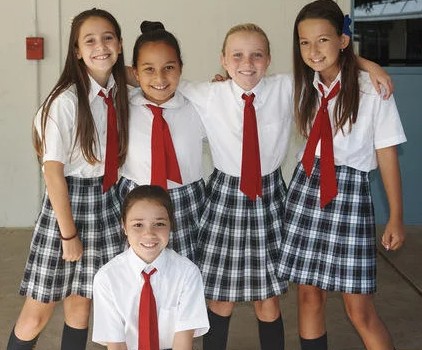
Visitors sometimes romanticize uniforms, imagining equality, discipline, and tradition, with tidy children walking to school as if they have wandered out of a 1957 documentary, but what they do not always see is the household cost, which can feel more like a small private tax. My domestic helper had to fork out $80 for her five-year-old daughter’s school uniforms, which is a large sum for clothing that the child will outgrow with depressing speed. In Florida that would be an irritation; in Cuenca it is a financial event, the kind you plan for, talk about, and absorb carefully because uniforms, like rent and electricity, are simply part of the deal.
And then there is the almuerzo, one of Cuenca’s small economic miracles, because in many countries eating lunch out is a luxury or at least a steady leak in your finances, whereas in Cuenca it can be cheaper than cooking once you factor in time and fuel. Working people eat an almuerzo for $2.50 to $3.50 and get soup, a main plate, and a drink; it is not always memorable, but lunch is not meant to be memorable, only reliable.
Which brings me back to my original question. Is the sight of glasses and braces a measure of affluence? Yes, but not in the North American sense of visible consumer excess; it is not the affluence of shiny vehicles, disposable fashion, and convenience purchases that cost more than a day’s wages, but rather a different kind of affluence that looks almost old-fashioned, namely the affluence of stability. It is the ability to correct vision so you can work or study, the willingness to straighten teeth because a straight smile is seen as part of a child’s future, and the capacity to pay $80 for uniforms without the household tipping into crisis.
And perhaps the most revealing sign of all is the ability to say, with total sincerity, that you do not know where to have lunch near your office because you always eat at your father’s house. In Cuenca that is not backward, not quaint, and certainly not poor; it is a system, and it may be one of the reasons the city still works as well as it does.


Hogar Esperanza News

Fabianos Pizzeria News

Fund Grace News

The Cuenca Dispatch

Week of September 20
Ecuador turns to industrial power cuts to protect Mazar and keep homes from going dark.
Ecuador raises its 2026 growth forecast, but El Niño could spoil the outlook next year.
Cuenca retirees challenge medical and therapy changes at IESS senior center.