










Drinking wine isn’t risk-free, but it is probably not the biggest health threat on your table
By Kathleen Willcox
Every time you get out of bed, leave your home, or just take a breath, you take a risk. Just ask your overprotective, hypochondriac grandfather: you could catch someone’s nasty germs, sprain your ankle, get hit by a vehicle driven by some nut, and so much more.
Many things in life, even seemingly ordinary ones, carry some risk. But some risks are greater than others. And while “casually sipping a glass of wine with friends over dinner” wasn’t seen as a risky activity before a few years ago, a concerted effort on the part of various governmental bodies (including reports from some with curious financial interests) and certain media outlets (with questionable motives) have led me to question just how much damage that organic Pinot Noir is going to do.
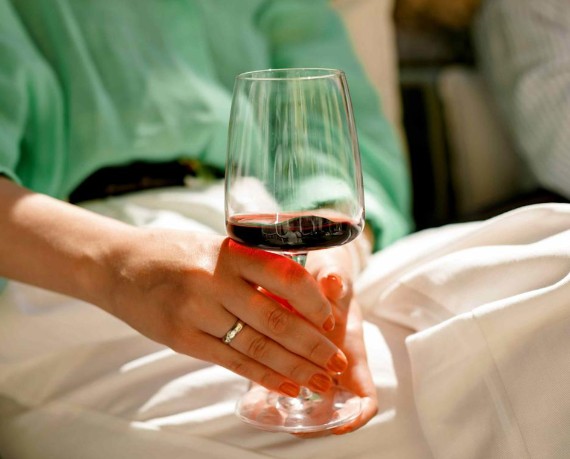 In 2023, the World Health Organization, whose alcohol policies are funded in part by temperance and neo-Prohibitionist organizations, declared that “no amount of alcohol” is “safe.” At this point, enjoying a glass of wine can feel like we are doing the statistical equivalent of jumping into shark-infested waters with flesh wounds.
But just how risky is drinking in moderation?
How moderate alcohol-related risks get mischaracterized
Journalists (this one included) are generally not trained statisticians. Just like a person who has devoted their life to crunching data may not be the best candidate to describe a great, single-vineyard Cabernet Sauvignon from an old-vine vineyard in high-elevation volcanic terroir.
Writers often unintentionally exaggerate risk because they don’t present statistics in a way that reflects the actual risk, says Creina Stockley, PhD, MBA. Stockley is a lecturer at Adelaide University and co-director of the International Scientific Forum on Alcohol Research.
“A common communication error in alcohol epidemiology is inflating small absolute risks by reporting only relative risk,” says Stockley.
Example, please?
“Imagine a study that finds that regular drinkers have a 10% higher risk of esophageal cancer,” says Stockley. “If the baseline risk of non-drinker is 1.3 cases per 100 people over a lifetime, and drinkers have 1.43 cases per 100 people, that constitutes a 10% increase.”
Frequently, that will be reported as alcohol boosts cancer risk by 10%. That sounds, and is, dramatic.
“But communicated in absolute terms, it becomes, ‘Your lifetime risk may rise from 1.3% to 1.43%,’ ” says Stockley. “Both statements are true, but one is calm and informative, while [the other sounds] frightening.”
“Most moderate-wine risk communications stem from relative risk inflation, and from lumping all drinkers together, not from the biological effects of a single small glass with food. Many everyday behaviors carry far greater metabolic or injury risks,” says Stockley.
Other health risks get downplayed
For a variety of potentially ideologically and economically motivated reasons, the risk of a glass of wine may be portrayed and perceived as riskier than, say, merrily snapping into a Slim Jim, or an afternoon scrolling TikTok.
But to consume ultra-processed foods is one of the worst things we can do for our health, says Dr. Jason Schroder, DO, medical director and cofounder of Craft Body Scan in Tulsa, Oklahoma, which specializes in early detection of disease through advanced imaging. Schroder has spent years treating patients recovering from cardiac and pulmonary crises, or those seeking to prevent them.
“Even a single serving of ultra-processed food a day measurably increases C-reactive protein, which is your body’s main measure of inflammation,” says Schroder. “Plus, a pattern of daily consumption results in the suppression of satiety hormones, while leading to excess calorie intake.”
In other words, that bowl of cereal or slice of pizza is a “direct driver of weight gain and obesity,” he says. “Eating just a little of the wrong things consistently for years compounds quickly.”
Basic nutritional knowledge informs us that chowing down on fast food on a daily basis is a bad idea. But what about some of the smaller “treats” we allow ourselves? And what about many of the so-marketed health foods we eat and feel good about?
The bad news on bacon
Life without bacon is almost as unimaginable as one without Sauvy B. But both are considered Class 1 carcinogens by health organizations that include the WHO, alongside asbestos and tobacco.
If folks were to give up one, Stockley recommends to leave the salt-cured, smoked hog bits behind. She says that bacon raises sodium intake, which can contribute to increased blood pressure.
“A bacon sandwich, or even a slice or two, increases cancer and cardiometabolic risk more than one daily glass of wine,” she says.
Chew over seasoned chips
I love a Cool Ranch Dorito, and I’m a fan of pairing it with a chilled, traditional-method California sparkling wine. But my affection for ultra-processed seasoned chips may be linked to a spike in blood sugar, LDL oxidation, and chronic inflammation, says Stockley.
“Regular intake of ultra-processed chips raises obesity and cardiovascular risk far more than wine consumed in moderation,” she says, adding that the rise in blood sugar is due to refined starch and flavorings. “A bag of these chips produces more metabolic and inflammatory harm than a daily glass of wine. There’s also a stronger association with depression risk with [high consumption of] ultra-processed chips than there is with moderate wine consumption.”
“Personally, I believe ultra-processed ‘health’ foods may be more dangerous than obvious junk because they bypass skepticism. No one thinks a hot dog is a wellness product, but a product labeled ‘protein,’ ‘natural,’ or ‘whole grain’ creates complacency,” says bariatric surgeon Dr. Hector Perez, an advisor at BestSurgeons.com
Gander your granola bars
Marketed with buzzwords like “high-fiber,” “protein-packed,” and “organic,” many think granola bars are healthy.
“As a bariatric surgeon, this one is very upsetting for me, because oftentimes, my patients strive to eat healthier, and end up being the victims of cleverly marketed ‘health foods’ that are anything but,” says Perez, a board-certified. “Most commercial granola bars are candy bars with better PR.”
Instead of fiber-packed, protein-rich paragons of health, these bars are typically “a slurry of brown rice syrup, tapioca syrup, honey, or cane sugar binding together refined oats and seed oils,” says Perez. “Many bars contain 12 to 20 grams of added sugar, meaning the glycemic response looks a lot like what you’d have with a cookie.”
Study the salad dressing
Prepare to be triggered, salad eaters.
“If you’re wondering why you’re stuck at the same weight after having salads the whole month, throw away your saucy, grocery-store salad dressing and try again,” says Perez. “I’ve seen people proudly build a vegetable-based meal and then pour 250 calories worth of soybean oil, sugar, and stabilizers on top.”
Many dressings contain added sugars to balance acidity, plus industrial seed oils high in Omega-6 fats, which Perez says can promote inflammation in excess. It’s important to review ingredients and nutritional information to ensure they align with your own individual needs and goals, while still keeping up with the healthy salad-eating habit overall.
“Personally, I believe ultra-processed ‘health’ foods may be more dangerous than obvious junk food because they bypass skepticism,” says Perez. “No one thinks a hot dog is a wellness product, but a product labeled ‘protein,’ ‘natural,’ or ‘whole grain’ creates complacency. My patients defend these foods more fiercely than soda.”
Which is worse — wine or social media?
Food is one thing. But what about other daily habits that many of us have? How do those risks stack up against wine?
Take social media. The average person spends about two-and-a-half hours per day on social media, while teens spend close to five hours. That time may be much more harmful than pairing a glass of wine with food.
“Heavy daily use of social media, which I define as two or more hours a day, has strong correlations with increased anxiety, depression, and body dissatisfaction,” says Stockley. “It can increase stress and disrupt sleep. The risk effect sizes are far larger with social media than a glass of wine.”
Comparing absolute risk with precision is difficult. But it seems like wine, unlike granola bars, has a PR problem. It’s one compounded by a lack of context and finesse in the way that its true risk is presented when compared with other things we eat and do without a second thought.
“Most moderate-wine risk communications stem from relative risk inflation, and from lumping all drinkers together, not from the biological effects of a single small glass with food,” says Stockley. “Many everyday behaviors carry far greater metabolic or injury risks. Ultra-processed foods, sedentary lifestyles, and mental health-shaping exposures such as excessive social media consistently show larger, clearer, and more harmful risk signals.”
Is wine risk-free?
Of course not. But when you take all things into health-conscious consideration, you may be better off sipping that glass of Champagne than enjoying a BLT.
“Regular intake of ultra-processed foods has been linked to long-term health risks, including heart disease, diabetes, obesity, and certain types of cancer,” says Rachael Ajmera, a registered dietitian and founder of healthy eating website Nutrimental. “On the other hand, having a glass of wine has actually been tied to some benefits for heart health, thanks to the presence of compounds like resveratrol. No benefits have been found for daily intake of processed meats or foods high in added sugar.”
The problem, Ajmera says, is when moderate intake turns into excessive intake. “Moderate intake is defined as up to one drink per day for women, and up to two drinks per day for men,” she says.
Everything in life is seeded with risk. Some activities — running with the bulls, heli-skiing — almost serve as a thumb-nosed dare to fate. But wine paired with food and good company?
As long as it follows moderation guidelines, not only will that wine potentially boost heart health, it’s also a toast to 8,000 years of communal joy, human connection, and the art and craft of turning grapes into an ageworthy tipple.
_________________
Credit: Food & Wine