









Ecuador claims 28% drop in homicides, increase in arrests, during new anti-crime campaign
Ecuador is claiming it has achieved “concrete results” in its fight against organized crime, as the country joins forces with the United States to conduct an anti-cartel military offensive.
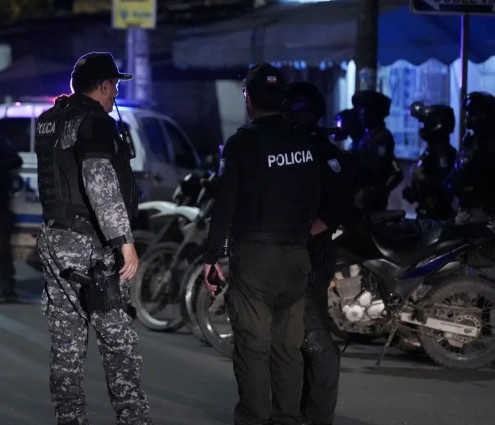
In March, the government imposed nighttime curfews in four provinces.
On Wednesday, the government of President Daniel Noboa announced that intentional homicides in March had decreased by 28 percent, compared to the same month last year.
Interior Minister John Reimberg added that 4,300 people had been arrested nationwide as part of the recent crime crackdown, and 2,200 search warrants had been executed.
In a social media post, Reimberg credited Noboa’s leadership and the work of the Security Bloc — a blended task force composed of national police and military members — for the arrests.
“President Daniel Noboa’s firm decisions to confront organized crime — combined with the sustained deployment of the Security Bloc, featuring effective territorial control and a genuine presence in the country’s most critical zones — are yielding clear and measurable results,” he wrote, pledging to continue the effort.
Defense Minister Gian Carlo Loffredo echoed Reimberg’s remarks, applauding the work so far.
“They are cornered — let that be clear — and this is just the beginning,” he wrote in his own post on Wednesday.
But the crackdown has already spurred questions about potential human rights abuses, as Ecuador, the US and other countries embark on a more aggressive campaign against cartels throughout Latin America. Last week, the United Nations issued a statement citing an alleged increase in human rights violations during current law enforcement operations.
President Noboa had run for re-election last year on the pledge that he would combat violent crime in the country, which surged after the start of the COVID-19 pandemic.
Since then, Ecuador has seen an influx of criminal networks seeking to capitalize on its weakened economy and strategic position on the Pacific Ocean, between major cocaine producers like Colombia and Peru.
The country’s reputation as an “island of peace” in South America has largely been overshadowed by the spiralling homicide rate, which is now among the highest in the region.
But Noboa has struggled to bring that rate down. Last year, as he embarked on his first full term as president, the country saw a more than 30-percent leap in homicides, with 9,216 cases recorded in 2025, compared to 7,063 in 2024.
___________________
Credit: Aljazeera