












The best hotel in the world
Scarborough was already old when the Victorians discovered it.
Long before package holidays and cheap flights, people came to this breezy Yorkshire town to take the waters, breathe the sea air and persuade themselves that exposure to the bracing breezes coming off the North Sea was good for the constitution (and if you had TB it probably was).
The arrival of the railroad transformed it into one of England’s great vacation resorts. The Grand Hotel, opened in 1867, rose above the sea like an enormous wedding cake, accommodating hundreds of guests who presumably considered a week in Scarborough the height of fashion and luxury.
 By the 1960s, Scarborough had become a more democratic pleasure ground. There were amusement arcades, donkey rides, theatres, cinemas, fish and chips, deckchairs and boarding houses run by terrifying landladies. British families arrived by train carrying suitcases, buckets and spades, and raincoats for the weather they confidently expected not to need.
Today, like most British seaside resorts, Scarborough inhabits several centuries at once. The Victorian hotels and terraces remain, although some have seen better days. There are still amusement arcades and fish and chips, but tourists can now consult their phones to find out that it is raining rather than looking out of the window.
A few miles north of town (7km), in the village of Cloughton, stands a place called Cober Hill. It is described today as a hotel, conference centre and retreat venue. None of those descriptions quite explains it. It is probably what Americans would call a resort, except that it is also a hotel. In fact it may be the best hotel in the world.
This is not because it has marble bathrooms, Egyptian cotton sheets or a swimming pool with underwater music. In the 1960s, the bedrooms did not even have television sets. As far as I remember, there was no TV anywhere in the building.
 A comparison with Ecuadorian hosterías is very apt. Both occupy the slightly eccentric territory between hotel, country retreat, family resort and function centre. They provide grounds, meals, games and communal rooms, and the attraction is partly that you remain on the property rather than merely sleep there. (The Quito Airport Inn and Suites, a handy motel with on-site alpacas, bunny rabbits, laundry, and customized excursions similarly feels like somewhere run according to its own internal logic rather than a standardized international hotel formula. They will also take care of your luggage free of charge while you hop over to the Galapagos.)
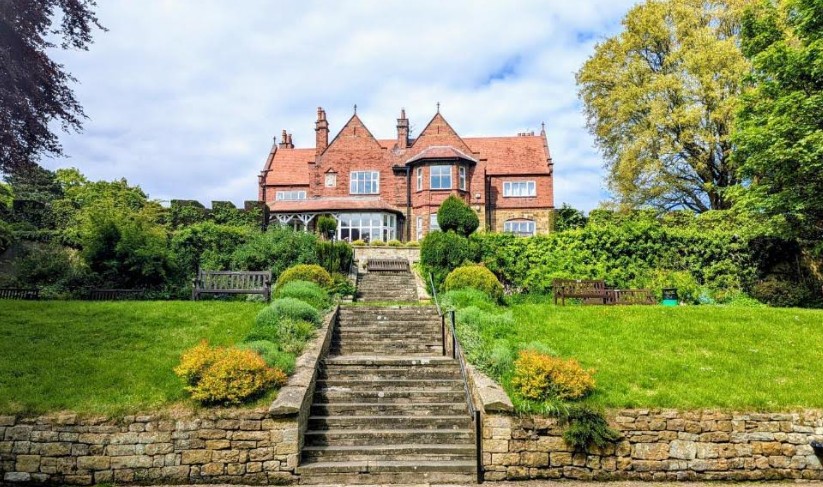
Cober Hill was a rambling Victorian mansion standing in extensive grounds overlooking the Yorkshire coast. It had croquet lawns, tennis courts and table-tennis tables. At the bottom of the garden was a pigsty, where, if you were lucky, you could see litters of baby pigs. A path led down towards a rocky beach where the North Sea arrived fresh from the Arctic, or so it seemed to a child wearing a bathing costume.
The house had been purchased in 1920 by Arnold Rowntree, a member of the Quaker chocolate-making family. The intention was to create an affordable place where Quaker families and groups could enjoy fellowship, education and refreshment in beautiful surroundings. Rowntree wanted it to be “a place of joy and beauty” and “a centre for refreshment and inspiration.”
 Remarkably, that is more or less what it became. Cober Hill was organised as a private company, but one with a decidedly uncorporate attitude towards money. I understand that it has never paid a dividend. Any profits were always invested back into the property, gradually improving the bedrooms, kitchens and other facilities while preserving the purpose for which the place had been created.
Today the hotel operation is owned by the Cober Hill Charitable Trust, and its profits continue to be used to maintain and improve Cober Hill for future generations. Even if no longer Quaker, it was capitalism without capitalists, a business run for the benefit of the people who used it rather than for shareholders waiting for a check.
My family first went to Cober Hill in 1961, when my sister Jessie was five. Jessie is now 70 and has returned every year since. When she acquired a husband, he was taken along too. When their son arrived, he joined the annual migration, and my nephew still goes today, even though he is in his forties. That is because Cober Hill is not a hotel you merely visit. It is a place that you are either born into or you marry into.
My mother continued going for the same week every year for the rest of her life and always played bridge in the same card school. When she divorced and remarried in 1980, she simply took her new husband to Cober Hill and introduced him to the friends she had already known there for nearly 20 years. No doubt they examined him carefully over tea and scones before deciding that he could stay and then dealt him into the card game.
That was how life worked in those parts. Families returned for the same week each summer and met the same families they had known the year before. Children grew up together, disappeared into adulthood and eventually returned with children of their own, because they knew this was the best hotel for families that they knew, so why not? Those children brought grandchildren, and some families have now reached the great-grandchild stage.
According to my two younger sisters, more than one marriage resulted from friendships that began between children at Cober Hill. This is family testimony rather than a peer-reviewed demographic study, but it seems entirely believable to me. If you place the same families in the same country house for the same week over several generations, sooner or later somebody is bound to marry somebody. Personally, I am kind of glad that I flew the family nest before I was old enough for romantic entanglements, otherwise I might have married someone whom my parents had known since she was a child and vice-versa.
Every summer week had its sporting championships. There were separate competitions for ladies and gentlemen in croquet, tennis and table tennis. These culminated in a formal presentation of small silver-coloured plastic trophies. The trophies were probably worth a few shillings in old money, but their value was immeasurable.
There were children’s games, card games, organised activities, concerts, and communal singing round the piano. People made their own entertainment, partly because that was what people did in those days and partly because there was no TV to provide an excuse for avoiding one another. Although I was not aware of it at the time, I daresay the mothers also liked it because they had no need to cook, mend, or wash dishes and they could talk to other mothers about how the children had grown or ‘shot up’ in popular terminology.
I last went to Cober Hill in 1965 and it was an eventful year. During that visit I went into Scarborough and saw the Beatles film A Hard Day’s Night. It was shown on a double bill with a film about Hank Williams, an American country singer of whom I had never previously heard, but actually his movie seemed better than the Beatles movie which was in black and white. I also kissed my first girl. Her name might have been Ella. At this time and this age it was not romance, but kissing was a kind of communal activity. Someone would turn out the light for a few seconds and then you would kiss someone you had pretended not to notice before, although you could find their lips in the dark.
In between the Beatles, Hank Williams and kissing games, I read a Penguin paperback collection of George Orwell’s essays which I had nicked from my father, and which contained instructions for making a good pot of tea. It was an unusually concentrated dose of adolescent education: Orwell for the mind, the Beatles for the spirit and Ella for the kissing games.
I was 14 years old and I never returned there again. The next year my childhood was over and I went to Germany for the summer to learn German and saw the Iron Curtain. Cober Hill therefore survives in my mind as a place fixed in 1965, complete with croquet hoops, table-tennis bats, wooden tennis rackets in presses, communal singing, pigs in a sty at the bottom of the garden, a rocky path down to the sea, and the Beatles harmonizing somewhere in the background on a Japanese transistor radio.
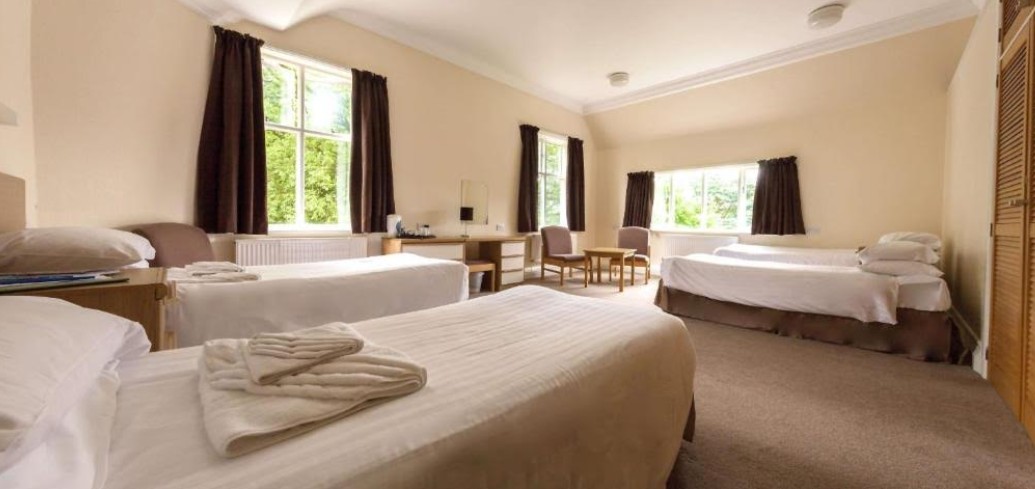
Yet Cober Hill itself did not remain frozen as the decades rolled past. Buildings were added and bedrooms acquired private bathrooms. It now hosts conferences, school visits, art courses, yoga retreats and family gatherings. There is internet service, and guests can presumably watch TV, Netflix, or YouTube on their own devices if they feel the need.
But when I recently read its reviews on TripAdvisor, I was astonished by how familiar it sounded. Guests still mention the peaceful grounds, the friendly staff, the wholesome food and the cakes and scones for afternoon tea. More importantly, they write about returning year after year after year.
One woman reported that she had holidayed there for more than 30 years and that her family had been coming for approximately 70. Another first went as a child with her parents and later returned with her own son and with friends she had met there. She said that it felt as though life had gone full circle.
That is the secret of Cober Hill. Its principal attraction was never the building, the sea view or even the scones. It was that guests kept on coming back.
Most hotels make their money by selling nights in bedrooms, but Cober Hill sold weeks in a temporary village which reappeared for one week every year. You arrived knowing who would probably be there. Children ran off with friends they had not seen for 51 weeks. Adults resumed conversations interrupted the previous August. The sporting tournaments began again, the little trophies were distributed, and another layer of memory was laid over all the previous ones.
Modern tourism promises novelty. We are encouraged to visit somewhere different, collect photographs and proceed to the next destination. Cober Hill offered almost the opposite. Its promise was that you could return and find the same people, the same games, the same walk to the beach and perhaps even the same jam and scones.
Of course, nothing remains exactly the same. The pigs left long ago and joined the bacon industry, the silver trophies may have disappeared and communal singing round the piano is unlikely to compete successfully with smartphones. My mother died in 2002. The children I knew are now in their seventies, if they are still alive.
But Jessie still goes along with her husband. Her son goes. Other families continue to arrive with their children, grandchildren and great-grandchildren.
The Grand Hotel in Scarborough may have been one of the largest and grandest hotels in Victorian Europe, but now it is a crumbling wreck. Although it has almost 11,000 reviews on TripAdvisor, the average score is 2.4 out of 5. Cober Hill never offered that kind of magnificence, but today it is better than ever and averages a score of 4.5 and is rated “#1 Best Value of 286 places to stay in Scarborough.”
The numbers probably don’t lie, but to my mind It offered something rather unusual. It allowed people to return to the same place until strangers became friends, friends became families and a summer holiday became an inheritance.
That is why it may have been the best hotel in the world.
If you are visiting England and would like to stay at Cober Hill, you probably need to make a reservation several months ahead, but it can be done at their Web site or by sending an email. And to save time, you might as well make a reservation for the following year while you are at it.