















Could Gringolandia become a power plant?
A power plant usually has a dam, a turbine or a chimney. In the chilly New England state of Vermont, one increasingly looks like somebody’s house or apartment.
The American state has been installing batteries in homes whose owners are tired of losing electricity during storms. According to a recent BBC report, more than 5,500 customers now have home battery systems through their utility. For $55 a month, a participating household can lease two batteries for ten years. The batteries keep the lights on when a power line comes down.
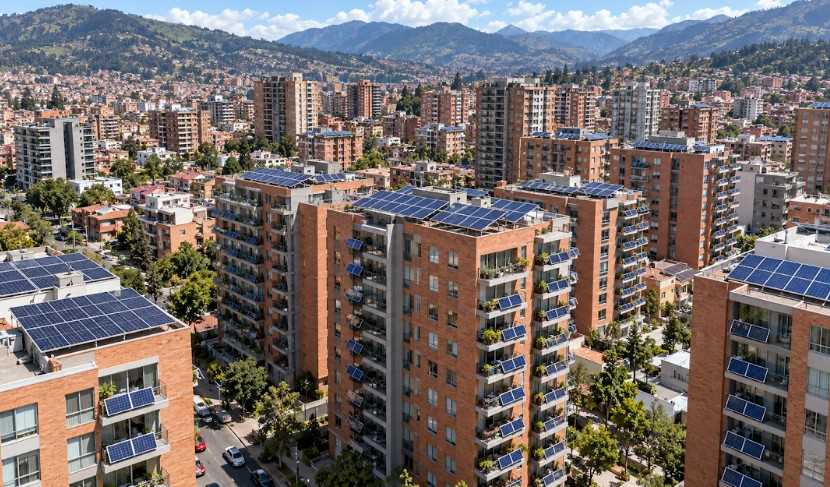 There is a second part to the arrangement. When electricity is plentiful, the batteries charge and then when demand rises, the utility can draw on some of their stored power, while leaving a reserve for the household. Software coordinates thousands of batteries so that, together, they behave rather like a power station. The name for this is a virtual power plant.
I have a small battery array in my Cuenca apartment. It can keep the internet, television and a few lights going. On its own, it will not impress anyone at the national electricity control centre, but if you connected enough batteries to a properly managed grid, the math would look more promising.
Could Ecuador do something similar? Possibly. But first we need to ask why the electricity has gone off.
Suppose a storm brings down a line in your neighbourhood, or a transformer fails. A charged battery in your home can keep selected appliances running while the repair crew works. It need not send any power at all to the grid to be useful. For that kind of outage, Vermont’s experience is directly relevant.
Ecuador’s power supply problem is rather different. When too little rain reaches the rivers that feed the hydroelectric system, there may be too little power available for the entire country as hydroelectric turbines cannot work on a trickle charge. A battery can supply power for a few hours, but it cannot replace weeks of missing rain. It is a reservoir for electricity, and, like a reservoir for water, it eventually needs refilling.
Still, “cannot solve the drought” is not the same as “cannot help.” One could imagine many batteries charging at times when there is surplus solar power, or when the grid has spare capacity, then supplying homes during the evening peak. That could reduce the amount of electricity Ecuador needs when demand peaks. On a day of scheduled cuts, a household might also get through its allotted outage without losing the refrigerator, internet or a medical device like a C-Pap.
The condition is that the batteries must be able to recharge. If Ecuador is short of electricity throughout the day, repeatedly charging batteries from the grid adds a little demand to the total because energy is lost in the process of converting main power into battery storage. Moving electricity from noon to evening may be useful, but pretending that the move creates new electricity serves no useful purpose.
Solar panels could improve the arrangement, particularly if their output helps charge batteries when hydroelectric production is constrained. But in a Cuenca apartment, the promising patch of sunshine may fall on somebody else’s roof. A balcony panel can help an individual household, but an array of balcony batteries is unlikely to turn an entire apartment block into a generating station.
There are practical questions, too. Vermont’s utility has a programme, compatible equipment, installers and a way to control the batteries while protecting a household’s backup reserve. Ecuador would need rules for connections to the grid (which are currently complex), suitable two-way meters, payment or bill credits, and a convincing reason for customers to let the utility use batteries they bought for their own emergencies. An ordinary portable power station cannot simply be plugged into a wall socket to supply the neighbourhood.
The most sensible Ecuadorian version might begin with larger, easier sites: businesses, public buildings, hotels, or apartment complexes with suitable roofs for solar panels and properly installed batteries. Homes could join where the equipment and economics make sense. Whether that is cheaper than other ways of adding generation and storage is a whole new question to which I do not have the answers.
Vermont has shown that a battery bought for peace of mind can also do a useful job for everyone else. In Ecuador, the personal benefit is easy to understand if you have spent an evening waiting for the lights to return so that you can take a shower. Any possible national benefit also depends on what caused them to go out. A battery can bridge a broken line or shift power from one hour to another, but if the rivers are running low for months, we must also find more electricity to put into it. Although sun and wind are obviously plentiful in Ecuador, capital equipment and distribution costs are variables in an equation that could switch the amount of dollars generated from plus to minus.
_________________
Source for the Vermont programme: the BBC article supplied, with the lease terms and backup arrangement also confirmed by Green Mountain Power. Ecuador’s regulator lists its current distributed generation and grid rules; the Ecuadorian programme discussed here is a proposal, not an existing household scheme.