











What Haiti shows Ecuador about helicopters for hire
CNN’s recent report from Haiti describes American security entrepreneur Erik Prince helping local police fight gangs with foreign mercenaries, helicopters and exploding drones, and Ecuadorians have good reason to read it closely.
President Daniel Noboa announced a strategic alliance with Prince in March 2025 and in June of that year Interior Minister John Reimberg confirmed that the government had hired him to train police and military personnel, although neither the terms nor the cost had been disclosed. Prince had already joined an April 2025 raid involving more than 500 police officers and soldiers, which the national police said ended in 68 arrests. None of this proves that Ecuador has adopted his Haitian methods, but it makes Haiti a fair place to ask what those methods can achieve and what they cannot.
 Impoverished and historically ungovernable, Haiti was the first and only nation in the world to stage a revolution that ended slavery. When the French Revolution of 1789 proclaimed ‘Liberty, Equality, Fraternity,’ the enslaved people of what is now Haiti took those fine words rather too literally and imagined they were meant to apply to them as well. Revolutionary France did indeed abolish slavery in 1794, but brought it back in 1802 when Napoleon treated liberty as a French achievement whose benefits need not extend to the people who produced the sugar that sweetened France’s morning cafe-au-lait.
Haiti now shares the large island of Hispaniola with the relatively prosperous Dominican Republic whose coast has many all-inclusive resorts with palm-fringed beaches, and in its capital, Port-au-Prince, gangs have turned ordinary journeys into gambles, choked the main roads with extortion checkpoints and driven many families from their homes.
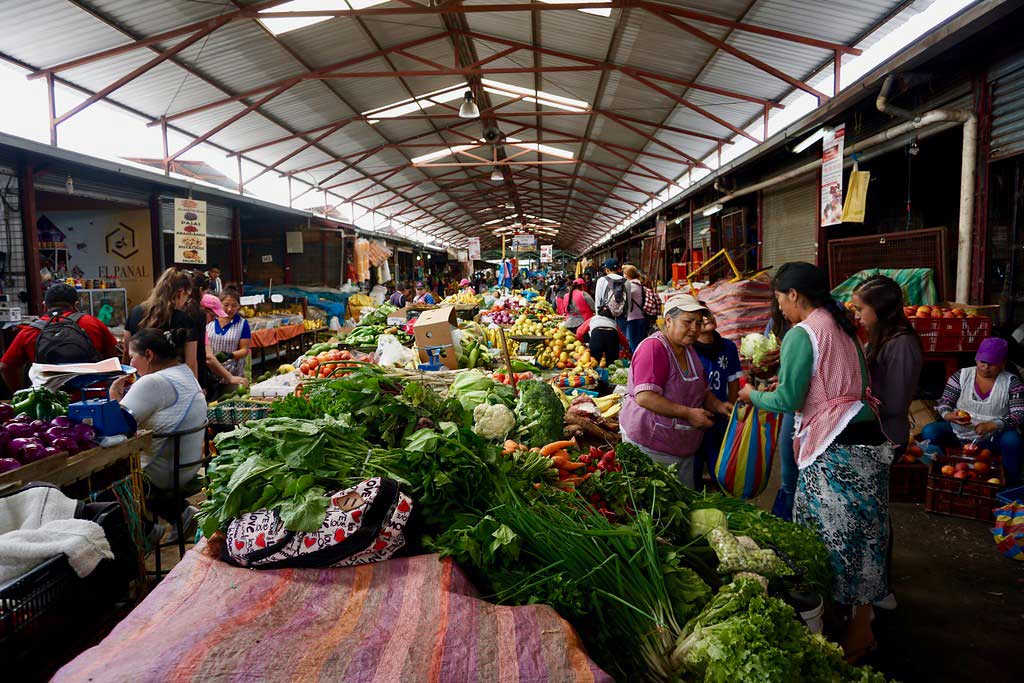
On a Cuenca sidewalk at dawn the worst hazard is usually loose paving or a stray dog, while CNN describes Haitians filing through gang territory at that same hour because their jobs still expect them to show up. Security debates tend to reward whoever sounds toughest, and that detail is a reminder that most ordinary people in Haiti only want to be able to get to work safely so that they can do their job and get paid.
Prince’s answer is forceful. His operation supports elite Haitian police, and a Task Force source told CNN it has carried out more than 2,000 drone strikes since it began. CNN also finds signs of tactical progress: it cites a United Nations assessment that security operations have halted gang expansion in parts of the capital and cleared some areas, and better air support has helped to protect police officers who used to regularly walk into ambushes with no hope of rescue.
Those benefits are real, because if you want to motivate an officer to enter a gang stronghold, he needs to know that you have his back. (On the other hand, you still cannot book an airline flight into the capital, because of the risk of it being fired at by gangs. In the unlikely case that you wish to visit Haiti, your best bet will be to fly to Santo Domingo in the Dominican Republic, and then travel by road, which is exactly what Charlie did when doing relief work following the earthquake of 2010.)
So progress has been made, but gangster toll booths still block the main highway from north to south that Prince promised to help reopen, families driven out of one community cannot safely return even after an operation declared it cleared, and the gangs are spreading into other parts of the country. The evidence supports a limited conclusion, which is that extra firepower can win local encounters, but has not yet shown that it can restore lasting public security.
Readers in Ecuador should ask themselves two questions: whether we stand in a considerably better position than Haiti, and whether we could ever end up somewhere similar.
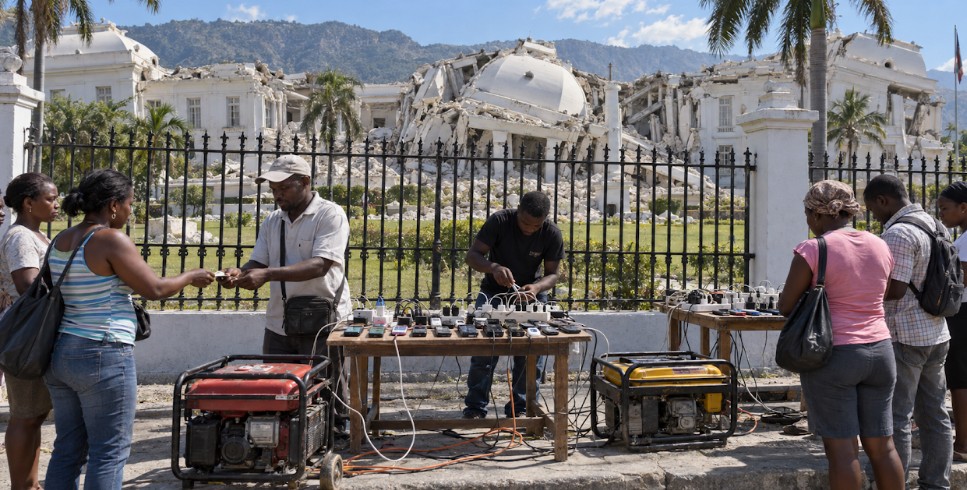
On the first, the answer is definitely yes, because Ecuador has an elected national government, working public institutions and national police and military structures, and has open roads, electricity (most of the time), piped potable water, incoming flights and tourists, while the Haiti has an unelected government, elections that keep getting postponed, and unreliable electricity, leaving those who can afford it dependent on generators, solar panels and batteries. Many families fill containers from water tankers because dependable clean water does not arrive through a household tap. Mobile phones still work if you are within signal range of a Digicell solar-powered installation, but keeping a phone charged can mean paying someone with a gas generator or solar installation to recharge it before you can Whatsapp a request for money to a family member in the US.
Conditions also differ sharply inside Ecuador, and life in Cuenca or Guayaquil is in no way interchangeable with life in a gang-dominated district of Port-au-Prince. A high national murder rate is a red flag on the railroad to the future, but it does not by itself show that the government has been derailed.
The second question deserves a more careful answer, because further deterioration is possible, although this report cannot tell us how likely a nationwide Haitian collapse is, and calling it Ecuador’s inevitable destination would be alarmism in extremis.
The more immediate danger is that individual communities develop similar conditions, with gangs dictating who can travel, who can trade and who must pay while residents stop regarding law enforcement as available or trustworthy.
A country can keep its presidential palace intact and still lose effective authority over parts of its territory. The warning signs include spreading criminal checkpoints, schools and businesses closing under threat, public officials abandoning their posts and extortion becoming an accepted cost of daily life. Those are the indicators to monitor, not a description of Ecuador as a whole or the weight of cocaine confiscated.
The two crises also differ in origin, because Ecuador’s place in the international cocaine trade hands its criminal organizations money and opportunities that follow from its geography and economy, while Haiti’s crisis grows out of poverty, political breakdown, and severely weakened security institutions. Similar symptoms do not guarantee the same course or call for the same treatment. Even so, both countries show that criminal organizations take power wherever lawful authority is absent, compromised or afraid.
Ecuador’s Metástasis case illustrates the point clearly. In November 2024 a national court convicted 20 defendants, among them judges, prosecutors, senior police officers, prison officials and lawyers, who belonged to the network built around the drug trafficker Leandro Norero, and roughly a dozen others had already accepted plea deals. A gang does not have to beat every policeman if it can buy the cooperation of someone higher up the ladder of the judicial system. That gives Ecuador an advantage and a warning, because its institutions can investigate and convict corrupt insiders, but still need sustained protection against the people trying to buy them.
However it should be noted that the convictions in the Metástasis case were handed down by a panel of three magistrates, and that having a successful jury trial in such cases, even if the system allowed it in Ecuador –which it doesn’t– would probably be impossible.
The first lesson from Haiti is to plan for the day after a successful operation. Someone has to patrol the neighborhood once the special unit leaves, a shopkeeper has to be able to report extortion without the complaint reaching the extortionist, witnesses have to be able to testify safely and investigators have to build a case that survives in court.
Where those pieces are missing, clearing a neighborhood amounts to a temporary visit. Ecuador should pair targeted operations with a continuing police presence, protected investigators, accessible public services and practical support for residents. Noboa has run the fight against the gangs as an internal armed conflict against “terrorists” since 2024, and while soldiers may be needed where heavily armed criminals can overwhelm ordinary patrols, the lasting objective has to be a community where ordinary policing works again.
The second lesson is to tell the difference between reducing crime and relocating it. CNN reports that Haitian gangs under pressure are moving their territory elsewhere, and Ecuador should pay attention, because pressure on one route, prison or coastal district often gives criminals a reason to look for another. A safer street is welcome, but if the extortionists have simply moved to the next town, the national achievement is smaller than the local press conference headlines suggest.
Success should be judged by sustained changes in murders, extortion, disappearances and freedom of movement across affected and neighboring areas, since arrest totals, seized weapons and demolished buildings measure activity and do not show that people are safer.
The third lesson is about the money behind the gunmen. Ecuador’s criminal organizations profit from drug trafficking, extortion, and illegal gold mining, and arresting or killing one man does not remove the source of revenue, the corrupt protection, or the recruitment network that came with his position.
Financial investigations, scrutiny of unexplained wealth, tighter port controls and action against money laundering belong at the center of security policy, as does stopping prisoners from continuing to direct crimes outside prison walls. The Metástasis court took that approach when it ordered those convicted to pay $4 million in damages jointly and the seizure of shares in the companies involved. These measures offer fewer chances to pose beside a helicopter, but they make the next gang leader’s work harder.
The fourth lesson is that protecting civilians is very important. CNN’s tally of UN reporting attributes at least 85 civilian deaths to drone strikes in Haiti, and it describes children killed when a strike missed its target. Prince acknowledged that accidents can happen but declined to discuss specific cases. Human Rights Watch counted 141 explosive-drone strikes between March 2025 and January 2026 that killed at least 1,243 people, and it describes them as extrajudicial killings, while the Associated Press reports that the task force behind them operates outside the oversight of Haiti’s National Police.
People terrorized by gangs are entitled to effective protection, and they are entitled to expect that those providing it can tell them apart from the criminals. A family that fears both sides has less reason to give police the information that effective policing depends on, so credible investigations of suspected abuses by security personnel, along with acknowledgment and remedy of errors, serve the mission as well as justice.
The same applies to foreign assistance. Training, intelligence and specialist equipment can help Ecuador, but contracts need clear objectives, lawful limits, accountable command and independent scrutiny, and the public should be able to judge what it has bought and whether it has received value for money.
Finally, Haiti shows the danger of letting gangs top up their depleted ranks with children, and CNN cites UNICEF estimates that minors make up between 30 and 50 percent of gang membership there. Ecuador should protect children threatened with recruitment, keep schools open and offer credible ways out to those who can be rehabilitated safely. Serious crimes still require an appropriate response from the justice system, and preventing the next recruitment is also part of reducing the next murder.
Haiti offers no convincing evidence that Ecuador should buy a ready-made solution from a foreign security company, and it does not show that force is unnecessary either, since some armed criminals will have to be confronted by people equipped to stop them.
What it does show is the gap between winning a firefight and governing a neighborhood or a canton. Ecuador is considerably better placed than Haiti, and its future does not depend on Haiti’s present, but keeping that advantage means strengthening institutions before more communities decide that the gang is the only authority that reliably shows up.
After every operation the question Ecuador must ask is who stays when the helicopter gunship and the drones fly away, and the answer has to be police officers, prosecutors, teachers and clinics rather than a gang.