

















Bed and breakfast without the breakfast
On my very first visit to Cuenca, which you might call an inspection visit, I rented an unimpeachably lovely apartment just behind the university that I found on AirBnb for twenty dollars a day, including utilities. At that rate, thirty days would have cost six hundred dollars for a month, which struck me as a very agreeable introduction to life in Cuenca, since I could have afforded to rent it indefinitely at that price. There was space to live, rather than merely somewhere to put a suitcase, and I could settle into the city without calculating how much the bedroom was costing while I was out of it.
Unfortunately, this was at the height of the pandemic, when accommodation owners had more apartments available than customers. Two years later, I saw the very same pad advertised for nine hundred dollars a month on a lease. My early discovery of the secret to economical expatriate living turned out to have involved arriving during a global emergency, which is difficult to recommend as a ongoing travel strategy.
 Those who are mathematically inclined will notice that the increase was fifty per cent, although an asking price is not necessarily an achieved rent, and I do not know whether the later arrangement included all the same utilities I had for $20 per day. Nevertheless, it provides a useful starting point for discussing Airbnb, because our opinions about its value often depend on a bargain we found in another country, several years ago, when things were different.
Airbnb has recently generated another of those arguments in which the internet divides into opposing armies over a dishwasher. Some owners believe guests should help prepare the property for the next arrival, while some guests believe that paying for accommodation, especially with a cleaning fee attached, should exempt them from everything beyond finding the exit. Between these positions lies a substantial population who would take it for granted that they would wash and dry their breakfast dishes without expecting either a medal or a dispute.
The immediate cause is a new Airbnb policy, announced in October and taking effect on November 20, 2026. It generally rules out asking guests to strip beds, start laundry, wash and put away dishes, or take out the garbage. Gathering used towels, putting dishes in the sink and separating rubbish into designated indoor bins remain acceptable requests, with some allowances possible for local circumstances.
I have stayed in Airbnbs in a few countries, and I would normally wash up after myself, leave things reasonably clean and tidy and avoid running up unnecessary utility bills just for the heck of it. If I had been cooking for a week, I would not regard the departure date as permission to leave the kitchen sink full of sugar ants and cockroaches. Starting a dishwasher, if supplied, seems a modest courtesy, particularly when its contents could be clean and ready to put away before the cleaner arrives.
The owners have a practical point here. Pressing a button takes seconds, but the machine may run for two hours, so the benefit is having the cycle finished before the next stage of cleaning begins. However, a sensible business cannot depend entirely on a departing guest remembering the correct programme while looking for a passport and waiting for a taxi for a 6:00 am departure at the airport. A helpful favor becomes less agreeable when it appears on a mandatory checklist, accompanied by the possibility of a black mark against one’s name on a global Web site.
Cleaning charges add another complication, especially when they seem to multiply without any supplementary cleaning being done. A single charge for preparing an apartment after departure is understandable, because changing bedding and cleaning a bathroom costs money whichever way you slice it, whether the guest stayed two nights or ten nights. A daily cleaning charge, when nobody cleans during the visit, makes you wonder what you are paying for.
It may simply be part of the rental price wearing a different hat. Calling it cleaning does not automatically exempt it from tax or Airbnb commission, and the platform normally includes host-added cleaning fees when calculating its service charge. Nor is an owner doing the cleaning personally necessarily collecting money under false pretences, since their labour has a value too. The more important question is whether the price and the service have been honestly described.
Utilities are another area where the interests of owner and guest can diverge. My most recent landlord in Britain was very insistent about turning down the central heating below 70 degrees, including on damp, chilly summer evenings when turning it up a little higher seemed to me the more attractive option. Heating fuel and gas are expensive, and I could understand his concern, although understanding that the landlord has to pay a bill does not make one’s feet any warmer.
An owner who includes heating in the price is accepting a cost that varies with the weather, the climate, and the habits of the occupant. The occupant, meanwhile, may reasonably suppose that a furnished rental in Britain includes being sufficiently warm to sit down without retaining most of one’s outdoor clothing and two pairs of socks. Both parties can consider themselves entirely reasonable while conducting an increasingly frank and candid diplomatic conversation, each with one hand on the thermostat.
Florida presents the opposite problem. Depending on the season and the property, air conditioning may need to run around the clock, even though the compressor cycles rather than operating continuously. It controls humidity as well as temperature, and switching everything off can have consequences beyond making the returning guest uncomfortable. An apartment in Cuenca, a British flat in cold weather and a Florida condo rental in humid heat therefore have quite different running costs, even if their photographs all show similarly cheerful rattan sofas with floral cushions.
Airbnb’s new guidance recognises at least part of this distinction: an owner can ask guests to turn off air conditioning when they leave, but should not advertise an amenity and then discourage them from using it. My preference would be for sensible, property-specific instructions agreed in advance, rather than discovering after arrival that comfortable temperatures are available only in the photographs.
In Ecuador, there is also the growing importance of operating formally. Residential tourist accommodation has had its own regulatory framework since 2023, and providing it through an app does not remove the requirements for tax registration, tourism registration and the appropriate annual operating licence.
In May 2026, the SRI announced that it had notified nine thousand accommodation providers using platforms including Airbnb and Booking to regularize their tax affairs. The spare apartment has become considerably harder to treat as invisible income.
The tax position is more complicated than adding a single percentage to every booking. The SRI’s accommodation guidance distinguishes between tax regimes, while qualifying foreign tourists can receive accommodation at zero per cent IVA from establishments with the required tourism registration and licence.
Foreign residents and visa holders should note that carrying a foreign passport does not itself qualify them for that tourist concession; Ecuadorian residency matters, which means people like me, and perhaps you, cannot assume we receive the same treatment as someone arriving for a short bird-watching vacation.
These obligations cost owners time and money, but hotels have a fair complaint if their competitors expect to provide essentially the same service without meeting the relevant requirements. Hotels can themselves sell rooms through Airbnb, subject to the platform’s standards and proper licensing, so the name on the booking website does not necessarily tell you what sort of business is behind the front door. You may be dealing with someone renting a spare bedroom, an owner with one apartment, a management company or a perfectly conventional hotel.
There is also something a bit odd about a business whose name began as “Air Bed and Breakfast” but now generally supplies neither air nor breakfast. I am happy to accept real beds with proper pillows instead of an airbed on someone’s living room floor, although the breakfast that has long since vanished from the menu seems to have attracted a lot less attention than whether I have loaded the dishwasher. Somewhere along the way, bacon and eggs and coffee became my own responsibility, followed by an international argument about who should wash the plate.
Whether the result is good value depends largely on what you need. For one night, a hotel with reception, luggage storage and breakfast, and a concierge to call a trusted taxi may beat an apartment whose check-in involves three messages, a key box, and a photograph of the wrong entrance. For a couple of weeks, a kitchen, washing machine and separate living room can make an enormous difference, while a family needing two bedrooms should compare the price of the apartment with suitable hotel accommodation rather than whichever single room happens to be cheapest.
The comparison also needs to use the final price. Cleaning, taxes, platform charges, payment costs and any separately charged utilities all belong in the calculation, along with what cooking a few meals might save over eating in restaurants. Countries differ in their taxes, labour costs and competing accommodation, but variation within a country can be just as significant. There is no particularly useful worldwide answer to whether Airbnb is cheap or good value, any more than there is to whether restaurants are expensive.
When I have liked a place and wanted to return or extend my stay, I have often contacted the owner directly to negotiate. There is a very obvious attraction in dealing with somebody whose apartment you already know, although Airbnb’s current policy expressly requires platform-originated extensions and repeat bookings to remain on the platform. A direct arrangement also means relying on your agreement with the owner rather than the platform’s booking protections, which makes a clear written understanding worth having.
I would still happily rent a good apartment from Airbnb at a fair price, and I would probably still wash the dishes before leaving. What I want is to know beforehand how much the stay will cost, whether I can keep reasonably warm or cool, and how much of the morning of departure has been allocated to domestic service. My twenty-dollars a night Cuenca apartment remains a fond memory, but these days I would read the instructions very carefully as I admire the view of the New Cathedral shot from the roof of the building with a telephoto lens.



Hogar Esperanza News

Fund Grace News

Fabianos Pizzeria News

The Cuenca Dispatch

Week of October 25

Ecuador heads into a four-day November holiday built around Cuenca’s Independence Day.
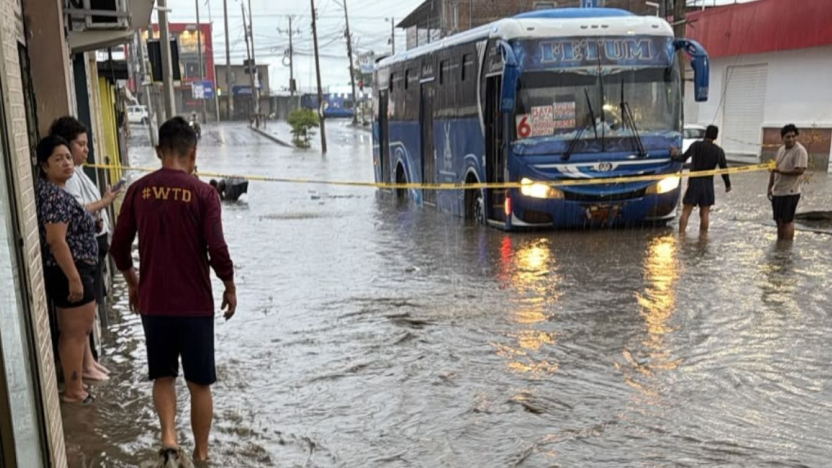
El Niño’s early rains have already affected more than 30,000 people across Ecuador.

Exporters press Constitutional Court to move three major trade agreements forward
Manabi property
