









Cuenca’s 330 independence holiday events. Carlos asked who gets the business

Azuay’s master bakers participate in Cuenca’s Artisan’s Day Parade on November 5, 2026, with a float decorated with bread. Photo: Chase Squires, Cuenca.
Strong holiday figures tell one story. The people behind the counters have more questions worth asking.
Carlos wanted to know what Cuenca’s 330 events had meant for the people working through them. Tom had arrived at the bakery with a simpler assessment.
“Wonderful celebrations,” he said. “The city was full.”
“Good,” Carlos said. “What did you buy?”
Tom considered the question. “Lunch. Coffee. Something Elaine said we didn’t need.”
“Then you participated in the economy.”
“I thought I was enjoying myself.”
“Sometimes we get both.”
Carlos smiled and reached for a paper bag. He liked a celebration. He also knew that the work began before the first visitor arrived and continued after the music stopped.
Bread required flour, time and someone willing to start early. A crowd could arrive unexpectedly. The dough needed notice.
What did the holiday figures actually show?
Cuenca’s reported holiday results showed strong hotel demand and substantial sales at specified fairs, although they did not establish every business’s profit.
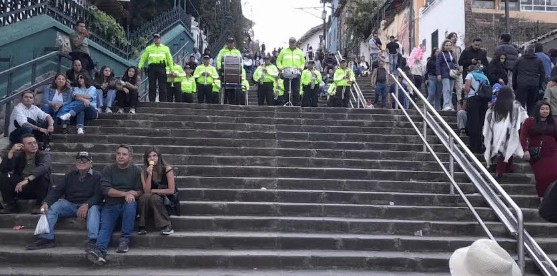
A police band performs on the escalinata near Parque de la Madre as spectators gather on the steps. Photo: Jim Smith.
The municipal balance, presented November 4 and reported by Metro Ecuador and Teleamazonas, estimated $38.2 million in economic activity during the October 31 to November 3 holiday. Reported average hotel occupancy reached 89.22%.
Those are encouraging results. They deserve a place in the story alongside the photographs of crowded streets. However, an estimated citywide economic impact is not the same measure as a business’s sales. Neither figure tells us what an owner kept after expenses.
The report also offered a closer view of some small enterprises. EDEC EP recorded $81,000 in sales across seven fair locations. Three cultural fairs contributed another $38,728, bringing the combined reported sales to $119,728. That total covers the named initiatives. It is not a count of everything sold at every stall across Cuenca.
Tom read the figures on his phone.
“That sounds like good news.”
“It does,” Carlos said. “Now ask the next question.”
“Who sold what?”
“You’re getting closer.”
How did Cuenca’s 330 events create opportunities?
The celebration program created opportunities by bringing entertainment, customers and temporary selling spaces to several parts of the city.
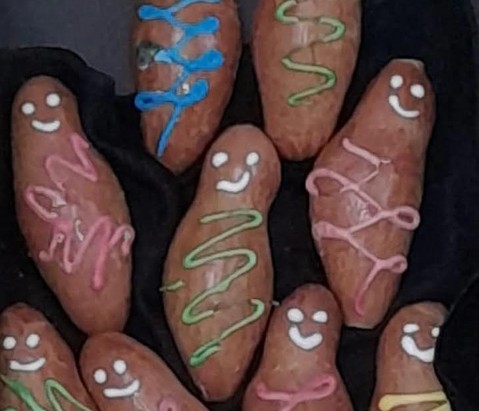
Guaguas de pan decorated with colorful icing and smiling faces are displayed at a vendor’s stall during Cuenca’s November festivities. Photo: Jim Smith.
The municipality’s October 23 announcement described more than 330 activities running from that date into December. The four-day national holiday was one part of that longer calendar, not its full duration.
Its commercial spaces included Paseo Tres de Noviembre, Avenida 12 de Abril, San Blas and Santo Domingo. The intention included helping shops, restaurants and hotels attract business.
Walking through the festivities, I photographed tent stalls along the Tomebamba, crowds beside the Broken Bridge and spectators lining the go-cart course near Todos Santos Church. A police band played on the escalinata near Parque de la Madre.
At one stall, decorated wooden objects covered the tables. At another, guaguas de pan smiled up from a black tray, their icing bright against the bread.
These were opportunities to stop, look and perhaps buy. My photographs record the displays and gatherings. They cannot tell us a vendor’s takings.
The celebration also made the work itself visible. On November 5, well-known expat Chase Squires photographed a bread-decorated float representing Azuay’s master bakers in the Artisan’s Day Parade. For a moment, a trade usually encountered across a counter occupied the street.
Carlos would have appreciated that. A baker could take pride in being seen, as well as hoping someone remembered where to buy tomorrow’s bread.
What would Paola count at her stall?
Paola would judge a holiday by what sold, what remained and the cost of having enough produce ready. When Tom reached her market stall, he was still thinking about the figures.
“Carlos says I should ask who sold what.”
“Ask who brought what, too,” Paola said, straightening a row of tomatoes.
“Isn’t that the same thing?”
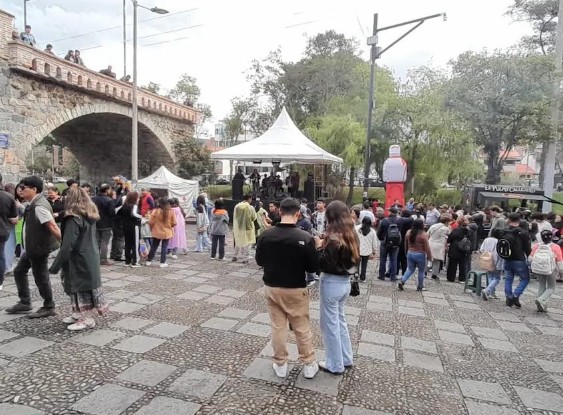
Crowds gather beside Cuenca’s Broken Bridge during the city’s independence festivities. Photo: Jim Smith.
“Only if everything sells.”
She could prepare for extra customers by buying more stock. But preparation tied up money before anyone made a purchase. Extra transport or help could add costs. Unsold produce still needed somewhere to go.
Carlos’s bread and Paola’s vegetables had that much in common. Neither could wait indefinitely for a customer to reconsider.
“Perhaps holiday prices should be higher,” Tom suggested.
“Some customers remember what tomatoes cost last Tuesday.”
“A disadvantage of becoming a regular.”
“For whom?”
Paola had another question for Carlos. Could a visitor buy his bread, like it and return the following morning? Her own customers might already have bought their vegetables before going out to celebrate.
The same crowd could create different opportunities for two businesses. Location mattered. So did the product, the customer’s plans and the chance of another visit.
The published totals did not break down individual vendors’ costs, unsold stock or earnings. Without those details, nobody could fairly turn the figures into a verdict on Paola’s stall or Carlos’s bakery.
What else did the celebrations make visible?
The festivities made local skills and working identities visible alongside the goods offered for sale.
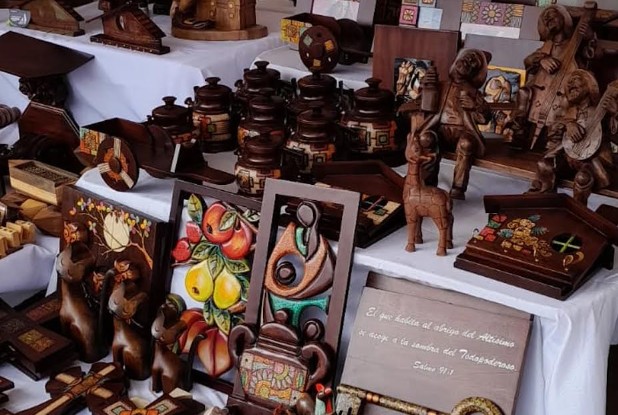
Carved figures, decorated boxes and other craft items fill a vendor’s display during Cuenca’s November festivities. Photo: Jim Smith.
The Artisan’s Day Parade carried the theme “Manos que crean, historias que perduran,” or “Hands that create, stories that endure.” Bakers marched as members of a trade. Other participants carried their association’s banner through the historic streets. That recognition mattered independently of any cash register. A city has reasons to celebrate its people, its traditions and the pleasure of gathering together.
Still, admiration and a purchase do different things. Someone could enjoy a craft display, praise the workmanship and leave without buying. The praise might be sincere. The seller would still have stock to pack away.
Nor could the fair sales figure answer every question about neighborhood commerce. It covered particular selling spaces, not a representative account of every shop’s holiday.
“So was it a successful celebration?” Tom asked Carlos later.
“We can enjoy what went well,” Carlos said. “We can also ask what would help next time.”
What happens after the visitors leave?
Repeat customers can carry a holiday opportunity into ordinary business after the crowds move on.
Tom had begun the week noticing how much the city offered him: music, food, busy streets and places to wander. Carlos and Paola were thinking about what it took to offer those things. That did not make his enjoyment foolish. It gave him more to notice the next time he stopped at a counter.
Cuenca’s 330 events created occasions to discover businesses and the people behind them. Their longer value also depends on what follows: another visit, a recommendation, an ordinary purchase on an ordinary day.
At the bakery, Carlos folded the top of Tom’s bag.
“Perhaps the city should organize another festival,” Tom said.
“I have a better idea.”
“What?”
“Come back tomorrow and buy another loaf.”
See the crowds, crafts and people behind Cuenca’s celebrations in our accompanying Instagram carousel.
When a familiar role changes, the skills behind it may still have a place. Our Next Cradle companion, The Role Changed. The Skill Didn’t Disappear, explores what that can mean.
________________
Author’s note
Carlos, Paola and Tom are recurring fictional characters. Their conversations illustrate questions about local commerce; they are not interviews or reports of particular businesses’ financial results. The photographs are my own. The holiday figures come from the reporting sources below.
Reporting sources
- Municipality of Cuenca, official celebration announcement, October 23, 2026: program scope, dates, selling locations and economic objectives.
- Metro Ecuador, municipal holiday balance, November 4, 2026: estimated economic activity, hotel occupancy and specified fair sales.
- Teleamazonas, holiday economic report, November 4, 2026: corroborating coverage of the same municipal balance, not an independent measurement.