










How Roundup lost and superweeds won but chemical companies and Big Ag continue to profit
By Drs. Robert Malone and Jill Glasspool Malone
Thirty years ago, Monsanto introduced Roundup Ready crops with a promise that sounded almost too good to be true: farmers could spray entire fields with glyphosate, killing weeds while leaving their genetically engineered crops unharmed. It was simple, inexpensive, and enormously profitable. But the weeds adapted, and the chemical industry kept selling more chemicals.
Today, 62 weed species across 31 countries have developed resistance to glyphosate. In America’s corn, soybean, and cotton fields, aggressive weeds such as Palmer amaranth and waterhemp can reach ten feet tall, produce hundreds of thousands of seeds, and devastate crop yields. Worse, some populations now survive the replacement herbicides introduced when Roundup stopped working. In Illinois, waterhemp populations have developed resistance to all seven major herbicide groups historically used to kill emerged weeds in soybeans.
 This was a predictable failure, not an unforeseeable biological accident. Repeated spraying selected for resistant weeds, while chemical manufacturers profited from selling both the original herbicides and the genetically engineered seeds and replacement chemicals marketed to overcome resistance. Farmers inherited rising costs, declining effectiveness, and increasingly complicated spraying programs.
And there is a potentially devastating human cost. In 2015, the International Agency for Research on Cancer classified glyphosate as probably carcinogenic to humans. A March 2026 Food & Water Watch analysis found that 82 percent of Iowa counties with high glyphosate use and available cancer data had non-Hodgkin lymphoma rates above the national average. Nationally, 60 percent of counties in the highest fifth of glyphosate use had above-average NHL incidence. These geographic findings do not establish causation, but they reinforce concerns raised by studies of occupational pesticide exposure.
Meanwhile, farmers are being pushed toward additional herbicides, including glufosinate, dicamba, 2,4-D, and, in some weed-control programs, highly toxic paraquat. The long-term consequences of repeated exposure to combinations of these pesticides remain inadequately understood. We are escalating chemical exposure to fight weeds that are increasingly resistant to the chemicals themselves.
The regulatory system raises another troubling question. Much of the safety testing submitted for pesticide approval is conducted or financed by the companies seeking permission to sell the products. The manufacturers profit from chemical sales while supplying much of the evidence regulators use to evaluate their safety. That conflict of interest demands far greater independent scrutiny.
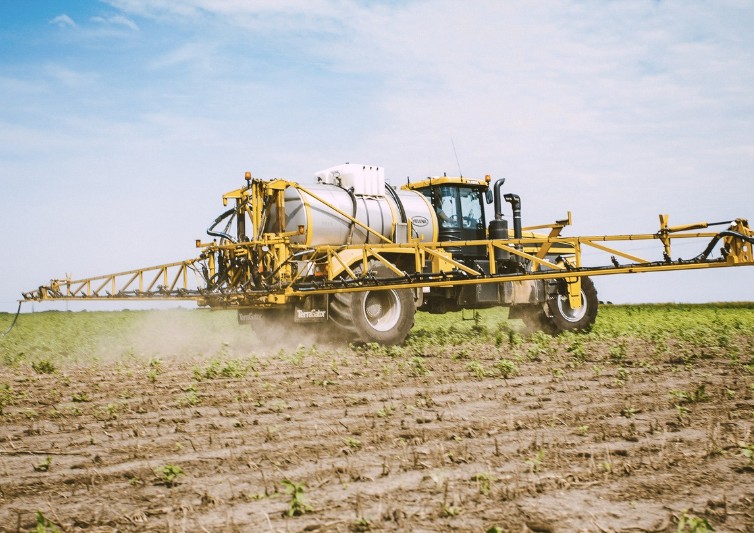
Today, 62 weed species across 31 countries have developed resistance to glyphosate.
Yet in February 2026, President Trump invoked the Defense Production Act to protect domestic glyphosate production, declaring it essential to national defense and food security. The decision provoked a backlash across the Make America Healthy Again movement. Calley Means, former senior adviser to HHS Secretary Robert F. Kennedy Jr., has challenged the national security justification and alleged that powerful lobbying interests influenced the administration’s decision.
Washington is protecting the production of a chemical that increasingly fails against some of America’s worst weeds. The government can guarantee the supply of glyphosate. It cannot force resistant weeds to start dying again.
There are alternatives. Cover crops, crop rotation, mowing, mechanical weed removal, harvest-time seed destruction, and emerging robotic technologies offer ways to control weeds without escalating chemical dependence. On our own Virginia farm, we have brought approximately 95 percent of our 30 acres of pasture under control from pigweed using mowing, weed whacking, and cover crops, without herbicides.
After thirty years, the fundamental question is no longer why Roundup cannot kill America’s worst weeds. It is why our agricultural policies continue to support a system that profits from chemical dependence while farmers, rural communities, consumers, and the environment bear the consequences.
We cannot keep spraying our way out of a problem that spraying helped create.
________________
This is the short version of a longer article about Roundup Ready and glyphosate posted on Robert Malone’s Substack page. To read the full article click here.