
















Mazar reservoir gets a break as turbines shut down
The water level at the Mazar reservoir stabilized Friday as its three downstream hydroelectric plants were left idle for most of the day. After dropping eight meters in two weeks, the reservoir showed a three-quarter meter rise Saturday morning.
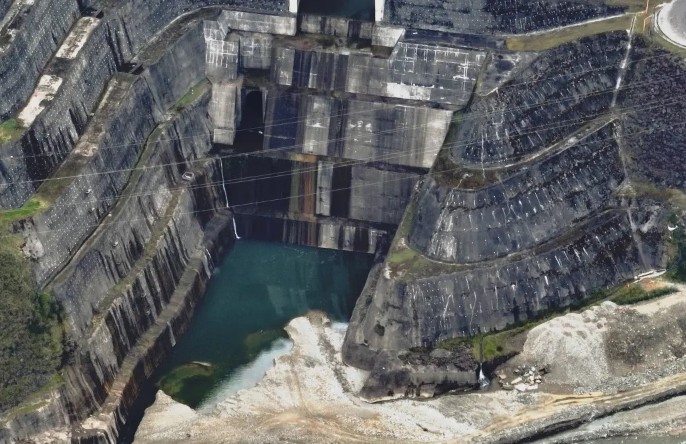
One of the dams at the Mazar hydroelectric reservoir.
At 7 a.m. Saturday, the reservoir stood at 2,120.6 meters above sea level, or 5.3 meter above the critical operational level. In mid-Augst, the level was 2,153 msl.
The flow rate of the Rio Paute, which feeds the reservoir remains low, at 35.5 cubic meters per second, less than a half of optimal flow.
The country’s largest hydro plant, Coca Codo Sinclair in Napo Province, is also affected by low water flow in the Rio Coca, 139 msl., 60% of optimal flow. Coca Codo is a flow-of-the-river facility and does not have a reservoir.
Hydroelectric expert and former CentroSur director Jorge Luis Hidalgo called the Mazar reservoir recovery good news but “small, temporary relief.” “We need much more water flowing in to reach a healthy, stable level, which means we need much more rain,” he said. “It’s important to understand that most of the relief of Thursday and Friday was achieved by turning off the turbines and these will need to restart to meet demand.”
Hidalgo added that the Mazar plants were allowed to go idle only because the government disconnected major industries and large businesses last. “This saved 450 or 500 megawatts,” he said. “The government is using industry as its safety value in the crisis.”
The weather forecast through November 25 is for light and moderate showers on the eastern slope of the Andes, where the largest hydro plants are located, while the coast and littoral region will continue to see heavy rain.