
















An expat tells how his personal experiences don’t align with many of the common stereotypes
By Steven Rigney
An oft-expressed sentiment among North American travelers is that being a gringo in a Hispanic country makes one a target. There is local pricing and then there is exploitative gringo pricing, often called the gringo tax. The police look for any opportunity to find a gringo in violation so as to require a bribe. Sometimes a bus won’t stop for a gringo. The locals look down on gringos because of the lack of Spanish-speaking skills. Listening to some gringos, there seems to be an endless supply of prejudicial grievances.
In my thirty-some years of traveling and living in Mexico and Ecuador, I have heard and read these stereotypical comments many times. I find them offensive.
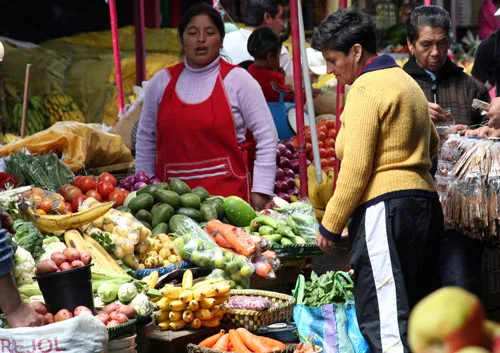 These types of comments run extremely counter to my own personal experiences. They degrade and do a disservice to the many wonderful, generous and gentle people that I have encountered in my travels, as well as the general citizenry who live in these host countries. To silently accept these comments as truth without rebuttal would be to turn my back in hypocrisy and disrespect to all the kindness, help and friendship I have been shown. So, as the Desiderata instructs, I sit and attempt to speak my truth quietly and clearly, and offer my two cents.
Many times these comments come from friends with good hearts or those for whom I otherwise have respect. For the most part I think these comments, from friend and stranger alike, are born of unthinking ignorance and lack of sensitivity to a bigger picture other than one’s own immediate experience. I find it to be a curse for us humans to think that our own narrow perspective equates to universal truth.
Of course, I can only respond to the stereotypical nature of the subject and not to others’ unique personal experiences. And admittedly, I can only offer anecdotal evidence in response. Furthermore, I am only addressing the general culture and not the subculture of the criminal class. There are bad actors everywhere and one must proceed with appropriate caution.
In an attempt to make sense of it all, I’ll resist the amateur endeavor to delve into underlying psychologies and attitudes that produce stereotypes. Instead, I’ll go directly to the whats and whys that bring me to my own perspective.
First of all, who hasn’t been cheated, gouged, or stolen from or been the victim of predatory pricing at times in one’s own home country? By the plumber, the mechanic, the salesperson, a neighbor? It doesn’t take being in a foreign country to be preyed upon. We all are P. T. Barnum’s suckers at some point. It happens to everyone everywhere!
To be sure, on occasion my ignorance has been taken advantage of while traveling by unscrupulous operators. I have also experienced many attempts to overcharge me, sometimes successfully, in large part because Hispanics are generally a negotiating culture. It’s not the vendor’s fault if the buyer does not know how to negotiate. And don’t leave your backpack unattended. It will disappear! These occurrences, however, don’t warrant a stereotype.
The reason I find these stereotypical expressions offensive is that I simply don’t find them true as a norm. They are only true to a very small degree. Therefore, if they are not significantly true, they are needlessly hurtful, judgmental and divisive and are not a positive or constructive approach to our fellow humans.
Again, this is not to say I have never been victimized. Of course, I have. I’ve also encountered unpleasant or prejudicial attitudes directed towards me by locals. It is shocking. Not so much due to feeling threatened or scorned, though these uneasy feelings naturally arise. And why wouldn’t they? It would be uncommon for a person not to feel disturbed at being shunned. I don’t enjoy being disliked for no other reason than the color of my skin, my height or my language. Neither does anyone else. Anywhere. It’s offensive, thoughtless and unjust.
The reason I am shocked at being the target of overt prejudice is because it is so rare. I am caught completely off guard the few times this has occurred. Because I think that being humble in a foreign country is respectful, as well as wise, I blithely go about my business in a friendly and courteous manner. I assume that I am accepted even with my obvious language and cultural disadvantage. I have grown accustomed to my behavior engendering a reciprocal response. My travels have shown me that we humans are overwhelmingly a kindhearted sort. Respect, generosity, helpfulness and friendliness are human traits not limited to this culture and people or that.
There is a gentleman on a street I have passed on my way to a computer repair shop near the Feria Libre. As I passed by the first time he called out to me, “Get out of my country. You don’t belong here!”
What? Whoa! I butchered a few Spanish words explaining that I meant no harm and went on my way as he continued his comments. It was unsettling.
The next couple of times, there he was again with the same message. These times I was prepared. I had practiced how to, somewhat properly, say that I live here and how much I like Ecuador. This response by no means mollified him, nor did I expect it to, but that wasn’t the point. I can only control my own behavior, which was to remain respectful and unaggressive.
Now, contrast that single experience with the hundreds of others that are heartwarming, kind or inspiring; the common experiences of everyday. Like the young seamstress at the Feria Libre whose needle expertise is surpassed only by her gentle friendliness. Or the egg lady who picks out the biggest eggs for me. Or the taxi driver attempting to help me with my pronunciation. Or the jogger coming up behind me on my morning walk saying, “Good morning, sir,” as he passes. Or the little old cheese lady, who I am pretty sure is an angel, giving me back change, insisting I gave her too much. The list goes on, day after day. I have come to expect this as the normal way things are, and indeed, should be.
On a trip driving through Mexico a few years ago, my check-engine dash light came on. I was in the middle of a desert with not much traffic and was a little freaked out about the possible implications. I reluctantly took my chances and continued on to the next big city 50 miles away, feeling angst and trepidation the whole way.
I arrived at a dealership at closing time and explained my situation the best I could to the receptionist. I was told to come back in the morning. I gently explained that I couldn’t wait because I needed to get back on the road. She called the boss and within a few minutes he came forth with his diagnostic computer. He plugged it into my car and informed me that I had gotten some bad gas. “Don’t worry about it,” he said as he reset the sensor, all the while reassuring this anxious gringo. Finally, at half past closing and the car ready for the road again, I asked how much I owed. With a smile, he wouldn’t accept payment. That is certainly not the behavior I would expect in the U.S.
I have been in need, both small and great, many times in my travels. Whether in the U.S. or abroad, I have received kindness and goodness from locals going out of their way to help me. I have been unexpectedly befriended or assisted at the most opportune times by strangers. It’s just the way most of us people are. These acts are not at all isolated or infrequent. They are everywhere. I am humbled by them.
My travels have taught me to be unreceptive to those attitudes and sentiments which indicate a burden or inequities we gringos are subject to. Stop it! We are not put upon.
As an expat in this gentle land of Ecuador, I find myself smiling often at the small, inconsequential exchanges that happen every day. Simple acts of kindness, friendliness, honesty and acceptance; this is the norm or stereotype that I’m familiar with. I hope the reader is too.