

















Burgers by bike
Somewhere north of Panama they invented an app that tells you when to be hungry.
It also tells you how much guilt you should feel when you order dinner. If you do not tip enough, the little icons turn sad and the universe frowns upon you. If you hesitate at the suggested premium delivery tier, the app reminds you that drivers have families too.
The burger arrives lukewarm, the fries get soggy in a paper coffin, and you could easily end up paying twenty dollars for a meal that tastes like shame.
That is the modern delivery experience in much of the developed world. Hungry by algorithm. Fed by subscription and judged by software.
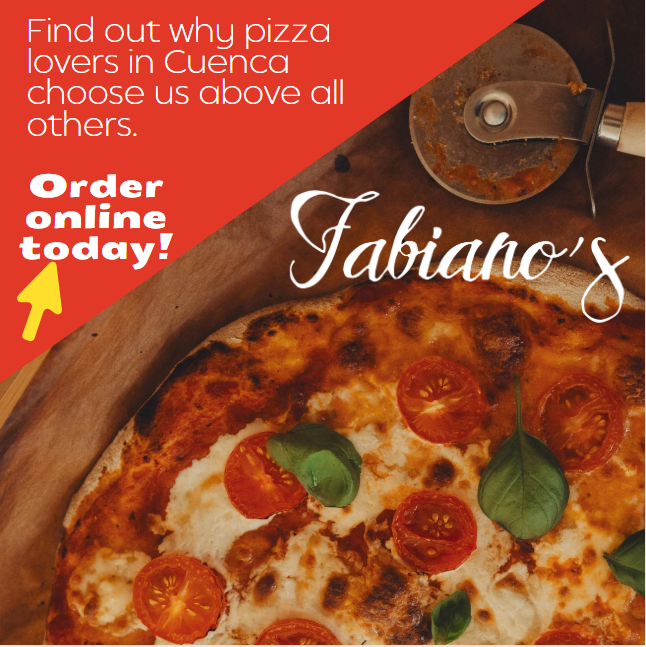
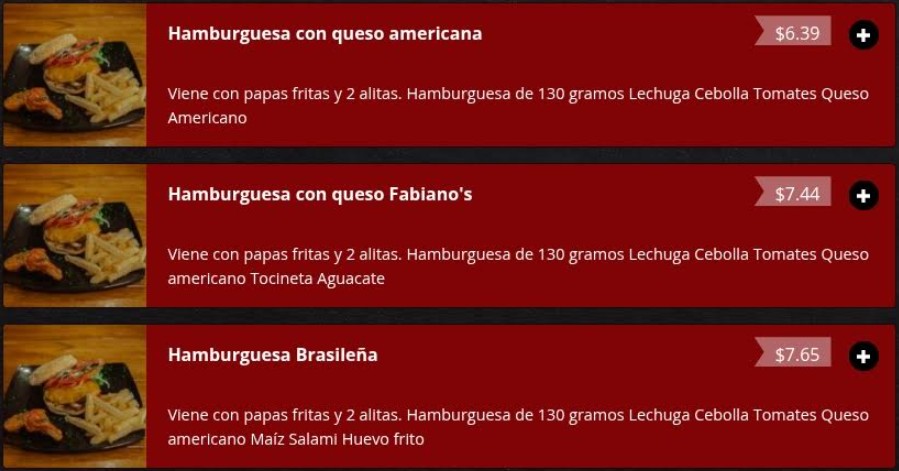 Meanwhile, here in Cuenca, I get hungry like people used to so I look at the clock and I think about food, so sometimes I open the website of a local Italian restaurant chain, which is really just a menu with pictures and prices that include IVA. Almost suspiciously simple. I pick what I want, type my address and check the box that says pay cash on delivery, because there seems to be no alternative. An email comes back to say they received my order and will be getting on it enseguida, or right away.
When the food is ready someone calls me on WhatsApp and asks where I live. I send them a location pin. They say they are on the way.
No dashboards. No loyalty points. No cartoon driver racing across a map. Just supper coming uphill on a motorbike on a rainy night.
A hamburguesa Brasileña costs $7,65, expensive, but to be fair this does include a side order of French fries, two chicken wings, some salami, and even a fried egg, and, most importantly, a rectal examination glove for the wings that prevents you from getting your fingers all brown with barbecue sauce.
When the young man on a motorbike arrives I go downstairs and hand him a ten-dollar bill. Sometimes I hand him a bit more if it is raining or close to the evening news hour. There is no set tariff or fixed delivery fee. There is no policy so I simply give what seems fair relative to taxi fares for the same distance, He seems to be happy with this, at least he thanks me without any signs of sarcasm or throwing the food on the ground.
Is this delivery payment fair? I think so, because it is almost exactly the same as what it would cost me to take a round-trip in a taxi to pick up the food myself. Of course, thrifty readers will examine this economic model and soon deduce that you could pay the same delivery fee and receive two, or even three hamburgers at your garden gate without forking out a percentage of the cost of the order. Which is how it should be.
In the United States this sort of delivery system would be written about as a cultural breakthrough. Social capital. Peer to peer trust. A triumph of community over technology.
Consultants would fly to conferences at hotels with golf courses and rental surfboards in Hawaii and speak excitedly about the Future of Local Value Exchange. Venture capitalists would invest in platforms designed to recreate it. Startups would promise to heal the human soul through burrito logistics.
Here, it is just another day in paradise.
I once mentioned this system in conversation with another gringito. They blinked like someone discovering fire. You just give cash to the delivery person? On a motorbike? Without an app? What if someone cheats you?
I did not know how to reply, because that question seems to come from a world where every rule exists to prevent disappointment. If you build a society around mistrust, you end up with rules, fees, alerts and little sad faces that scold you for not tipping twenty five percent. You also pay twenty dollars for a crummy burger and still feel you might have wronged the delivery driver.
Cuenca has rules, of course. It is not total anarchy here, but daily life still runs on an understanding that most people are trying to do the right thing. Someone carries your meal up the mountain, so you hand them a couple of dollars. Nobody reaches for a calculator or checks a rating for your tipping munificence. The exchange ends with a thank you, not a push notification.
There are countries that measure standard of living in income and economic output. Maybe that makes sense in their context. I have lived in some of them and admired their order and efficiency. I also remember how many small acts of life required a form, a contract or a napkin covered in ink from signing receipts all day.
In Cuenca the modern world has arrived, but it has agreed to sit in the corner while the human world continues to do its work.
You can call a taxi and pay two dollars and fifty cents to go across town. Or you can have a young man on a motorcycle bring you lasagna and garlic breadsticks and hand him the same amount when he arrives. There is a WhatsApp alert, a greeting and a thank you. And there is a supper that seems not to have been focus-grouped to death.
I sometimes wonder what economists make of this. They might say Ecuador earns less per person. They might comment on productivity metrics. They might ask how we manage without layered incentive structures and artificial delivery urgency*. They might even assume this simplicity is a sign that we are behind the times.
I prefer to think that some places ran ahead too far and forgot to stop. They sprinted into a future where software mediates every human interaction.
Here in Cuenca the world feels like a place where dinner arrives by motorcycle because you asked for it, not because the algorithm needs you to stay engaged.
I will take the ten-dollar bill and a WhatsApp message from the street below. The future can wait until after I finish my fries.
* Artificial delivery urgency is when an app pretends your burger is as time-sensitive as a heart transplant, mostly so it can charge you extra.