

















Considering the fragility of citizenship
By Jonathan Mason
It is a curious thing, and not without irony, that in the great republic which so proudly proclaims the rights of man, the right to belong has become something contingent, paper-thin, and bureaucratically brittle. 
Citizenship in the United States is, for millions, not a natural condition of being but a chain of paperwork stretching across continents and decades — a chain which, if broken at any link, might see entire families slip through the floorboards of legality.
Consider, for instance, the case of a naturalized American citizen — call him Charles — whose own journey to the United States began with marriage to an American woman he met while she was working overseas. Through that marriage, Charles obtained lawful permanent residency and eventually naturalized. His Haitian second wife also became a citizen, as did her daughter by previous marriage, after the now-routine DNA testing. His own daughter, born overseas, inherited citizenship from him under the rules of transmission. All proper, all legal.
 Yet the entire edifice depends on one assumption: that Charles’s naturalization will never be questioned. Remove that one stone, and the structure totters. If some future administration finds a bureaucratic flaw, a missing document, or an unrecorded change of name, what then? The wife’s citizenship, the daughter’s, the grandchild’s — all may come under review. This is not some dystopian hypothesis. The denaturalization task force, inaugurated under the present mangagement of the US, was charged precisely with unearthing old, sometimes trivial, technicalities that could serve to void entire citizenship lines.
And what if Charles, years earlier, had answered a question untruthfully on his application for naturalization? A question such as, “Have you ever used drugs?” or “Have you ever engaged in prostitution?” — questions whose scope is vast and whose answers may depend on technicalities, memory, or shame. If that answer is deemed dishonest, then not only Charles’s citizenship, but that of his wife, daughter, and future descendants, could be placed in jeopardy. The machinery is already in place. It only requires a motive and an official with a pen.
There is a Kafkaesque logic to it. One is a citizen, but only until someone decides to look too closely. One’s passport is valid, but only while the original certificate remains unchallenged. The government giveth, and it may yet take away.
And here lies the problem. Citizenship, if it is to mean anything at all, must be more than a scrap of paper. It must be rooted in belonging, in recognition, in the social contract that binds people to a state and each other. But the United States, in its great administrative sprawl, has come to treat citizenship — especially for those not born on its soil — as a sort of conditional lease, revocable under pressure or prejudice.
The Supreme Court, one would think, might have taken a stand. Yet it has never definitively ruled on whether children born in the U.S. to undocumented immigrants are citizens. Nor has it fully clarified the permanence of derivative citizenship. Like so many institutions of supposed finality, it prefers to wait for the ‘right case,’ as if the daily fear of statelessness were not case enough.
It is not inconceivable that the United States could become, in this respect, a mirror of the Dominican Republic, which in 2013 began to strip Haitian-descended children of their citizenship retroactively. A bureaucratic act, a court decision, and suddenly people who had never known another home were declared aliens in the only country they had ever lived.
The same seeds are being planted in American in the name of law. The fruits, if they come, will not be ripe for freedom.
In Ecuador, the lines between residency and citizenship are drawn differently. Many foreigners live for years on various forms of permanent residency—retirement visas, investor visas, professional visas — without ever applying for full citizenship. Those who do naturalize often find the process slow but achievable.
Yet even in this relatively open system, the distinction matters. A resident may stay, work, and pay taxes, but cannot vote or claim certain rights reserved for citizens. And like elsewhere, a change in political climate could turn long-settled lives precarious with a single stroke of legislative reform.
This is not only an American issue. In the United Kingdom, there is a widespread and casual assumption that possession of a British passport confers citizenship and the unquestioned right to reside and work. But this too is not always so.
A British passport may be held by certain categories of overseas nationals, who may lack full citizenship rights, voting rights, or even the automatic right of abode in the UK. The distinction is rarely discussed, and even more rarely understood. As in the United States, the illusion of security rests on documentation that may not mean what one thinks it means — until it is tested.
Perhaps this is the defining question of our time: Who gets to belong? And who decides? In a country built by immigrants, sustained by them, and increasingly divided over their presence, the answer is no longer clear. But if we do not answer it, others will — with forms, with denials, with erasures.
And when the tap on the shoulder comes, it will not be the Constitution that saves you. It will be the paperwork you can produce, and whether someone believes it still counts.
________________
Follow Jonathan Mason on his Substack page.



Hogar Esperanza News

Fabianos Pizzeria News

Fund Grace News

The Cuenca Dispatch

Week of September 20
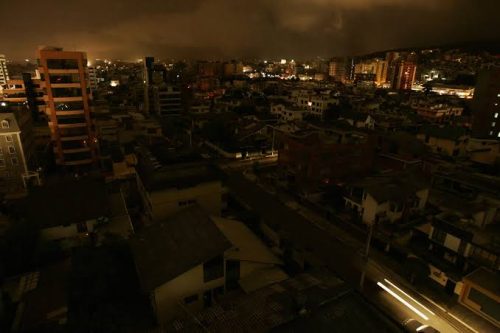
Ecuador turns to industrial power cuts to protect Mazar and keep homes from going dark.
Ecuador raises its 2026 growth forecast, but El Niño could spoil the outlook next year.
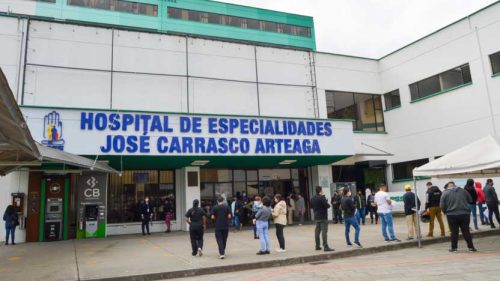
Cuenca retirees challenge medical and therapy changes at IESS senior center.