
















Controversial Machu Picchu airport opens in 2027 as critics decry ‘irreparable harm’ to the Sacred Valley
By Alexandra Marvar
Machu Picchu has always been hard to reach, but a new airport will soon change that and bring 200% more visitors to the area – and some area residents aren’t happy about it.
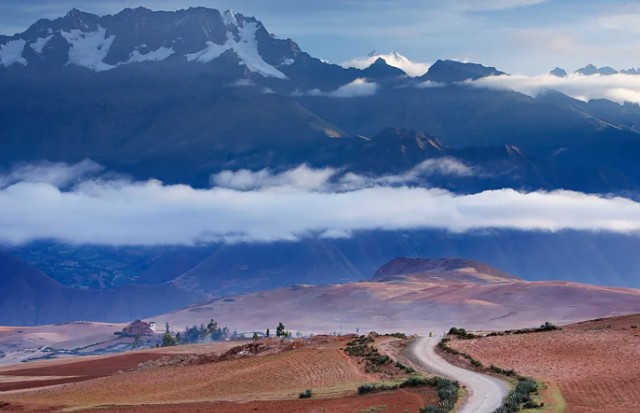
Critics claim the new airport has destroyed much of the heritage of Peru’s Sacred Valley.
Reaching the ancient Incan citadel of Machu Picchu isn’t easy, and that’s by design: the Incas chose this site high on a mountainside in the Amazonian cloud forest precisely because they wanted it to stay hidden.
Yet every day, thousands of travellers make the pilgrimage to Peru’s Sacred Valley to see South America’s best-known ancient wonder. Some arrive on foot via a four-day trek through the Andes, as people have been doing for hundreds of years. Others take a car or taxi to a train and then board a 30-passenger bus, as I did during a recent visit. After winding up a wildly steep switchback road, I was delivered directly to the gates of this city in the clouds.
This was just the final stretch of my journey. Like many visitors, I flew internationally into Lima, took a domestic flight to Cusco, then travelled two hours into the Sacred Valley, where I spent a couple of days acclimating to the high altitude while exploring the region. Visiting Machu Picchu isn’t a quick trip. And for many travellers, it simply isn’t feasible.
Now, the Peruvian government hopes to change that with the construction of Chinchero International Airport. Located on the outskirts of Chinchero – a historic Andean city known for its traditional weaving community – the airport could allow travellers to bypass Lima or the Incan capital of Cusco entirely, shaving hours – if not days – off transit time to Machu Picchu. But for the past nine years, it has been a dusty construction site, creeping towards completion in fits and starts. Befallen by delays, the airport was expected to open this year but officials are now estimating it will be completed in late 2027 – and that’s not the only reason it’s controversial.
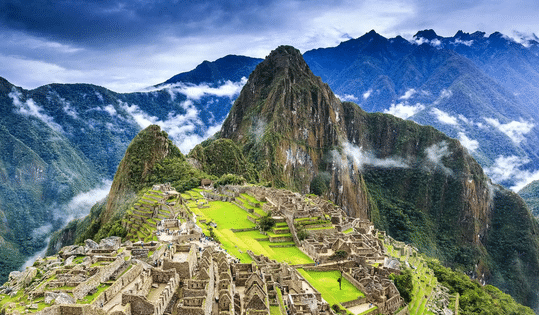
Machu Picchu
Proponents say the airport will bring an economic jolt to a vast, under-developed region. According to Peru’s Ministry of Transport and Communications, the project – which is estimated to have cost 2.3tn Peruvian soles (£499m) so far – has created more than 5,000 construction jobs and will ultimately benefit an estimated one million locals working in or adjacent to tourism.
The airport is designed to accommodate as many as eight million travellers annually, and it could increase visitor numbers by as much as 200%. While this could be a boon for the valley’s lodges and hotels, many nearby operators and guides have joined Indigenous communities, archaeologists and conservationists in protesting the project, citing cultural and environmental concerns.
Carved by the Urubamba River and ringed by the jagged peaks of the Andes, the Sacred Valley stretches from Cusco to the cloud forests around Machu Picchu. This was the spiritual and administrative heartland of the Incan empire. Original Incan roads, irrigation systems, structures and even an inland salt mine have been continuously in use for centuries. Opponents of the airport warn that its construction threatens watersheds, wildlife habitats and pre-Incan and Incan heritage sites.
According to Luis Flores, a guide at Explora who grew up in the Sacred Valley, the region’s agricultural heritage is already at risk. Explora’s Sacred Valley lodge is located beside the tiny village of Urquillos, the self-proclaimed “world capital of corn”. Corn has grown here for centuries, in various sizes and colours – from tooth-enamel white to eggplant purple. Nearby, fields are terraced by original Incan stone walls, which preserved the rich soil. Since the airport was announced more than a decade ago, Flores says families around Chinchero have begun selling their farmland.
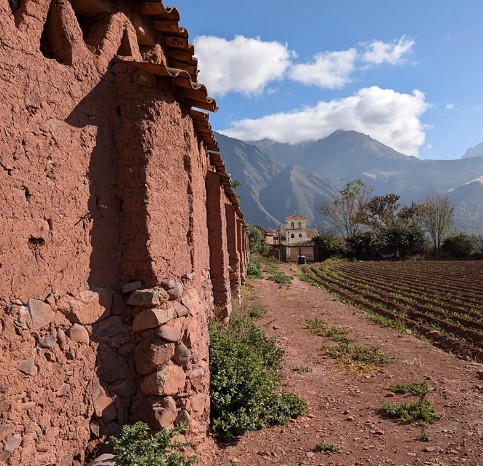
Terraced farmland often sits next to original Incan stone walls in the Sacred Valley (Credit: Alexandra Marvar)
Much of that land has since been developed, and in place of small farms growing potatoes, corn, beans and quinoa for local markets, there are now “houses everywhere, everywhere” Flores says. The change has only just begun: “With dozens of airplanes landing and taking off, that area is going to be different.”
Flores expects this development will continue. “Different hotel companies are going to buy more land to build more hotels,” he says. “We’ll need more facilities for tourists. It means that we are going to lose a lot of crop fields.”
Lizbeth Lopez Becerra, a Machu Picchu guide based in Cusco, can see the potential benefits to the tourism sector, but not without a “proper analysis” of the impact – and a complete reimagining of the area’s infrastructure. (A heritage impact assessment was still incomplete as of 2025.) She echoes widely shared concerns that the region is already at capacity. The lone road in and out of Cusco is already “chaos” each weekend, she says. Some communities are facing water shortages. Waste management solutions are also overtaxed and recycling infrastructure is nonexistent.
While the airport’s ongoing construction has already changed the Sacred Valley, no one is confident when it will open. Since plans were first floated in 1978, the project has been waylaid by construction delays and funding shortfalls and tangled in allegations of corruption. Some question whether it will be completed at all.
When Petit Miribel and her late husband moved to the valley’s largest town, Urubamba, in the 1990s, plans for a nearly airport were already in discussion. “I’ve been hearing about the airport for about 30 years,” she says. “And if I had been here for 50 years, I would have been hearing about it for 50 years.”
__________________
Credit: BBC