














Different tables, same café: Why younger and older expats rarely cross paths in Cuenca
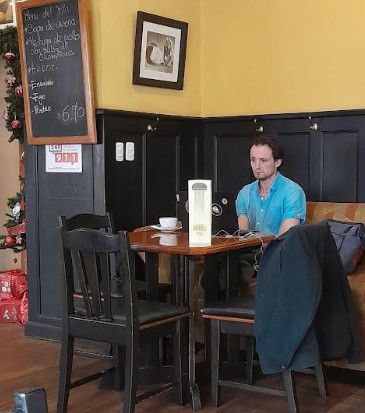
Spend enough time in Cuenca’s cafés and you start to notice something subtle. The room is full, yet the tables rarely mix.
Older expats often sit with people who arrived around the same time, share similar routines, and meet at familiar hours. Younger expats are nearby, but they are easy to miss. They come later. They leave earlier. They sit with laptops, headphones, or one close friend instead of a group.
This is not conflict. It is rhythm.
How Age Quietly Shapes Expat Life
Most expat conversations treat age as background information. In practice, it shapes almost everything.
 In Cuenca, the most visible expat group is retirees, many of them over 65. Their days tend to follow a predictable pattern. Morning errands. Coffee around ten. Lunch by noon or one. Home before dark.
Younger expats, often between 25 and 45, live on a very different schedule. Many work remotely for companies in North America or Europe. Others freelance, consult, teach online, or run small digital businesses. Their workdays may start late or stretch into the evening.
Some are single. Some are couples. A growing number have young children.
These differences create separate daily worlds, even when people live only a few blocks apart.
The Hidden Younger Age Bands
When older expats think of “younger,” they often imagine backpackers or short-term tourists. That picture is outdated.
In reality, the younger expat population in Cuenca often falls into three overlapping age groups.
 Ages 25–34
This group includes digital nomads, early-career professionals, and creatives. Many stay six months to two years. They favor flexible housing, coworking spaces, and cafés where laptops are welcome. Social life happens later in the day and often looks informal or spontaneous.
Ages 35–44
This group is more likely to be settled, even if temporarily. Many are married or partnered. Some have children enrolled in local or international schools. Work schedules still dominate their days, but routines are more stable.
Ages 45–54
Often overlooked, this group sits between nomads and retirees. Many are mid-career professionals who chose Cuenca for cost of living, lifestyle, or family reasons. They may share interests with retirees but still work full time and keep later hours.
These age bands do not disappear. They simply do not gather where retirees expect them to be.
Work Changes Everything
Retirement frees time. Work structures it.
 Retirees can meet mid-morning, attend weekday talks, or linger over lunch. Younger expats usually cannot. Their workdays may align with U.S. or European time zones, which means meetings in the afternoon or evening.
A remote worker may finish at seven or eight at night. By then, many retirees are already home.
This creates a quiet misunderstanding.
Older expats may assume younger ones are uninterested or aloof. Younger expats may assume retirees are unavailable or uninterested in evening activity. Neither is true.
They are simply awake at different hours.
Families Change the Picture Again
Another overlooked factor is family life.
Some younger expats arrive with children. School schedules, homework, and bedtime routines limit evening socializing. Parents may spend weekends at parks, libraries, or family-friendly cafés instead of bars or expat events.
These families often integrate locally faster than expected, but they remain largely invisible to traditional expat networks.
They are not absent. They are just busy.
Safety, Energy, and the Night Question
Age also shapes how people relate to the city after dark.
Many retirees prefer not to circulate at night. Concerns about safety, vision, balance, or simple fatigue play a role. Early dinners and early nights feel comfortable and sensible.
 Younger expats are often more willing to move around in the evening. They attend language exchanges, live music, art openings, or casual meetups that start after seven.
This difference reinforces separation without intention.
The city feels different depending on the hour you experience it.
Same City, Different Signals
Cafés themselves send signals.
Some places invite conversation. Others invite focus.
Classic gathering spots like Cafe San Sebas or Café Austria naturally encourage talk and familiarity. They work well for daytime meetups and long conversations.
Laptop-friendly spots such as Coffee Cor, Slow Brew Coffee Shop, and Café Ñucallacta quietly attract a younger crowd. People sit longer, speak less, and work more.
Coworking spaces and flexible cafés draw people who do not always see themselves as part of the expat scene at all. They are building careers, not communities.
Geography Matters Too
Neighborhood choice reinforces these patterns.
Areas near Parque Calderón and San Sebastián appeal to long-time expats who value walkability and familiarity. The Remigio Crespo corridor tends to attract younger residents looking for newer cafés, gyms, and social energy.
The distance is short. The experience is not.
 Why This Matters for How We Tell the Story
Expat coverage often reflects the most visible group. In Cuenca, that visibility skews older. The result is not wrong, but it is incomplete.
Younger expats are sometimes mistaken for tourists or temporary visitors. In fact, many are deeply invested in the city, even if their timelines look different.
When we focus on only one table, we shrink the room.
Seeing the Whole Room
Cuenca is not divided. It is layered.
The city holds retirees, remote workers, families, creatives, and long-term settlers all at once. They share sidewalks, cafés, and markets, even if they rarely share tables.
This is not a problem to solve. It is a reality to notice.
When we widen the lens, the expat story becomes more accurate and more generous. Cuenca is not one community. It is many communities living side by side, each shaped by age, work, energy, and time.
They are already in the same café. They are just sitting at different tables.
A related reflection on expat community by age explores how timing, work, and life stage quietly shape belonging when living abroad.



Hogar Esperanza News

Dani News

Fund Grace News

Property Amazon News

The Cuenca Dispatch

Week of January 11

Cuenca hospital staff warn lives are at risk as medicine shortages deepen inside the region’s main public hospital.

Caracas upheaval threatens to sever Correísmo’s last powerful lifeline in a rapidly shifting Latin American left.

Mazar drops as government leans on thermal power to calm blackout fears during Ecuador’s dry season.
Anubis Restaurant News

Fabianos Pizzeria News