














Ecuador’s new ecological corridor connects the Andes and Amazon ecosystems
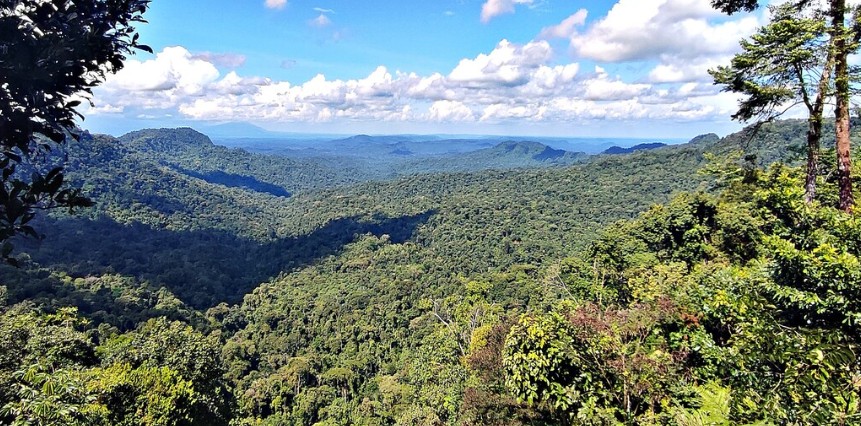
Tree cover in the Llanganates–Yasuní Connectivity Corridor. Image by Victor Utreras/WCS
By Maxwell Radwin
Ecuador has announced the creation of a new biological corridor designed to connect the eastern ranges of the Andes with the Amazon Rainforest, part of a larger initiative to strengthen ecological connectivity and protect biodiversity.
The Llanganates–Yasuní Connectivity Corridor, officially announced this month, spans 2,159 square kilometers (834 square miles) across two provinces, connecting Llanganates National Park with Yasuní Biosphere Reserve. It’s one of several projects in the country aiming to preserve ecological connectivity between the Andes and Amazon, a transition zone vital for species adaptation as climate change and human pressure reshape habitats.
“By securing ecological connectivity between the Andes and the Amazon, we are helping safeguard biodiversity, strengthen climate resilience, and support local communities whose livelihoods depend on healthy ecosystems,” WCS Ecuador country director Sebastian Valdivieso said in a press release. “This corridor reflects the power of collaboration between national authorities, local governments, civil society and international partners.”
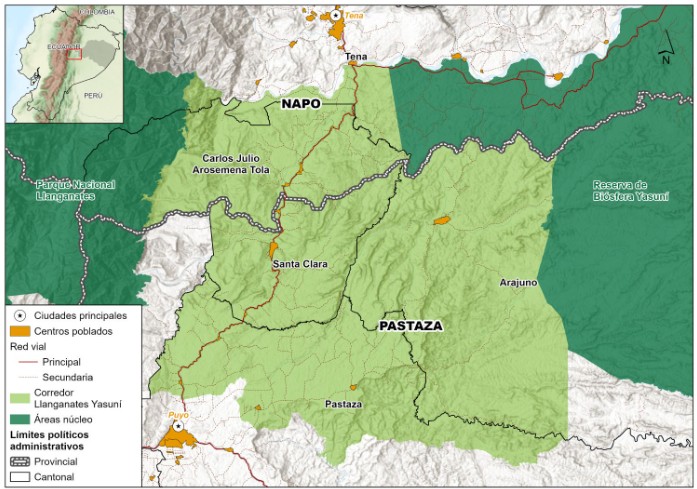
Yasuní Biosphere Reserve covers 27,564 km2 (10,643 mi2) of Amazon Rainforest, while Llanganates National Park covers 2,197 km2 (848 mi2) of high-elevation ecosystems in the Andes. The two protected areas appear close on a map but are actually separated by significant elevation differences, with parts of Llanganates reaching around 4,000 meters (13,000 feet) above sea level.
Now, the corridor allows “altitudinal connectivity” between the two protected areas, according to WCS Ecuador, one of the organizations overseeing the project. The corridor will help protect species that need to migrate between different elevations, such as the black-and-chestnut eagle (Spizaetus isidori). It could also help species that don’t usually migrate adapt to climate change and habitat loss.
Other organizations providing support for the project included the Legacy Landscapes Fund, the Gordon and Betty Moore Foundation, the Bezos Earth Fund, and Harvey and Heidi Bookman.
Throughout the process, WCS worked with the Napo and Pastaza provincial governments as well as the municipal governments of Tena, Carlos Julio Arosemena Tola, Santa Clara, Arajuno and Pastaza. The areas have historically felt pressure from agriculture, roadbuilding and extractive industries, most notably oil in Yasuní Biosphere Reserve.
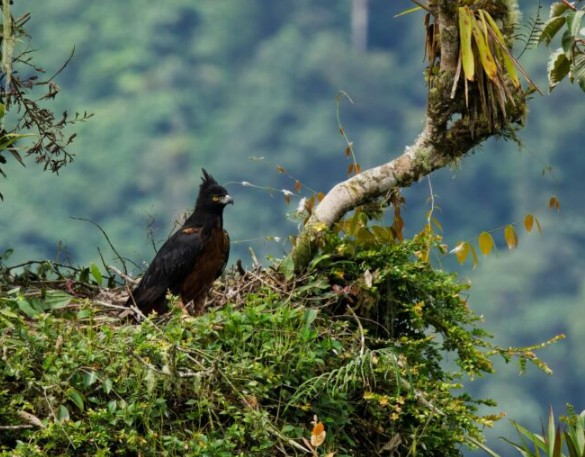
The black-and-chestnut eagle (Spizaetus isidori). Image by Diego Mosquera/WCS
Part of the work involved making sure that communities continue sustainable economic practices and recognize the importance of habitats in the area, according to Diana Paredes, coordinator for WCS’s Conservation Area Strategy.
“We’re not only protecting species, habitats and ecosystems, we’re also ensuring clean water, food for the people who live here and depend on the corridor, and also dignified living conditions for the communities,” she told Mongabay.
“If we sit down together, debate the best actions and strategies, we can create an impact that is positive both for people and for the conservation of species and habitats,” she added.
The corridor was born from a 2020 decision by the Ministry of Environment to regulate corridors as “Special Areas for the Conservation of Biodiversity,” a designation meant to connect protected areas.
Since then, WCS has also provided support for the creation of the Cuyabeno–Yasuní Corridor, officially recognized last March. It covers approximately 2,750 km2 (1,062 mi2) and connects Yasuní National Park (included within the biosphere reserve) and Cuyabeno Wildlife Reserve, a highly biodiverse protected area at the foothill of the Andes spanning more than 6,000 km2 (2,300 mi2).
Paredes said WCS Ecuador doesn’t plan to create another corridor for the moment but is open to finding new opportunities.
In the meantime, it’s developing an integrated management plan for the Llanganates–Yasuní Connectivity Corridor and preparing environmental education initiatives so future generations understand the importance of the habitats in the area.
“We want children and everyone who lives in this corridor to understand that protecting these species also means protecting water, forests and the resources that sustain their daily lives,” she said.
________________
Credit: Mongaby