














How a new shipping port in Posorja created Ecuador’s latest criminal epicenter
By Steven Dudley
It was around 3 p.m. on July 19 when a young man stumbled into a small billiards hall in the coastal city of General Villamil Playas in southern Ecuador. Inside, a group of long-time friends was having a reunion. But the young man had a different agenda: He was fleeing rivals.
The rivals had chased him on his motorbike to the door of what police later described as a small, unlicensed bar. After the attackers found the bar, they entered, saw their target, and indiscriminately opened fire with high-powered rifles. The young man escaped, but as many as 11 others were killed. (The exact number is unknown, since locals often remove bodies from crime scenes.)
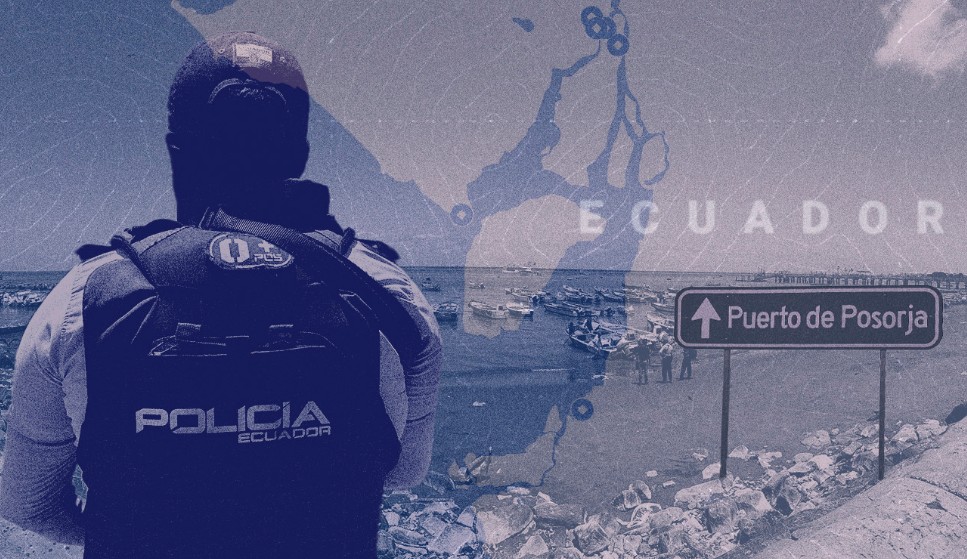
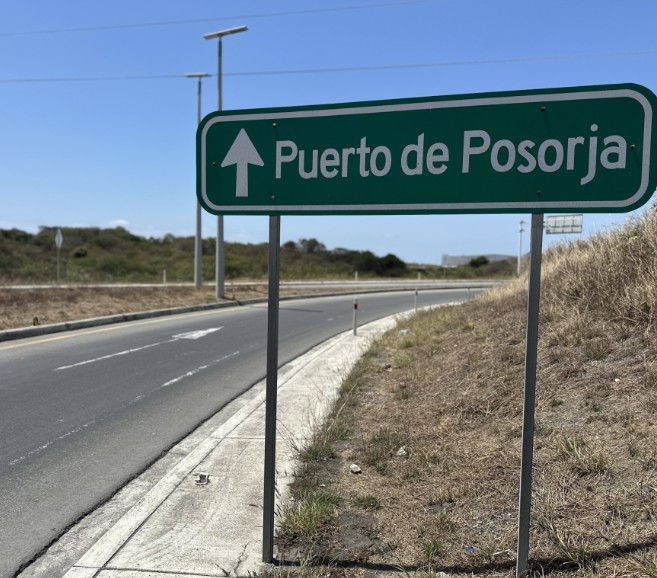 The massacre is part of a larger bloodbath in Guayas, Ecuador’s most populous province. Playas, as it is popularly known, is a beach town. But it is intimately connected to neighboring Posorja, a gritty fishing village that faces inward towards the river inlets that connect it to the country’s industrial and shipping hub, Guayaquil.
In 2019, Playas and Posorja recorded just one and three homicides, respectively. But by 2023, homicides had jumped to record highs — 80 in Playas and 75 in Posorja. The towns’ combined homicide rate hit 168 per 100,000, quadruple the national average. Homicides have continued since, with Playas seeing 62 homicides between January and September 2025, on pace to equal or eclipse 2023’s record, while Posorja recorded 36 homicides in the same period.
The surge in criminal activity, authorities and locals told InSight Crime, is related to the opening of a new, deep-water port in Posorja. The port has attracted business from some of the world’s largest shipping companies, such as Maersk, the Danish transport giant. But it has also attracted organized crime, which has led to a similarly startling rise in other crimes, such as extortion.
‘Are You Asking Me for the Check?’
The first time Angela* felt things had changed was when a group of what she described as “youths” entered her restaurant. Angela was accustomed to demanding customers. She had built and managed her restaurant and hostel on the road between Playas and Posorja, and a few years earlier, she had tended to a group of 15 hard-charging men that some regulars later said were “into drugs.”
But these customers were even more aggressive. There were a half dozen – three men and three women – she said. The oldest was about 24. They had tattoos and sat “slumping” in their chairs. And they wielded their words as if they were weapons.
 “We want breakfast,” one of them blurted out.
Angela went back to the kitchen and told her workers, “Heads up, eh,” and asked them to make sure their cameras were working. The restaurant is filled with them, as well as lights that look remarkably similar to cameras.
When the group finished eating, one of them turned to Angela: “OK, miss, how do you want to do this?”
Angela understood immediately they were suggesting they talk about an extortion payment. Extortions had proliferated since the port had been inaugurated. But she played dumb.
“Sorry,” she said. “Do what? Are you asking me for the check?”
Two of the men signaled to one another, and one of them, a more “conciliatory” one, according to Angela, jumped in.
“Yeah, yeah, miss. Bring us the check, please.”
Angela brought them the bill.
“Why is it so much?” the more aggressive one jumped back in.
Angela showed them the menu they’d used to order, and the calm one reasserted himself.
“Let me make sure it’s all there,” he said, looking at the check. “We’re good, miss.”
They paid, and they left, but the feeling they had imparted remained like a pit in Angela’s stomach.
The Battle for the Port
Back in Playas, details of the July massacre seeped out. The group of friends in the billiards hall did not know the young man who was the target of the attack. Videos on social media showed them playing pool prior to his arrival. And the target of the attack, police determined, was a member of the Choneros.
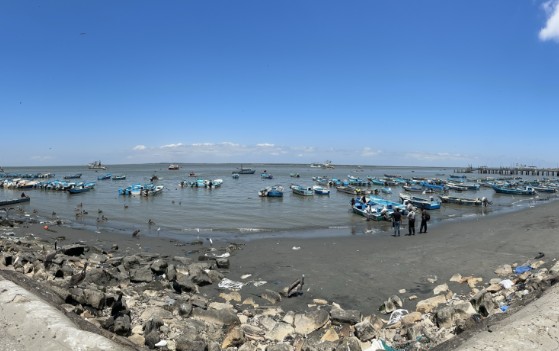
Posorja’s fishing harbor. Credit: Steven Dudley / InSight Crime
The Choneros are one of Ecuador’s most powerful criminal groups, and in September, the Trump administration placed them on the US government’s list of foreign terrorist organizations.
But like many criminal groups in Ecuador, they have atomized. The police say the group is split into two factions in Playas: the Silenciosos, or Silent Ones, and the Playeros, which loosely translates as those from Playas. The two were, in a way, subcontractors of the underworld, and their affiliation with the Choneros put them at odds with the other major criminal group in the area, the Lobos, or the Wolves.
According to local police interviewed by InSight Crime, the Lobos, who were also designated a foreign terrorist organization by the Trump administration, have established their local headquarters in Posorja. And it was the Lobos, authorities believe, who gave chase and ultimately killed close to a dozen people on that July afternoon.
It was not clear what prompted this specific fight, but authorities say the port has brought with it a whole new criminal dynamic that forms the backdrop of nearly every homicide these days. At the heart of this is the battle to control access to the port.
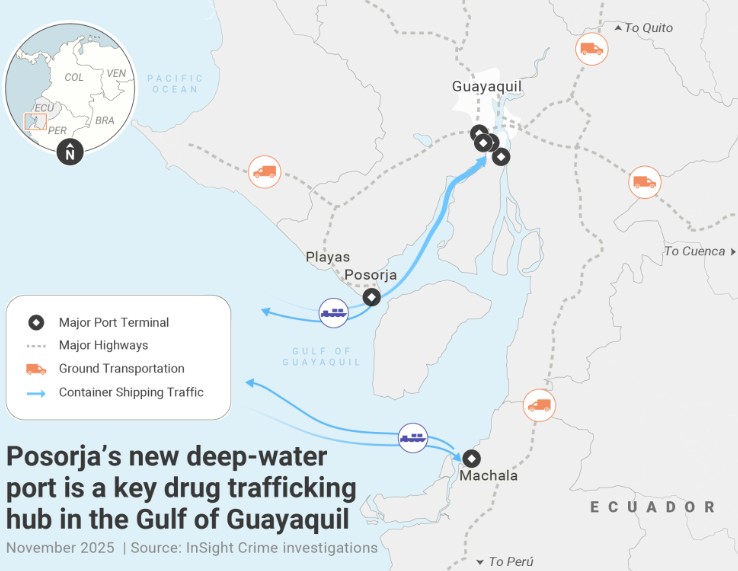
Posorja is Guayaquil’s first deep-water port and can accommodate post-Panamax, the world’s largest container ships. The vessels can carry nearly three times the amount of cargo that the Panamax ships can, and the port’s strategic location cuts off a large part of the journey incoming container ships have to make into the Guayaquil tributaries or further south to the shipping terminal in Machala, near Ecuador’s border with Peru.
The port’s rise has been meteoric. By volume, Posorja has already become Ecuador’s busiest shipping terminal. And authorities say this has led to increased drug trafficking. According to official information obtained by the Organized Crime and Corruption Reporting Project (OCCRP), authorities seized over 15 tons of cocaine in 2024 in the region where Posorja is located, nearly three times what they seized in 2023. And authorities in Europe told OCCRP that Posorja is one of the main embarkation points for cocaine seized in Antwerp and Rotterdam, two of the continent’s main ports of entry.
Ecuadorian authorities say that with a surge in trafficking, other criminal economies have also surged. Among them is drug peddling, which can lead to infighting among the Choneros’ factions, complicating matters for investigators seeking to sort through the motives behind the homicides.
And then there is extortion. Sometimes, large criminal groups are behind it, looking for new moneymaking opportunities. And sometimes, small criminal groups are trying to take advantage of the criminal climate, often faking their affiliation with larger groups as a way of striking fear into victims. As Angela’s case illustrated, in nearly every instance, it is difficult to tell who is who.
‘How Many Days Are You Open?’
After her brush with the suspicious group, Angela said a few months later a couple of young Ecuadorians came in and asked her: “How many days do you open?”
Startled, she responded: “Why?”
They told her they worked at the nearby shrimp-processing plant and wanted to arrange for some meals. Their boss would come by, they added. Then they left.
A few days later, four men came “tattooed to their core,” Angela said. Dressed in flip-flops and camouflage jumpers, they maneuvered to get a better look at the place, poking their heads around the corners, evaluating the size of the pool, and counting the number of rooms, Angela explained.
“Look,” one of them finally said. “Some others came to ask whether you would feed us.”
“Ah, you are the bosses of those boys,” Angela responded, before launching into a long story about how she was not the owner, just an employee who had no control over her schedule or the meals they served.
“I’m really just taking care of the place,” she said.
The men left.
A few days later, a tall man arrived on a motorbike. Angela had a full house and was saying goodbye to some regulars before she turned to him.
“What can I do for you, sir?” she asked.
“Where can I leave my helmet?” he said.
After she pointed to an empty table, he put his helmet down and began to inspect the place, peeking around the corner, checking the size of the pool, counting the number of rooms. And then, just like the others, he asked: “Hey, how many days are you open?”
Startled, Angela served him a beer and, as she had with the other group, told him she was only the caretaker, not the owner. She then explained they had a lot of security, including a phone app that could identify callers by their number.
“OK,” he responded. “I’m gonna call you and see if it’s true.”
Angela gave him her number, and he dialed. When she showed him the name that was appearing on the phone, he got up, dropped $5 on the table, and rushed out the door.
An Arrest, Then Another Massacre
On August 6, authorities captured four suspected members of the Lobos who they said had participated in the July massacre. During the operation, authorities seized at least one telephone, several handguns and an automatic weapon, and munitions hidden in motorcycle helmets and a bathroom.
A Teleamazonas report said authorities later used the phone to track a nearly two-ton shipment of cocaine from Posorja to Panama, where it was seized. But when InSight Crime inquired about the seizure, local authorities did not offer any more details.
Still, the situation in Playas continued to deteriorate. On October 12, gunmen stormed a quinceañera and killed five people.
‘I Will Have to Send My Boys to Your House’
Throughout this time, Angela heard numerous stories from her neighbors and friends about extortions. The modus operandi was similar: individuals or small groups would go to businesses to set up an initial ask. Angela said these scouts got a commission for finding victims, and authorities corroborated this modus operandi.
“That’s why they are looking over the place to see how many rooms, how many hammocks, like, how many people can they hold, how much money can they make, so they can determine how much to ask for,” Angela explained.
But sometimes, they simply sent messages. Angela showed InSight Crime several. They began cordially, requesting her to pick up their calls and offering their protection services “for her own security.” When she ignored them, they dropped the double-speak.
“Answer me or I will have to send my boys to your house,” the person wrote. “I don’t think we will need to use violence so that you understand how serious this is.”
Angela blocked their number, and although she had yet to pay any extortion, she told InSight Crime she was going to close her restaurant and hostel and move to Guayaquil.
*The name of this individual has been changed for security reasons.
________________
Credit: InSight Crime