












If the U.S. is serious about defeating the Mexican cartels it must first stop supplying them with weapons
By John Lindsay-Poland
When the presidents of the United States and Mexico brought the two countries back from the edge of a trade war on Feb. 3, each made commitments to the other.
Mexican President Claudia Scheinbaum pledged to send 10,000 Mexican troops to the border with the U.S. to stem the trafficking of fentanyl and flow of migrants into the United States — something the country has done before.
For his part, President Donald Trump promised to “avoid the trafficking of high-powered weapons from the U.S. into Mexico,” according to Scheinbaum’s accounting. Both agreed to revisit these issues after 30 days.
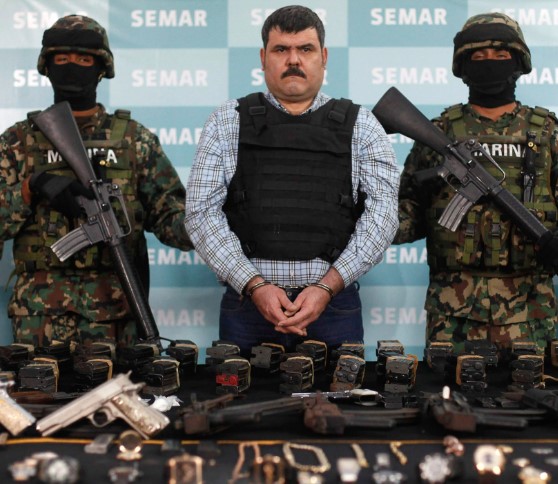
Most of the weapons used by Mexican drug cartels come from the U.S.
Trump should keep his promise to Mexico by taking decisive action against weapons trafficking that is feeding drug cartels.
And Mexico is not alone. Weapons trafficked from the U.S., mainly through Florida and Georgia, are also a key driver of violence in Haiti, where Secretary of State Marco Rubio recently visited the neighboring Dominican Republic. Increasingly, gangs in Haiti use these weapons to dominate and terrorize broad swaths of territory.
The U.S. is also the major supplier of weapons fueling violence in Colombia, Peru and Ecuador.
Both countries also have an interest in stemming the trafficking of weapons that empower drug cartels, accelerate migration from fleeing violence in search of safe harbor and leave families and communities devastated.
In the case of Mexico and the U.S., they are each other’s largest trading partners, and both have an interest in avoiding a trade war that would slow the commerce that moves thousands of containers and trucks over the border daily, which represents over $800 billion in goods each year. Mexico has substantial leverage with the U.S. and is prepared to impose tariffs of its own on the U.S.
As Scheinbaum said in response to Trump’s claims of Mexican government collusion with cartels: If there is such an alliance anywhere, it is in the U.S. gun shops that sell high-powered weapons to these criminal groups. According to U.S. official data, 70% of firearms that are recovered in crime scenes in Mexico and submitted for tracing came from the U.S. Most of them are purchased from retail gun shops or gun shows in Texas, Arizona or California. Nearly all of these weapons are bought by U.S. citizens and then trafficked over the border into Mexico.
Once in Mexico, these weapons are critical for cartels to run illegal narcotics businesses, terrorize communities and migrants and intimidate local authorities.
How will the Trump administration carry out its commitment to stop the trafficking of powerful firearms to Mexico? The days until early March are a test of that commitment.
The Trump administration has been eager to take action with its wide political latitude. If radical actions are needed to get things done, then Trump should issue an executive order to take assault rifles, .50 caliber rifles and high-capacity magazines, used by the cartels in thousands of crimes, off the U.S. retail market.
In the absence of an executive order, the president should support legislative proposals with the same effect. That includes legislation introduced last week to ban the commercial sale in the U.S. of .50 caliber rifles that only the cartels have an interest in buying.
The Justice Department should order the inspection of every gun dealer that has been implicated in sales of firearms trafficked to Mexico to ensure they are not facilitating trafficking to the cartels. The president can use the executive authority in the National Firearms Act of 1968 to stop the importation into the U.S. of assault rifles, many of which are trafficked to Mexico.
He should also support legislation to require background checks for all sales of firearms, including online, by mail order and at gun shows. These actions would begin to fulfill the administration’s aim to eliminate criminal cartels.
But is President Trump courageous enough to take them?
_________________
John Lindsay-Poland is the director of the Stop U.S. Guns to Mexico project, a Global Exchange project.