













Mexico says U.S. invasion ‘will not happen,’ insists Trump administration confront U.S. addiction problem
By Ruta Kulkarni
“No, we will not allow the U.S. to invade Mexico. It will not happen,” was the response Friday by Mexican President Claudia Sheinbaum gave about the possibility of U.S. troops entering Mexico to fight drug cartels.
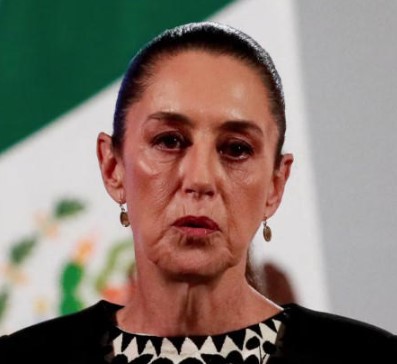
Mexican President Claudia Sheinbaum
Tensions between Mexico and the U.S. have escalated following a recent statement from a U.S. official suggesting that military intervention could be considered against drug cartels operating on Mexican soil. The statement, made during a confirmation hearing, implied that if American citizens were at risk, all options, including military action, would be on the table.
“No, not everything is on the table. Not on the chair, not on the floor, not anywhere,” Sheinbaum said during a press conference. She went on to say such a military action, if it happened, would meet “inglorious defeat” but said she wanted to work out difference through diplomatic channels.
Some of the heightened tension came as a result of headline in a Mexico City newspaper earlier in the week, titled “The delusions of a confused old man,” in reference to U.S. President Donald Trump. The White House sent a message to Sheinbaum and the newspaper demanding an apology.
The Mexican government has consistently opposed any form of external military involvement in its internal affairs. Officials have stressed that while Mexico is open to collaboration on security issues, it will only do so within a framework of sovereignty and mutual respect. Any suggestion of unilateral action by another nation is seen as a direct violation of Mexico’s independence.
The comments from the U.S. official have reignited discussions about the approach needed to tackle organized crime in the region. Some American policymakers have pushed for stronger measures against cartels, arguing that their activities have severe consequences on both sides of the border. However, the Mexican government has made it clear that its security strategy will be determined by its own policies and enforcement agencies.
In addition to the recent remarks about military intervention, reports have surfaced that U.S. surveillance drones have been flying over Mexican territory to monitor areas where cartels operate. These flights, which are said to be focused on gathering intelligence about drug production, have been conducted with the cooperation of Mexican authorities. However, concerns about sovereignty remain.
Mexican officials have stated that while there is close coordination between both nations on security matters, any operations on Mexican soil must be authorized and supervised by the government. The use of foreign surveillance technology has been a sensitive topic, with many questioning whether it could lead to more intrusive actions in the future.
In her press conference, repeated the claim that Mexican drug cartels exist because of drug addiction problems in the U.S. “As always, we insist the U.S. take care of its problems at home, which begin b acknowledging it has one of the worst addiction problems of any country in the world.”
She added that Trump has not made good on a promise to control the sale of firearms to Mexican drug criminals. “He said he would rein in the merchants of death, but we see no action toward this end.”
Despite these concerns, the two nations have a history of working together to combat organized crime. Over the years, they have implemented various strategies to dismantle cartel operations, disrupt trafficking networks, and prevent the spread of illicit substances. However, the methods used to achieve these goals have often been a point of contention.
Diplomatic relations between the two nations are expected to continue despite the recent tensions. The official in question is still awaiting confirmation for their diplomatic post, and Mexican authorities have expressed willingness to maintain constructive dialogue. However, the recent remarks have made it clear that any suggestion of military action will be met with strong opposition.
As security challenges persist, Mexico and the United States will need to find common ground in addressing organized crime. While both nations share concerns about drug trafficking and violence, the debate over how to tackle these issues remains ongoing. What is certain is that Mexico’s leadership has drawn a clear line—foreign military action is not an option.
________________
Source: Regtechtimes