














On shipping, patience and mysteries of the 4×4 rule
Someone once asked me how long it takes for a package to be shipped from Temu in China to Cuenca, and the question simply is not that easy as it involves multiple actors, customs clearance in Quito, and taking into account factors like days of the week and public holidays and paros in Ecuador, plus all the information discussed above.
People imagine that Temu fills a box, hands it to a friendly courier, and a week later your doorbell rings. In reality, what you see in the app is only the front of the parade. Behind the scenes there are sellers in different cities, warehouses, consolidators, freight companies, customs agents, and registered couriers at the airport, along with a final delivery company in Cuenca that may or may not be the same firm. The customer sees a single order, but what the authorities see is a physical package arriving at the border, which is a different thing entirely.
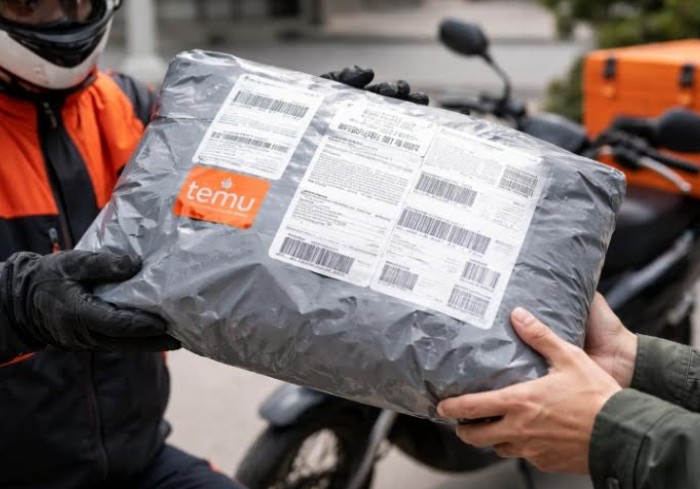 If you are ordering just a single item, like a computer or a camera, life is simple. One seller, one parcel, one journey, one $20 import fee. As soon as you start ordering several items, and it could easily be a dozen or more small bits and pieces, everything becomes far more complicated. Let’s say you want a projector, a tripod, a viewing screen, an HDMI cable, a bluetooth speaker, and an Android stick to complete your setup, then some of these items may come from one warehouse in one city and others from another. A few may be packed together and a few may not. You still see what looks like one basket of goods on your My Temu page, but the logistics world now sees several moving boxes travelling at different speeds, so shipping becomes less like buying a toaster and more like organising a parade so that the dancing girls don’t get gassed by the exhaust fumes from the float in front.
This matters because Ecuador has its famous 4×4 rule, which allows you to import four kilos and up to four hundred dollars, for which you pay a flat twenty dollar import fee. That twenty dollars is charged for each and every package that gets declared at customs. If everything is gathered into one single carton or plastic sack before the package reaches Ecuador, you pay the fee once. If the items end up in two boxes, you may end up paying twice. Or maybe not. The system does not care about your shopping cart, your order history, or your sense of fairness. It cares about the parcel that appears in front of the customs officer in Quito, or sometimes Guayaquil.
 Temu often tries to put everything into one shipment, and they even collect the twenty dollars at checkout for you. That does not mean every order arrives as one physical box. If something is bulky, fragile, or sits in a different warehouse, or contains batteries, then it may travel separately.
Temu’s Ecuador site has a very useful feature. If you put a dozen items in your online shopping cart, it may tell you “sorry Ecuador has a 4kgs limit, please click to remove item X from your cart and put it in a new cart.” Having removed item X, you may now still be able to add a few more 1-Click small items to your basket, like maybe a USB stick or a pill cutter, or a nose hair trimmer until Temu tells you “Woah, there! Too much stuff. Stop while you are ahead”. As far as I am aware Amazon does not have this cunning feature, which is what makes Temu the bomb that it is.
Amazon is more fragmented, since it uses many different sellers and fulfillment centers. People like to say that Amazon ships things, but Amazon is really a village of suppliers stitched together by software. The label says Amazon, but the logistics chain may belong to several different companies before the parcel ever reaches Ecuador. By the time the package clears customs, the swoosh on box is about as meaningful as the logo on the side of the airplane.
Then there is the calendar to consider, because a parcel arriving at Quito on a Thursday may well sit in customs over the weekend. A parcel that misses the last processing window before a national holiday may enjoy an unplanned rest. If the customs broker has one missing document, the parcel sits a little longer. Nobody has done anything wrong, but the machine simply works at its own pace, which is not the same pace as a nervous shopper hitting refresh on tracking updates.
The final stretch is the domestic courier. Your parcel has now had more barcode swipes and signatures than a diplomatic treaty, but it still has to find a motorbike in Cuenca for the last mile. Sometimes that is fast. Sometimes the rider is in another part of town. Sometimes the phone number on the packet has one wrong digit. You learn not to plan your life around a promised delivery day. You also learn to be pleased when the parcel appears unannounced just after almuerzo on a Tuesday.
So when people ask how long Temu takes, I usually say this. If all goes smoothly, maybe ten to fifteen days. If there are weekends, holidays, split packages, weather, paperwork questions, or a courier with a lot on his plate, then perhaps a little longer. The clever shopper understands that the only date that matters is the one when the parcel is finally in their hands, and not the one that appears on a theoretical timeline in an app.
Cuenca teaches patience in many small ways, and international shipping is one of them. The system works, and often works well, but it has many moving parts. The trick is not to believe the illusion that one big American or Chinese company is Santa Claus sending you a box from the north pole via reindeer and elves. The truth is that your parcel travels like a relay runner’s baton, passed from hand to hand across half the world, and it arrives only when the entire chain has done its work.
That is why the real answer to the question of how long it takes is always the same. It depends.