












The Cuenca neighborhood that doesn’t exist
The first time I saw “Gringolandia” listed as a neighborhood in Cuenca, I assumed I had missed a municipal announcement. Perhaps the city council had quietly created a new parish, drawn a few boundaries along the river, and installed a sign somewhere official-looking. It seemed unlikely, but cities do change, and one learns not to dismiss these things too quickly.
They do not, however, change in this way.
Gringolandia does not officially exist. You will not find it on a map of Cuenca. It does not appear on electricity outage schedules, which are otherwise impressively precise down to individual sectors and transformers. It is not a parish, not a subdivision, not a zoning category, and not a place you can enter into a taxi app with any expectation of arriving somewhere specific. It has no administrative reality at all.
 And yet the word circulates with surprising confidence.
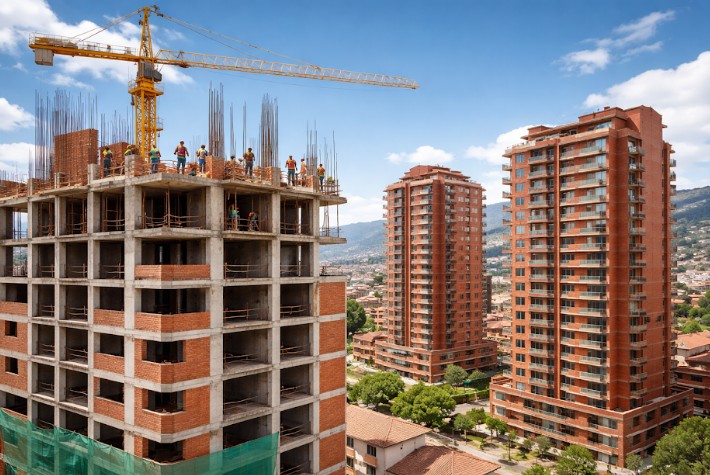
Ask three people where it is, and you will receive three answers. Some will point toward the river corridor east of El Centro, around El Vergel and Avenida 12 de Abril, where newer apartment buildings line the Tomebamba and the sidewalks are broad enough for steady foot traffic. Others will gesture toward Puertas del Sol or Solano, where the buildings are newer and the services feel slightly adjusted to foreign expectations. More recently, some will include the stretch along Ordóñez Lasso, where high-rise construction, wider roads, and parking-heavy buildings give the area a distinctly different character from the older city.
This lack of agreement is not a minor detail. It is the whole point.
A real neighborhood has edges. It appears on official documents. It is subject to zoning rules, water pressure variations, and the occasional power cut that arrives on schedule whether one approves of it or not. If the lights go out in San Sebastián, you know where you are. If they go out in Totoracocha, you know where you are. If they go out in Gringolandia, you are in a place that does not exist, which complicates the conversation when you call to report the problem.
The term itself deserves a moment’s attention. “Gringo” in Ecuador is usually used without much intent to offend, but it is not entirely neutral either. To elevate it into a place name is a curious move, rather like designating a district elsewhere as “Immigrant Alley” and presenting it in a housing guide as though it were a formal and recognized location. One might use the term casually, but it sits uneasily when treated as geography.
What people are usually trying to describe is something more subtle. “Gringolandia” often refers not to who lives in a place, but to how the place is built. It points to areas where the layout, buildings, and general feel depart from the traditional Cuenca pattern and move toward something more planned, more vertical, and a little more familiar to foreign eyes.
You can see it along parts of the river, where newer apartment blocks sit beside the water and the urban rhythm feels slightly reordered. You can see it more clearly along Ordóñez Lasso, where high-rise buildings, garages, and wider roads create an environment that does not quite resemble the older city at all. These areas feel less like an extension of Cuenca and more like a parallel version of it, built according to a different set of assumptions about space and convenience.
What is notable is that many of the people living in these areas are not foreigners. They are Ecuadorians who have chosen newer construction, elevators, parking, and a different style of urban life. The label “Gringolandia” persists anyway, even when it no longer describes the people who live there, which suggests that the word has drifted away from its original meaning and settled into something looser.
And this is where the internet enters the story.
Once a term like this appears in print, especially in an article that presents it with confidence, it begins to take on the appearance of fact. It is listed alongside real neighborhoods, described in the same tone, and offered as a choice to readers who assume that it must therefore exist. The distinction between nickname and geography disappears, and an idea becomes a place.
It is a small example of a larger habit. Cities are increasingly described by people who do not live in them, using templates that work just well enough to pass. The result is not entirely wrong, but it is not entirely right either. It is a version of the city that has been smoothed, simplified, and, in this case, quietly invented.
Cuenca does not divide itself into Gringolandia and somewhere else. It remains what it has always been, a city of overlapping patterns, older and newer layers, and streets that resist simple classification. Some areas are newer, some are older, some are noisier, some are quieter, and people choose between them for reasons that have more to do with daily life than with labels.
So if you are told that you should consider living in Gringolandia, it may be worth asking a few practical questions. Where exactly is it. What are its boundaries. Which bus serves it, and where does the power go out when it rains.
You may find that the answers vary.
At which point it becomes clear that you have not been directed to a neighborhood at all, but to an idea that has been given just enough shape to sound convincing.