
















The French are fighting back against ‘Dry January’. Here’s why you should too
By Anthony Peregrine
Across the road and up a path from our house you come to the edge of a small cliff. Below, the plain runs away to the Cévennes hills. When we arrived here 35 years ago, the plain was blanketed entirely in vines. Acres and acres of them. These days, vast quantities have been ripped out. I was there this morning and, scanning round, reckoned that vines now covered maybe only 40 per cent of the endless terrain. The rest is sort of fallow wasteland.
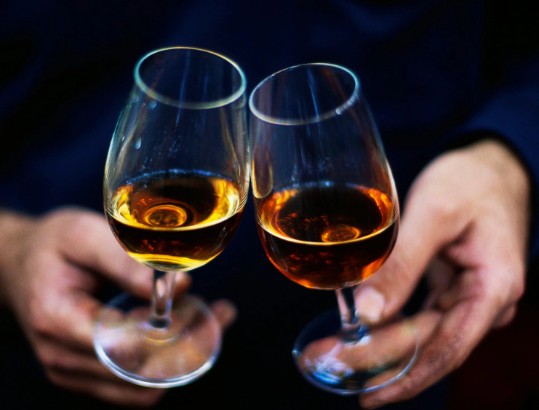
The French wine industry is fighting back against Dry January with a campaign of its own – French January Credit: Owen Franken/Corbis Documentary RF
Right there, then – two minutes from home – is the evidence of the struggles of the French wine industry. Consumption has dropped by 60 per cent since 1960. The decline is mirrored in most other wine-producing countries. At this rate, our children’s children will be stuck with cola, smoothies and Red Bull. This is one reason I look askance at the Dry January, which got underway, and its celebration of all things non-alcoholic.
Let us be clear. Dry January is not an unambiguous good. I’d say it’s an abomination, but that’s just me. I tried “dry January mornings” once and didn’t get past 11am. There is, though, a lot more at stake than my equilibrium. To paraphrase Churchill (talking, granted, of Prohibition), it is an affront to centuries of civilisation.
Which is why we might welcome a counter-initiative from the French wine industry – not “Dry January” but “French January”. This new campaign is not quite disinterested. It’s been devised by Vin & Société, a national body speaking for some 440,000 people working in the industry. That said, it’s not advocating that everyone ignore Dry January to spend the month legless.
The response is measured, more “let’s do moderation, not abstinence”, perhaps have a crack at low or no-alcohol wines. Or lighter whites or sparklers. The aim is a month dedicated to “a modern version of the French art-de-vivre… which values conviviality, responsibility and freedom of choice”. Argue with that, if you will.
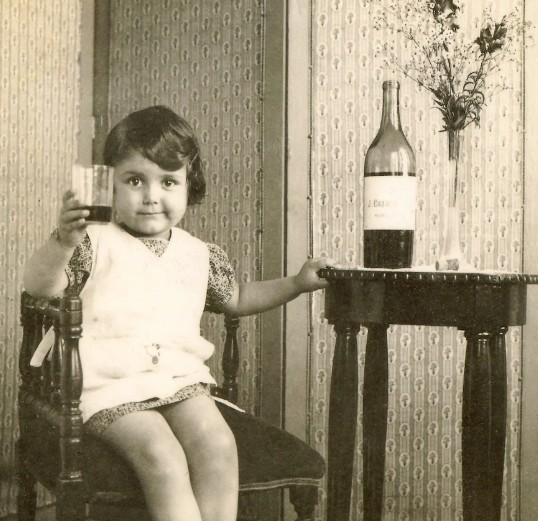
Wine was once a staple of a French child’s diet Credit: adoc-photos/Corbis Historical
Thus starts the 2026 fight back against the present automatic assumption – heard these days whenever the subject is mentioned in the public discourse – that wine is “a problem”, that its only purpose is to serve as something to be shunned. As Sir Winston would doubtless have said, this ignores more than 2,000 years of French culture and agriculture. It also ignores the effect on the landscape, an £82 billion turnover (taking into account all the cash generated by wine), tens of thousands of jobs and, very much not least, the good cheer, profound happiness and solace that wine has generated.
A 2,600-year-old love story
France’s first wine was apparently grown by the Greeks around their Marseille trading post some 2,600 years ago. By the middle ages, records suggest that relatively well-off people were drinking three litres a day. Poorer ones made do with beer or cider, water being out of the question because of contamination.
French thirst scarcely diminished over the centuries, wine being considered a key part of the diet, a liquid foodstuff. It was essential for calories, keeping illness at bay and – oddly, maybe – as a rampart against alcoholism. Wine was good and natural while spirits – notably from abroad – were the enemy.
This went for children, too. Wine fortified them. It could be served – diluted, but served all the same – in school canteens until the 1950s. It was banned in lycées (secondary schools) only in 1981. Good for kids, then, and vital for the military. Wine was, said Marshal Joffre, commander in chief of French forces at the start of the Great War, “the soldier’s friend”. He took his lead from Eugène Rousseaux, director of a wine research station who, in 1914, said wine “exalts the quality of our race, the good humour, the tenacity, the courage”. A daily wine ration of a quarter of a litre per man in 1914 had risen to three-quarters by 1918. This remained below the 1915 suggestion of the National Medical Academy that 500 to 750ml per meal was normal.
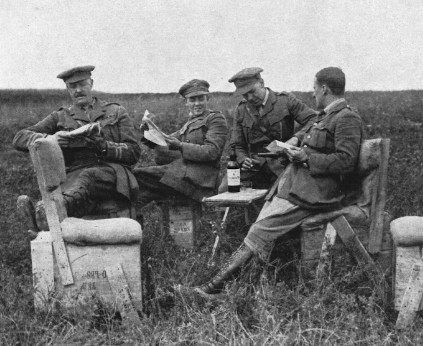
In the First World War, wine was ‘the soldier’s friend’ Credit: Heritage Images/The Print Collector
More recently, as Denis Verdier says, “farmworkers had a daily allowance of two litres a day written into their work contracts”. Verdier, a senior figure in French wine for decades and, at 74, still president of an array of wine organisations, has been well-placed to track the “societal evolution” leading to the present circumstances: his family have been wine producers in the southern Gard département since the 17th century and he is the president of the biggest wine co-operative in the region.
“You’re working a field by hand, it’s tough physical work. You need energy, so a litre of wine. With machines, now robotics, you need much less,” he says at his base in the cave coopérative at Calvisson, near Nîmes. And less is what French people have been drinking. Wine consumption has dropped by two-thirds since 1960, from three bottles per person per week to an average of one per week these days. 90 per cent of French people don’t drink wine regularly.
I’m among the other 10 per cent, but can’t do this on my own. Overall, wine has evolved from a daily companion – breakfast through supper – to a more or less frequent pleasure to, most recently, a source of worry. Other elements have fuelled the evolution. Water is now clean, so that’s no longer an excuse for the second bottle. There are fewer long, sit-down meals: TV, other screens and fast food have seen to that. Other drinks have joined the competition, not least craft beers, whisky and 57,000 varieties of gin.
And everyone, politicians, doctors, newspaper lifestyle columnists, Gen-Z children, health authorities and pretty much anyone else who ever speaks is warning that a glass of wine ensures an early death. Little wonder that around 19 per cent of French people say they never drink any alcohol.
Moderation and innovation
It’s not only France, of course. But, as the planet’s number one producer, France is hit harder than most. As Verdier says: “A big societal change isn’t just ‘societal’. It’s about men and women, vignerons and vigneronnes, who lose their livelihoods, who suffer. You’ve seen demonstrations, sometimes 10,000 strong, in Béziers, Nîmes and Montpellier.”

The industry will have to adapt to modern drinking habits in order to survive Credit: Arnaud Finistre/AFP
Forced distillation of excess wine and subsidised ripping out of vines haven’t invariably sufficed to balance supply to demand, notably in areas like Occitanie, historically the big-volume home of affordable wines.
There have been grave problems here before. In the late 19th century, the phylloxera wine disease pretty much wiped out all French wine production. Poverty stalked Languedoc villages. Competition from cynically adulterated wines caused upheaval in the early 20th, as did two world wars, the 1930s economic debacle and the extraordinary frost of February 1956.
Wine growers are used to tough times – but rarely caused by suspicion, and disavowal, of the product itself. That’s a key factor in the struggle right now. Naturally, Brexit, the closing off of the Russian market and decline in the Chinese one haven’t helped. Nor have Trumpian tariffs. Wine growers can’t do much about these. They can, though, resist the contention that their product is somehow suspicious.
Whence French January – and the push back. “Wine drinking in the over-40s is holding up. There are still traditional aficionados of more structured wines. We need to keep them,” says Verdier. “It’s the under-40s who have turned away from wine. Not necessarily from all alcohol, but from wine,” he says. “It’s a balancing act. We must tempt them back.”
That’s the hill upon which “French January” is fighting. Keep the older drinkers on board while going all out moderation – and innovation – to pull in the next generation. In the Gard, that means a new emphasis on white and rosé wines in a historically red region. Also on non and low-alcohol wines, which we are now obliged to call NoLo. Nationwide, the NoLo market has apparently grown by 22 per cent since 2022. It’s now said to be worth some £265 million.
There’s more. “Cocktails and mocktails,” says Verdier. The Gard now has its own sparkling wine and spritz – bright orange, just like in Italy. The advance on many fronts hasn’t delighted everyone. Obviously not. This is French viticulture. They are a contrary lot. Tell them it’s raining and someone will sue for libel on behalf of the sun. But, says Verdier, the circumstances leave them no choice.
No choice, either, but to go all out on wine tourism. Which, along with drinking as much wine as a God-given constitution can handle, is where we come in. There’s no finer way of getting under the skin of France (or Italy or Spain or Portugal) than travelling the winelands, meeting vignerons and experiencing a sense of centuries – festive, convivial and moving. All wine regions now put on more wine festivals, visits, evening events, dinners and vineyard walks than anyone can reasonably count. I’d say these are more rewarding than sitting around abstemiously.
At the very least, you should have a good time. At best, you’re participating in, and perpetuating, a culture vital to civilisation for the last 8,000 years. In that light, Dry January may appear even more wan than it did before.
________________
Credit: The Telegraph