














The “Internal Armed Conflict”: What It Really Means for an Expat in Cuenca
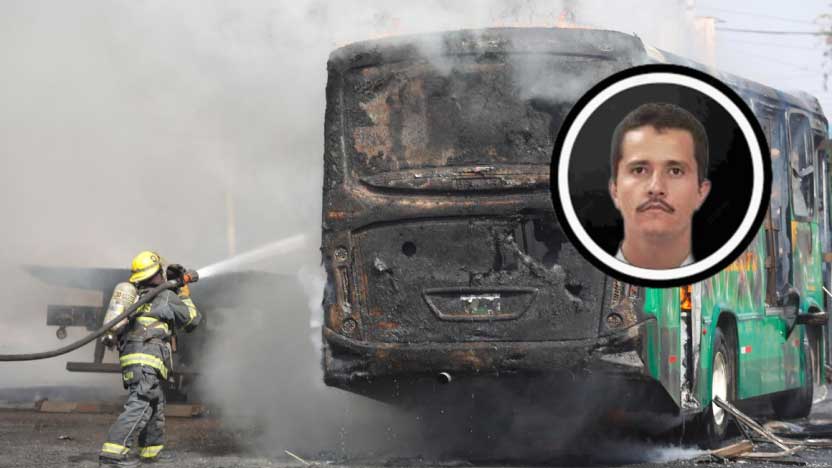
 In January 2024, Ecuador was thrust into the international spotlight for all the wrong reasons. The headlines were terrifying. José Adolfo Macías Villamar, the notorious gang leader known as “Fito,” vanished from his prison cell. In what was clearly a coordinated and brazen show of force, prison riots exploded across the country.
Then came the image seared into the global consciousness: a group of armed, masked men storming a live television broadcast in Guayaquil, taking journalists hostage on the air.
The nation reeled. In response, the newly elected President Daniel Noboa made a historic and grave declaration: a 60-day state of emergency and a national “internal armed conflict.” For prospective expats watching from afar, these words were a death knell to their dreams. They conjured images of a failed state, civil war, and chaos in the streets.
A year later, in 2025, that declaration technically remains in effect. But to understand what this means for an expat considering a move, it is critical to separate the headline from the context.
- What the Conflict IS
President Noboa’s declaration was not a statement of panic; it was a precise legal and military maneuver. This is a targeted war declared by the Ecuadorian government against 22 specific, named transnational criminal groups. The largest and most infamous are Los Choneros (Fito’s group) and their rivals, Los Lobos.
This declaration was a fundamental shift. It officially reclassified these gangs from “common criminals” to “terrorist” combatants. This legal change gave the Ecuadorian military sweeping new powers to patrol the streets, enter homes in search of combatants, and treat gang members as military targets, not as a domestic police matter. In short, the government stopped playing defense and went on the offensive.
- What the Conflict is NOT
This is the most crucial distinction for any foreigner to understand. This is not a civil war. It is not a popular uprising or a political revolution.
There is no ideological divide. It is not one half of the country, or one political faction, fighting the other. The average Ecuadorian citizen is not a participant; they are a victim, weary of the violence and overwhelmingly supportive of the government’s crackdown. This is, in the simplest terms, the state versus organized crime. It is a war for control, not for ideology.
- The Root Cause: Geography and Cocaine
The root cause, acknowledged by all experts, is drug trafficking. Ecuador itself is not a major producer. The problem is its location. It is wedged between the two largest cocaine-producing countries in the world: Colombia to the north and Peru to the south.
For years, Ecuador was just a quiet transit route. But several factors made it the perfect hub for transnational cartels: a dollarized economy (no need to launder drug money), large-scale international ports, and a historically under-resourced military.
The violence is a turf war between cartels fighting for control of the “plazas,” or trafficking routes. Specifically, they are fighting for control of the coastal ports—Guayaquil, Esmeraldas, and Manabí—from which they ship drugs to Europe and the United States. The violence is concentrated there because that is where the product and the money are.
- The Effect on Cuenca: The Key Question
This is the most important question for an expat. The answer lies in the critical distinction between the event and the location.
The Link: Cuenca was involved in the initial January 2024 event. One of the coordinated prison riots occurred at the Turi prison, a large federal facility located on a hill just outside the city. Guards were taken hostage, and the city was put on high alert. This was a frightening and serious event that brought the national crisis directly to Cuenca’s doorstep.
The Distinction: However, the Turi riot was a symptom of the national prison crisis, not the start of a local war. It was a contained event. Since that initial chaos, the ongoing violence—the extortions, kidnappings, and assassinations—is not happening in Cuenca.
It remains heavily concentrated in the coastal provinces, hundreds of miles and a massive mountain range away. Cuenca is in the Andes. It is not a port. It is not on a primary trafficking route. The “business” of the cartels is not here.
The Expat Experience: Expat reports from 2024 and 2025 unanimously confirm this. While the social media amplification and international news created a “buzz of bad information” and unsubstantiated rumors, the reality on the ground in Cuenca remained “calm” and “normal.”
Long-term expats report that while they are cautious and more aware, daily life continues. Cafes are full, people walk along the rivers, and the mercados are bustling. The violence is not targeted at civilians or expats, who are of no interest to the gangs. It is almost exclusively gang-on-gang or gang-on-state, and it is happening far away.
While the “internal armed conflict” is a real and serious security crisis for Ecuador, it is one that is, for now, geographically isolated far from the highland-expat havens.
This article is sponsored by smilehealthecuador.com. The ‘conflict’ is real, but it’s not in Cuenca. In Cuenca, the only ‘shocking’ thing is the low price for a perfect set of veneers at smilehealthecuador.com. They’re waging their own “war” on high dental costs, and they’re winning. It’s one battle you’ll be glad to be a part of.