
















The loneliest generation isn’t Gen Z scrolling at 2 a.m. — it’s the Baby Boomers realizing that being useful and being valued are not the same thing
By Lachlan Brown
The headlines keep saying Gen Z is the loneliest generation. And the data supports it, in a narrow, specific way. Young people report high rates of social isolation, screen-mediated connection that does not satisfy, and a pervasive sense of disconnection from the people around them. That is real and it matters.
But there is another loneliness that nobody is writing about. It is quieter. It does not show up in surveys because the people experiencing it were trained never to report it. It does not generate think pieces because it is not dramatic or photogenic. It just sits there, in living rooms and kitchens and doctor’s offices, in the silence between phone calls that do not come, in the space that opens up when you stop being needed and discover that nobody taught you how to be wanted.
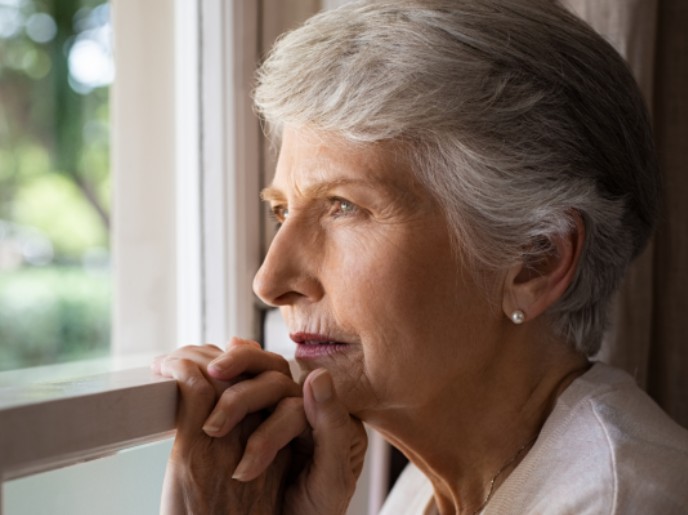 The loneliest generation in America is not scrolling at 2am. They are sitting in houses they paid off, with phones that rarely ring, wondering when exactly they became optional.
The usefulness trap
The boomers built their entire social architecture around being useful. They were the providers. The fixers. The ones who showed up when something broke, when someone needed money, when a crisis required a calm adult in the room. Their value to their families, their communities, and their own sense of self was rooted in function. They mattered because they did things for people.
Research by Froidevaux, Hirschi, and Wang on mattering in retirement identified mattering as an overlooked but critical dimension of the aging experience. Mattering is defined as the perception that you are important to others, that you make a difference in the world, that people would notice your absence. The research found that mattering is not the same as self-esteem or mastery. It specifically refers to the self-concept within the relational context. You can feel competent and still not feel like you matter to anyone.
For the boomers, usefulness and mattering were fused. They were the same thing. As long as someone needed their help, they mattered. The problem is that usefulness has a shelf life. Children grow up. Careers end. Bodies slow down. And the person who built their entire sense of significance on being the one who fixes things eventually runs out of things to fix.
What happens when the usefulness ends
A review of mattering and the well-being of older adults found that mattering was robustly linked with lower loneliness and higher life satisfaction. But it also found that mattering can be lost when a key life role no longer applies, and that this loss can contribute to depression that stems not only from the loss of significance but also from a perceived loss of self. The review noted that the transitions of later life can be felt acutely by older people who still very much need the sense of validation that comes from mattering to others.
There are many ways for older people to experience a loss of mattering. It can take the form of becoming a caregiver to grandchildren who eventually become old enough to take care of themselves. It can take the form of losing mobility and no longer being able to fulfill an active volunteer role. And it can take the form of the loss of perceived mattering that results when an older person transitions to retirement and no longer feels important and significant to others.
The boomer who raised everyone and fixed everything is now experiencing all of these simultaneously. Their children are independent. Their grandchildren are busy. Their expertise, which was once the reason people called, has been replaced by a search engine. And the phone, which used to ring with requests for help, now rings mostly with reminders about medical appointments.
The difference between useful and valued
Here is the distinction that breaks this generation’s heart: being useful means people come to you when they need something. Being valued means people come to you because they want to be near you. The first is transactional. The second is relational. And many boomers, through no fault of their own, never learned to build the second because the first was so reliably available that they never had to.
___________________
Credit: Veg Out



Hogar Esperanza News

Fund Grace News

Property Manabi

Nice apartment banner
The Cuenca Dispatch

Week of August 23

Ecuador’s economy grew 2% during the first half of 2026 compared with the same period a year earlier, according to new Banco Central del Ecuador data.

Cuenca gets a prime view of next week’s deep partial lunar eclipse.

Ecuador’s economy grows 2% in the first half of 2026.
Fabianos Pizzeria News