



















The nation of a birth
There is something almost touching about a judge asking a simple question and getting no answer. Not a philosophical answer, not a constitutional answer, just a practical one. How, exactly, are you going to do this?
That was the tone of US Supreme Court Justice Brett Kavanaugh when the question of birthright citizenship came up. Not whether it was right or wrong, but whether anyone had thought through what happens at 3:00 in the morning in a hospital when a baby arrives and someone has to fill out a form.
 The United States has long relied on a simple rule: if you are born on American soil, you are an American citizen. That idea comes from the Fourteenth Amendment, written in the aftermath of the Civil War to clarify the status of slaves and expressed in a sentence that looks clear until you stare at it too long. “All persons born… and subject to the jurisdiction thereof.”
(To fully understand the Fourteenth Amendment, you have to understand that only a decade earlier the Supreme Court of the USA had ruled conclusively that no person of African descent could ever be a US citizen.)
It is that second part of the 14th that causes trouble. “Subject to the jurisdiction” sounds straightforward, but it has never been entirely so. For many years it did not apply to some Native Americans living on reservations, who were regarded as belonging to separate sovereign entities. They were physically inside the United States but not fully under its jurisdiction in the legal sense. That alone should give pause to anyone who thinks the wording is simple.
Once you start pulling at that thread, the sweater unravels quickly.
Take the case of former UK Prime Minister Boris Johnson, born in New York to British parents. He was, at birth, automatically an American citizen. He later gave it up, not out of patriotism, but to avoid paying US capital gains taxes on a home he had sold in the UK. Then consider children born to foreign diplomats in Washington. They are born on American soil but are not considered American, because their parents are not subject to U.S. jurisdiction in the ordinary sense. The rule already has exceptions, and they are not trivial ones.
Now imagine trying to formalize all of this into a system that must process more than three million births a year.
The current arrangement is crude but effective. A birth certificate is issued, and that is the end of the matter. Under the proposed changes suggested by the current administration, that would no longer be enough. Officials would need to verify the legal status of the parents before deciding whether the child is a citizen. That means databases, cross-checks, notarized documents and inevitably, errors.
And errors in this context are not minor inconveniences. They can be the difference between being a citizen and being a stateless person.
Anyone who has tried to obtain a Consular Report of Birth Abroad will recognize the flavor of what is coming. That process already requires documents, appointments, listing every overseas vacation the father has taken in the last 20 years and how many days were spent outside of the US, and the hope that nothing has been misfiled or mistranscribed. It is manageable for the bureaucracy when dealing with a relatively small number of overseas births, but becomes something else entirely when applied to every newborn in the country.
Then there is the matter of family reality, which rarely conforms to legal neatness. Many families have mixed immigration status across parents and grandparents. Some involve uncertain paternity, some involve absent fathers, some involve situations that no bureaucratic form is designed to handle, including cases of rape. The law may prefer clarity, but life does not supply it.
At that point, one begins to wonder whether the courts themselves might acquire a new function. We already have immigration courts, endlessly occupied with sorting out status after the fact. It is not hard to imagine the creation of “birth courts,” where disputed parentage, documentation gaps, and jurisdictional puzzles are examined in something approaching real time.
Of course there are legal precendents. One is reminded, uncomfortably, of King Solomon, who proposed to resolve a dispute over a child by cutting it in half. The modern version would be less dramatic but no less fraught, with judges asked to decide, on imperfect evidence, who belongs where. If that sounds theatrical, history offers a darker precedent in Herod the Great, whose solution to a disputed birth during a census was rather more final, but ultimately ineffective since it apparently applied to maternity hospitals, but not to mangers and stables.
The debate often turns to “birth tourism,” the idea that people travel to the United States specifically to give birth so that their child acquires citizenship. This certainly happens, but the numbers are elusive and probably exaggerated. More importantly, it raises a practical question that is rarely asked. Who is paying the hospitals for all these births? In many cases, these are private arrangements paid for by the families themselves. It is not clear that this represents a large burden on the taxpayer, though it makes for a compelling political slogan.
Other countries provide useful contrasts. Canada and Mexico both have forms of birthright citizenship and do not appear to be overwhelmed by pregnant tourists arriving to give birth. On the other hand, the Dominican Republic has taken a different approach, issuing distinct birth certificates to children of Haitian mothers unless the child is formally registered by a Dominican father. That creates a paper trail, but also a class of people whose status is uncertain when they want to obtain passports some time in the future.
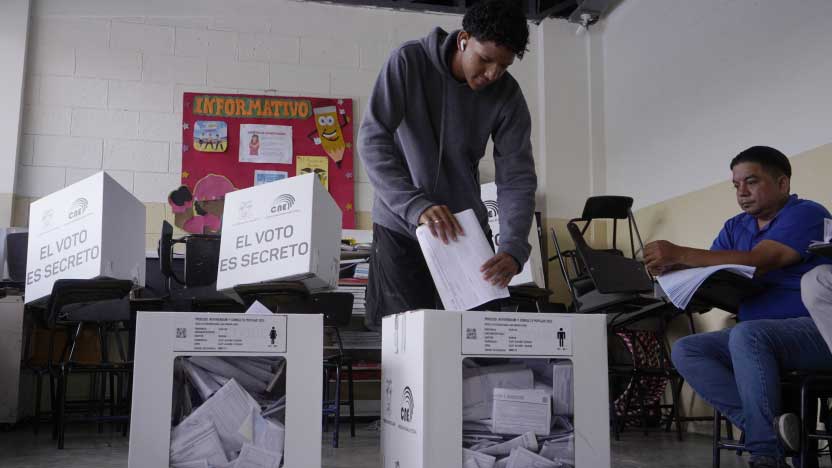
In South America, including countries like Ecuador, the principle of jus soli, citizenship by birthplace, is generally accepted with fewer political overtones. The system is not perfect, but it is straightforward, and that counts for a great deal.
What emerges from all this is not a grand philosophical dispute about soil versus blood, but a much more prosaic problem. How do you build an admin system that can cope with the complexity of real human lives?
The American system, for all its imperfections, has the virtue of simplicity. You are born there, you belong there. It avoids the need to investigate the circumstances of your parents at the moment of your birth, which is perhaps the one moment in life when you have no control over anything at all.
Replace that with a system based on parentage, and you immediately inherit the administrative burdens of proving who those parents are, what their status was, and whether the records are accurate. Most cases would be straightforward enough, processed without fuss in hospitals and offices across the country. It is the edge cases, always the edge cases, that accumulate and begin to define the system.
A recent CNN article hints at this with the uncomfortable exchange in court, where the answer to the question “How?” was essentially “We’ll figure it out.”
That is not reassuring.
The risk is not merely inconvenience. It is the creation of a class of people who are, in effect, citizens in fact but not on paper. The United Kingdom discovered this in the Windrush scandal, when people who were born British and had lived for decades in the UK, suddenly found themselves unable to prove it when it was time for them to retire and collect a pension.
Paperwork has a way of becoming reality.
And so the question returns to the hospital at 3:00 in the morning. A child is born, a form is filled out, and a life begins. The elegance of the old system was that it required no further inquiry. The danger of the proposed new one is that it may require too much.
In the end, the debate over birthright citizenship may not be decided by history or theory or by nine legal scholars uncovering the occult meaning of the 14th Amendment, but by something far less grand — whether the system designed to replace it would actually work at all.