












The U.S. suspends joint military operations with Ecuador, investigates human rights violations
The U.S. has suspended joint military operations with Ecuador while the Trump administration investigates possible extra-judicial killings by Ecuadorian armed forces. According to the New York Times and Atlantic magazine, U.S. personnel may have also been involved in the killings.
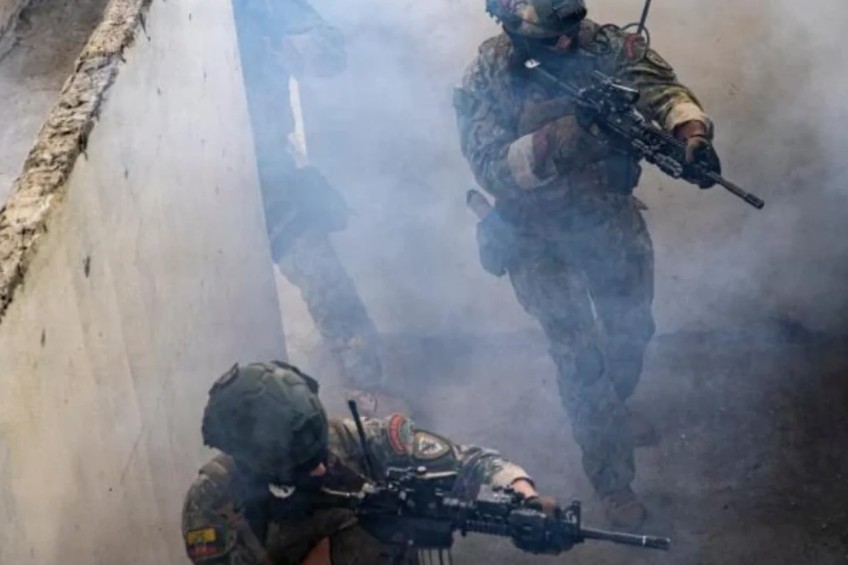
Joint Ecuador-U.S. military operations have been suspended pending an investigation.
Joint operations were suspended in mid-October with no public announcement.
According to U.S. officials, the investigation focuses on the September 23 killing of Carlos Germán Muñoz, who Ecuador claimed was linked to several international criminal organizations, include the Los Choneros gang. Although the U.S. Defense Department claims U.S. military personnel were not present at the scene, other sources say they were.
A spokesman for the Defense Department said the investigation “is regarding possible human rights violations”
According to the Atlantic, unnamed military personnel claim that Muñoz was shot after he surrendered and raised his hands.
Following the U.S. mid-term election, several Democratic Congress members announced they would conduct their own investigation of joint U.S.-Ecuador missions. In particular, they said they would look into the bombing of Ecuadorian fishing boats by the U.S. Navy and the “ethical standards” of the Ecuadorian military.
Noboa also has concerns about the military alliance with the U.S. A poll conducted in early November showed 80% of Ecuadorians oppose the U.S. bombings of fishing boats and associate the bombings with the military partnership. In court hearings in Manta, the U.S. and Ecuador have refused to provide legal justification for the bombings and none of the fishermen arrested in the incidents have been convicted.
In an interview on CNN en Español, researchers for the Atlantic said that Noboa enthusiastically approved of joining “iron fist” military operations with the U.S. “He was eager to please Trump and presidential advisor Stephen Miller and thought the partnership would be popular with the public,” one of the researchers said. “Then, he noticed that the boat bombings were hurting his popularity, which was already underwater.”
The March helicopter bombing of a dairy farm near the Colombian border, with U.S. participation, was also an embarrassment for the Noboa government. After the bombing, it was revealed that U.S. intelligence had misidentified the target, one of the Atlantic researchers said. Several farm worders were beaten up by Ecuadorian soldiers following the bombing. The researcher added: “Without acknowledging it publicly, Noboa reimbursed the farm owners and apologized for the mistake.”
In recent weeks, Noboa has also faced resistance from within the Ecuadorian military about joint Ecuador-U.S. missions. An Army general was fired in October for questioning government policy.