













U.S. trade deal will be signed this week; Without gov’t help, communities build bridges; Police ‘correct’ the curfew order for Cuenca; Flu shots are still available
Curious? –
(De El Mercurio del viernes, 6/3) Se convoca registro para agenda cultural (Call for entries for cultural agenda) – La Dirección Municipal de Cultura opened the call for collectives, managers and organizations to register their proposals in the Agenda de Fiestas de Cuenca in abril. This invitation is directed at those who organize artistic, cultural, touristic or culinary activities with the goal of including them in the official program. If you are interested, register your event on a form available until el martes, 17/3. <How about a copy and paste of the events from GringoPost?>
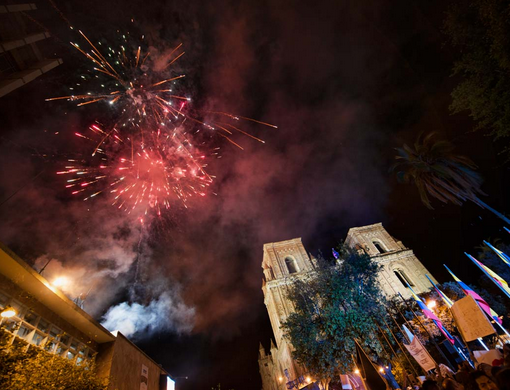
Cuenca’s Cultural Affairs office is collecting information for events to be celebrated during the city’s foundation holidays in April.
(De El Mercurio del viernes, 6/3) Habitantes de Santa Isabel deciden hacer su propio puente (Residents of Santa Isabel decide to build their own bridge) – The residents of the lower part of Santa Isabel have decided to build a communal bridge for themselves next to the existing bridge over the río Rircay to reduce the risk of being left isolated when the river rises. The residents of Sulupali Grande led the initiative and included people from Sulupali Chico, Jubones, San Salvador de Cuba, Sauceloma, and La Cría. They met to form a pre-construction committee on el 28/2 after they lost hope that the Prefectura of Azuay would build one. They are going to build a bridge similar to the one in existence using cement, rock material from the river, and iron salvaged from the old ExCrea bridge which collapsed in 2012.
The estimated cost is about $35,000 and they have raised $962 so far. They have earmarked about $270 to build a temporary passageway to allow access to the bridge. Guillermo Coronel, a spokesman for the bridge committee, said they are seeking funding from local, provincial and the national government as well as from migrants from the canton who went overseas. Andrea Brito, the province’s secretary of road infrastructure said that the previous administration conducted studies that a bridge would cost almost $7.3 million.
(De El Mercurio del viernes, 6/3) Mingas han sido claves (Mingas have been key) – The residents of the lower part of Santa Isabel have built improvised bridges with their own money for years, due to structural problems with the old ExCrea bridge since 2008. They first built bridges with eucalyptus trunks and planks when summer ended to enable vehicular traffic. However, when the rains returned, these structures were swept away by the river. Between 2012 & 2013, they built a concrete bridge with planks. In 2015, they built a 2nd communal bridge with more reinforcement. However, in 2021, the river rose and destroyed both structures leaving only one bridge which has stayed in operation the last 11 years. <I’m still trying to figure out exactly how many bridges or parts of bridges there are still standing. I am imagining the reporter trying to sort out half a dozen committee members each telling the history of the bridges all at once.>
(De El Mercurio del viernes, 6/3) Campaña contra la influenza se extiende hasta el 30/5 (Influenza campaign extended until May 30) – The Ministerio de Salud has extended the Campaña National Vacúnate for 60 days, until el 30/5. The last epidemiological analysis found increased circulation of respiratory viruses. For this reason, it is indispensable to increase the protection for at risk groups. To date, 2.9 million doses have been administered. <I know. Those of you who believe in vaccines might get jabs, those who don’t, won’t. You don’t need to debate it here.>
(De El Mercurio del sabado, 7/3) Comandante de la Policía en Azuay rectifica y dice que no habrá ‘toque de queda’ en Cuenca (Police commander in Azuay says there will be no ‘curfew’ in Cuenca) – In an about-face, the government says there will be no nighttime curfew in Cuenca. Azuay Police Commander Ángel Esquivel said the statement issued Friday that a 2 a.m.to 5 a.m. curfew would be enforced in the city was “incorrect.” The Friday statement by the National Police command added several cities, including Cuenca, to a list of areas where nighttime curfews would be implemented beginning March 15. Esquivel did not explain why the original statement was released but said Cuenca is a low-crime city and does not require a curfew.
(De El Mercurio del viernes, 6/3) Acuerdo comercial con Estados Unidos se firmará el 13/3 (Trade agreement with the United States to be signed on March 13) – Pres. Noboa announced on a radio interview that the Acuerdo de Comercio Recíproco (ART, for its initials in English) between the US and Ecuador will be signed el 13/3. In its first phase, 50% of Ecuadorian imports will immediately have a 0% tariff. <Does that include bananas? <Cocaine thrown in as a yapa?>) For the other 50% of imports, the current tariff of 15% will be maintained with dialogue oriented at a gradual reduction.
(De El Mercurio del viernes, 6/3) Estados Unidos emite alerta de seguridad en Ecuador (The United States issues a security alert in Ecuador) – The U.S. Embassy issued a security alert given the state of emergencies in nine provinces and the curfew in 4 to advise US citizens travelling or living in affected areas to take extreme care and comply with the Ecuadorian authorities’ instructions <assuming you know enough Spanish to understand those instructions.>. It reminded US citizens to follow the Travel Advisory from the State Department which currently recommends reconsidering travel to Ecuador due to crime, terrorism, civil disturbances and kidnappings. <At least we can feel safe from being hunted, kidnapped, and shot by Ecuadorian immigration agents.>
However, the alert pointed out that the Embassy has no information about specific or credible threats to US citizens or to US interests in the country. The curfew will be in effect in Guayas, Los Ríos, Santo Domingo and El Oro from el 15/3 to el 30/3 and applies on all days from 23:00 to 5:00. The Embassy is recommending US citizens to monitor official sources and local media, avoid zones where there is law enforcement activity, follow instructions from local authorities, carry ID, and review State Department travel advisories. <Ironic. The US is helping Ecuador deal with the drug problem on one hand, and discouraging tourism, which brings income into the country with the other.>



Hogar Esperanza News

Anubis Restaurant News

Fund Grace News

Fabianos Pizzeria News

San Clemente Banner News

Property Manabi Banner News

The Cuenca Dispatch

Week of March 01
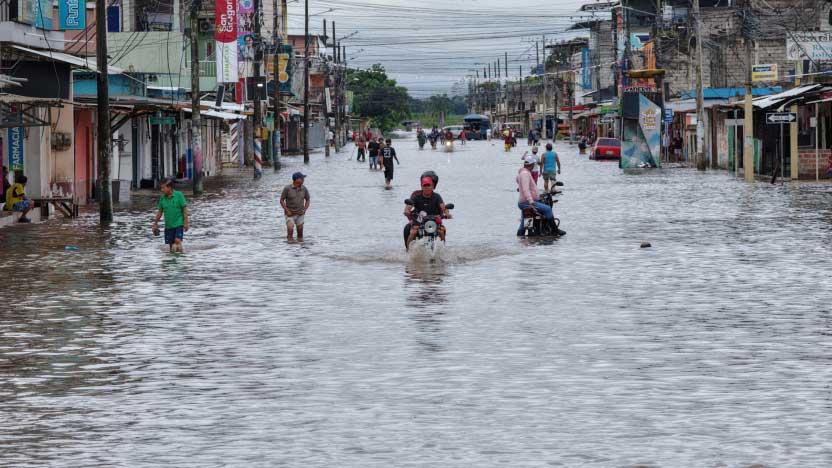
Emergency declared as winter rains batter Ecuador, damaging homes, schools and critical infrastructure.

Goleada fuel subsidy probe puts Guayaquil mayor and business network under judicial scrutiny.
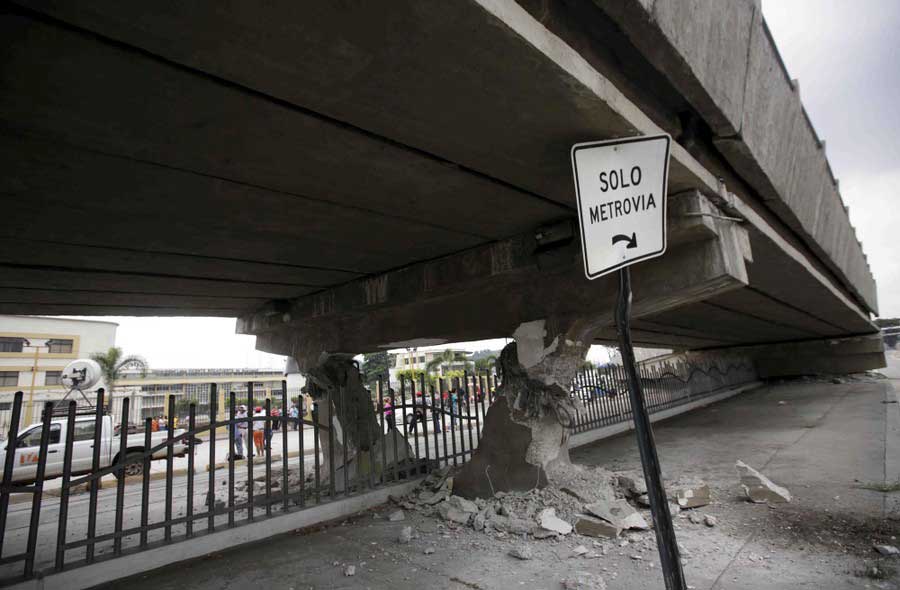
Noboa tightens spending rules on local governments amid claims of bloated payrolls.
Quinta Maria Banner News

Amazon Banner News