

















Weekslong lockups of European tourists at U.S. borders spark travel fears, prompt travel warnings
By Julie Watson
Lennon Tyler and her German fiancé often took road trips to Mexico when he vacationed in the United States since it was only a day’s drive from her home in Las Vegas, one of the perks of their long-distance relationship.
But things went terribly wrong when they drove back from Tijuana last month.
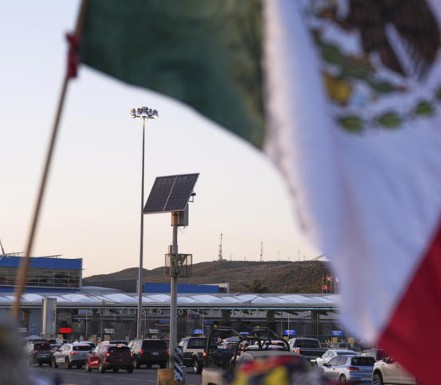
Foreign tourists and even some U.S. citizens are being detained at U.S. border crossings.
U.S. border agents handcuffed Tyler, a U.S. citizen, and chained her to a bench, while her fiancé, Lucas Sielaff, was accused of violating the rules of his 90-day U.S. tourist permit, the couple said. Authorities later handcuffed and shackled Sielaff and sent him to a crowded U.S. immigration detention center. He spent 16 days locked up before being allowed to fly home to Germany.
Since President Donald Trump took office, there have been other incidents of tourists like Sielaff being stopped at U.S. border crossings and held for weeks at U.S. immigration detention facilities before being allowed to fly home at their own expense.
They include another German tourist who was stopped at the Tijuana crossing on Jan. 25. Jessica Brösche spent over six weeks locked up, including over a week in solitary confinement, a friend said.
On the Canadian border, a backpacker from Wales spent nearly three weeks at a detention center before flying home this week. And a Canadian woman on a work visa detained at the Tijuana border spent 12 days in detention before returning home last weekend.
Sielaff, 25, and the others say it was never made clear why they were taken into custody even after they offered to go home voluntarily.
Pedro Rios, director of the American Friends Service Committee’s US-Mexico border program, a nonprofit that aids migrants, said in the 22 years he has worked on the border he’s never seen travelers from Western Europe and Canada, longtime U.S. allies, locked up like this. “It’s definitely unusual with these cases so close together, and the rationale for detaining these people doesn’t make sense,” he said. “It doesn’t justify the abhorrent treatment and conditions” they endured. “The only reason I see is there is a much more fervent anti-immigrant atmosphere,” Rios said.
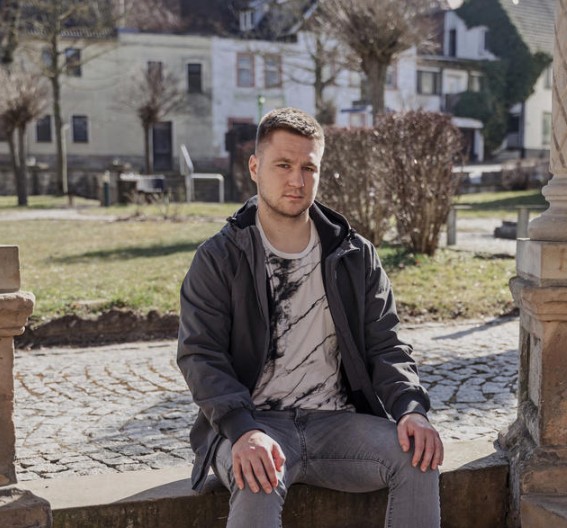
Tourist Lucas Sielaff back home in Germany.
Of course, tourists from countries where the U.S. requires visas — many of them non-Western nations — have long encountered difficulties entering the U.S.
U.S. authorities did not respond to a request from The Associated Press for figures on how many tourists have recently been held at detention facilities or explain why they weren’t simply denied entry.
Weekslong lockups fuel anxieties about tourist travel to US
The incidents are fueling anxiety as the Trump administration prepares for a ban on travelers from some countries. Noting the “evolving” federal travel policies, the University of California, Los Angeles sent a notice this week urging its foreign-born students and staff to consider the risks of travel for spring break, warning “re-entry requirements may change while you are away, impacting your return.”
Both German tourists were allowed into the United States under a program offered to a select group of countries, mostly in Europe and Asia, whose citizens are allowed to travel to the U.S. for business or leisure for up to 90 days without getting a visa in advance. Applicants register online with the Electronic System for Travel Authorization.
But even if they are authorized to travel under that system, U.S. authorities have wide discretion to still deny entry.
Following the detentions, Britain and Germany updated their travel advisories to alert people about the strict U.S. border enforcement. The United Kingdom warned “you may be liable to arrest or detention if you break the rules.”
Sielaff was taken away for more questioning. Tyler said she asked to go with him or if he could get a translator and was told to be quiet, then taken out of her car and handcuffed and chained to a bench. Her dog, recovering from surgery, was left in the car.
After four hours, Tyler was allowed to leave but said she was given no information about her fiancé’s whereabouts.
During questioning, Sielaff said he told authorities he never lived in the U.S. and had no criminal history. He said he was given a full-body search and ordered to hand over his cellphone and belongings. He was put in a holding cell where he slept on a bench for two days before being transferred to the Otay Mesa Detention Center in San Diego. There, he said, he shared a cell with eight others.
“You are angry, you are sad, you don’t know when you can get out,” Sielaff said. “You just don’t get any answers from anybody.”
He was finally told to get a direct flight to Germany and submit a confirmation number. In a frantic call from Sielaff, Tyler bought it for $2,744. He flew back March 5.
‘A blatant abuse’ of US border authorities’ power, victims say
“What happened at the border was just blatant abuse of the Border Patrol’s power,” Tyler said.
Ashley Paschen agrees. She said she learned about Brösche from a TikTok video asking anyone in the San Diego area for help after her family learned she was being held at the Otay Mesa Detention Center. Paschen visited her several times and told her people were working to get her out. Brosche flew home March 11.
“She’s happy to be home,” Paschen said. “She seems very relieved if anything but she’s not coming back here anytime soon.”
On Feb. 26, a tourist from Wales, Becky Burke, a backpacker traveling across North America, was stopped at the U.S.-Canada border and held for nearly three weeks at a detention facility in Washington state, her father, Paul Burke, posted on Facebook. She returned home Tuesday.
On March 3, Canadian Jasmine Mooney, an actress and entrepreneur on a U.S. work visa, was detained at the Tijuana crossing. She was released Saturday, her friend Brittany Kors said.
Before Mooney’s release, British Columbia Premier David Eby expressed concern, saying: “It certainly reinforces anxiety that … many Canadians have about our relationship with the U.S. right now, and the unpredictability of this administration and its actions.”
The detentions have prompted several European countries to issue travel warnings for the U.S. “Because of current conditions in the U.S. regarding immigration, please be advised that foreign tourists may be subject to lengthy entry procedures and possible detention,” the German government said in statement March 19.
Tyler plans to sue the U.S. government.
Sielaff said he and Tyler are now rethinking plans to hold their wedding in Las Vegas. He suffers nightmares and is considering therapy to cope with the trauma.
“Nobody is safe there anymore to come to America as a tourist,” he said.
________________
Credit: Associated Press



Hogar Esperanza News

Fabianos Pizzeria News

The Cuenca Dispatch

Week of September 20

Ecuador turns to industrial power cuts to protect Mazar and keep homes from going dark.

Ecuador raises its 2026 growth forecast, but El Niño could spoil the outlook next year.

Cuenca retirees challenge medical and therapy changes at IESS senior center.
Fund Grace News