














What doctors want you to know before you take a prescription drug off-label
By Caitlin Carlson
When Deborah M. Kado attends cocktail parties, she says people ask her all the time about what medications they “should” be taking or what she thinks about certain prescription medications used for longevity. “From the beginning of humanity, people have been dreading their own mortality and thinking of ways in which they can forestall it, or maybe even avoid it,” says Kado, a medical doctor, professor of geriatric medicine, and co-director of the Stanford Longevity Center.
In the modern era, that impulse has largely played out in the supplement aisle. Today, roughly 75 percent of Americans across age groups take some kind of dietary supplement, from omega-3s to vitamin D to creatine.
But increasingly, the focus is shifting beyond vitamins and powders. A growing number of people are turning to prescription drugs in hopes of improving health and slowing age-related decline.
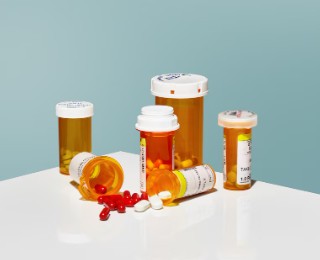 Cases in point: Ozempic and other GLP-1s, originally developed to treat diabetes, are now widely used for weight management and are being studied to treat conditions ranging from addiction to kidney disease. Rapamycin, a drug designed for organ transplant patients, is being taken by some for its purported “anti-aging” effects. Even testosterone replacement therapy is sometimes positioned as a longevity or performance enhancer.
Kado describes this moment as the next evolution in how people attempt to take control of their health. And while prescription drugs are harder to obtain than supplements, direct-to-consumer telehealth companies have made access easier, helping reframe medications as lifestyle tools rather than last-resort treatments.
That shift has clear appeal. Prescription drugs are regulated, measurable, and—unlike many supplements—backed by at least some clinical data. For people frustrated by a slow or inaccessible healthcare system, access to this kind of medication can feel empowering.
But there are also clear risks, as some of these medications haven’t been approved—or extensively studied—for these off-label, preventive uses. And, counterintuitively, studies, including a 2025 study in the Journal of the American Geriatrics Society, have found an association between taking more medications and higher mortality risk. “The people that I see who are 100,” Kado says, “literally take less than five meds.” So why are prescription drugs being reframed as tools for prevention now?
Why are people turning to these meds in the first place?
The shift toward prescription drugs as preventive tools didn’t happen in a vacuum. Arthur L. Caplan, founding head of the Division of Medical Ethics at NYU Grossman School of Medicine’s Department of Population Health, says this trend is a reflection of today’s “fast medicine” culture.
“People in America really like to believe that they don’t have to follow good health habits,” he says, like exercising and eating well. “What they [want] to do is find the right magic bullet, elixir, supplement, tonic, voodoo chant, and that’ll do it.”
Jennifer Schrack, a professor of epidemiology and medicine and the director of the Center on Aging and Health at Johns Hopkins University, agrees that it’s natural for people to find the idea of taking a pill that will keep them healthier to be appealing. “I’ve always said whenever a pill comes out that mimics exercise, I’m going to be out of business,” she says.
While she doesn’t rule out the possibility that some drugs could one day meaningfully support healthy aging, “there’s no evidence that these are going to be [lifespan] altering agents.” What we do know now is that staying active and socially and mentally engaged matters, but people want more than that.
Of course, another key driver is money. “This is all being driven by economics,” Kado says. Unlike in many other countries, drug companies are allowed to market directly to consumers in the U.S., point out both Kado and Caplan.
About two-thirds of adults in a University of Chicago survey said they’d seen ads for prescription medications (including those for weight loss such as Ozempic, Wegovy, or Mounjaro) on social media in the past 12 months. “[Companies are] taking note that people really want to have agency and live healthy and be their best possible selves, and they prey upon that when the medical evidence really isn’t there,” Kado says.
_______________
Credit: National Geographic