











Where the Cuenca’s can-can meets the cash machine: Adventures at Terminal Terrestre
If you ever find yourself thinking the Terminal Terrestre is just a place to catch a bus, you have not been paying attention.
The main bus station in Cuenca is a destination all by itself. It is also one of the few buildings in town where you can eat lunch, arrange a trip to the Amazon, buy a keychain shaped like a llama, and then fall dramatically from an elevated platform with no handrails, all before dessert.
Let us begin with the food. Lined up outside the main building and just across from the WCs (admisson 35 centavos, no debit cards accepted), like soldiers at morning parade, there are roughly twenty little restaurants offering almuerzos that taste like somebody’s grandmother is simmering broth in the back.
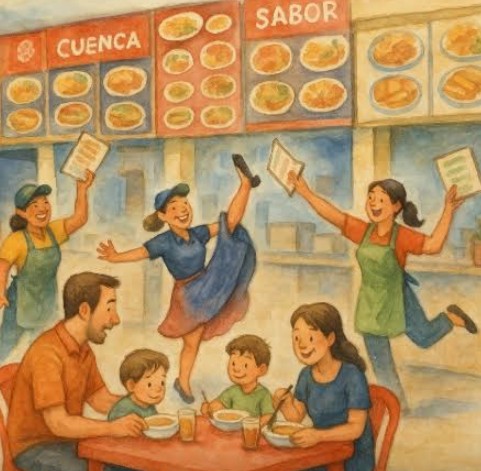 Each place has its own calling card. Some say the operators are not allowed to shout at passers-by so some owners wave menus like semaphore flags. Others break into a sort of high-kicking Andean can-can when they see you approaching. You approach on foot and suddenly you are a celebrity being lured to a private table by a girl called Veronica. For less than ten dollars you can sit down to a dish of fish, rice, plantains, avocado, and a glass of tree tomato juice and a sense of being slightly overwhelmed by enthusiasm.
After lunch, you may want to stroll. This is where the terminal truly shines. In the middle is a raised platform like cinema with rows of seats and a huge silentTV, holding a line of boutiques and ATMs, presumably designed by someone with Olympic training in balance beams. There is not a handrail in sight.
Watching people step up, withdraw cash, and step down without tumbling feels like a spectator sport. I once saw a Canadian retiree make the descent arms outstretched with the grace of a ballerina and then reward himself with a soft serve ice cream from the nearby Dumbo ice cream store. I respected that.
For those in need of practical errands, there are places to send emails, buy a SIM card. or dispatch parcels to places with charmingly familiar names like Loja and Zamora. If you prefer parcel adventures to personal ones, the shipping counters are happy to help you send a mystery package to Tia Maria in Machala. She will never guess what is inside until she opens it and finds a bundle of socks, a souvenir keyring, and a tub of instant coffee.
Transportation options abound, naturally. The taxi rank outside is steady and well stocked with tiny yellow taxis. Beside it, the tranvia station is a few steps away on the Avenida Espana median as if to reassure visitors that modernity lives here too and it is only one stop from here to the airport. You have to cross the road to get there, but–pro tip–there is safety in numbers when timing your dash between incoming local buses and making sure you do not fall under a tram when you trip over the rails.
Inside the terminal, glass counters house ticket offices for scores of bus companies with names that promise bold adventure. Destinations include towns in the high Andes whose names sound like places Indiana Jones might visit. They offer ejecutivo buses, a phrase that in Ecuador means they have seats, air conditioning, and Hollywood flop movies at a volume capable of reviving the departed.
Yet, for all this movement and promised movement, there is no rush. People drift. and families gather and disperse. Someone always has a suitcase wrapped in so much plastic film that it could survive a trip to Mars as well as the luggage locker under the bus. Life hums along and if you choose not to travel at all, nobody minds. You can stay right there, eating your lunch, licking your ice cream, watching the overhead screens announcing departures, or the football World Cup qualifiers on the TV, and observing the world come and go.
Some cities have grand train stations with marble floors and chandeliers. Cuenca has something better. It has a place where the can-can is performed at lunchtime by people who want to feed you.
If you leave hungry or bored, that is on you.