












Criminal gangs continue to run Ecuador’s prisons
By Global Initiative staff
Ecuador’s prison system has undergone a profound transformation over the past decade. According to a study by the Global Initiative Against Internation Crime, criminal groups in the country have consolidated control inside prisons, reshaping them into spaces governed through violence, coercion and informal authority rather than by the state.
The study traces how criminal governance inside Ecuador’s prisons did not emerge overnight, but developed alongside structural weaknesses in prison administration, chronic overcrowding, underfunding, corruption and the progressive withdrawal of effective state control. As the system expanded rapidly in recent years, prisons became central nodes in wider criminal economies, enabling incarcerated leaders to maintain authority, coordinate illicit activities and exercise power both inside and beyond prison walls.
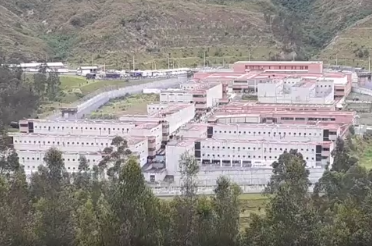
The government has been unable to control Ecuador’s prisons.
Based on case analyses, the study documents how criminal groups have established parallel systems of rule within prisons. These systems regulate access to basic goods and services, impose internal norms, and enforce compliance through violence. Control over cell blocks, wings or entire facilities allows groups to extract rents, manage internal disputes and determine who may live, move or survive within prison space.
The study shows that prisons have become arenas of violent competition between criminal groups. Large-scale massacres and recurrent outbreaks of violence are not random events but are closely linked to struggles over territorial control, leadership succession and access to resources. The report highlights how shifts in the criminal landscape outside prisons are mirrored inside them, with alliances and rivalries playing out through extreme violence.
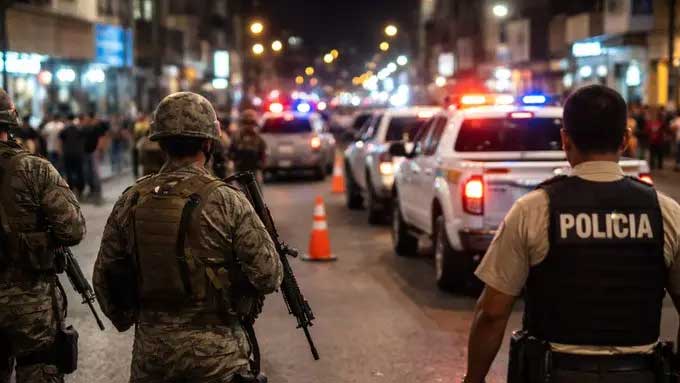
Government response to the prison crisis have largely relied on militarization and emergency measures. While these interventions have temporarily reasserted physical control, the report finds that they have not dismantled criminal governance structures. In some cases, short-term crackdowns have been followed by renewed violence or the reconfiguration of criminal control, rather than its elimination.
The study also documented the human consequences of prison control. Incarcerated people are exposed to persistent insecurity, extortion and arbitrary punishment. Family members are drawn into prison economies through payments, deliveries and negotiations necessary for survival. Prison staff operate under constant threat, facing coercion and limited institutional support. Many staff members are bribed to cooperate with criminal gangs.
The research situates Ecuador’s prison crisis within broader dynamics of organized crime and governance. It shows how prisons function not only as sites of detention, but as strategic spaces where criminal power is produced, contested and projected outside of prison walls.
Although the Ecuadorian government has built a new high-tech prison and proposes to build another, there is little to suggest it will succeed in the long run if there is no effort overhaul the entire system.
The study concludes that addressing prison violence requires more than episodic security interventions. It underscores the need to understand prisons as political and economic spaces shaped by long-term neglect, institutional fragility and criminal adaptation. Without confronting the conditions that allow criminal governance to flourish, efforts to restore state authority inside prisons are likely to remain partial and temporary.