









Travel brochures and blisters
There is a particular person for whom most travel writing is intended, and it is not, as far as I can tell, anyone I have ever met.
This person is usually part of a couple, moderately energetic, comfortably funded, and in need of what is described as a break from a job that may be stressful or boring, words that imply both relief and a certain level of exhaustion that must be gently repaired. He or she wishes to stroll through charming streets, admire local culture, and dine at restaurants that have been carefully selected for their atmosphere, with a light interest in history provided it does not interfere with lunch. A wide-brimmed hat, cargo pants, and short gray socks may also be adopted as part of the vacation uniform.
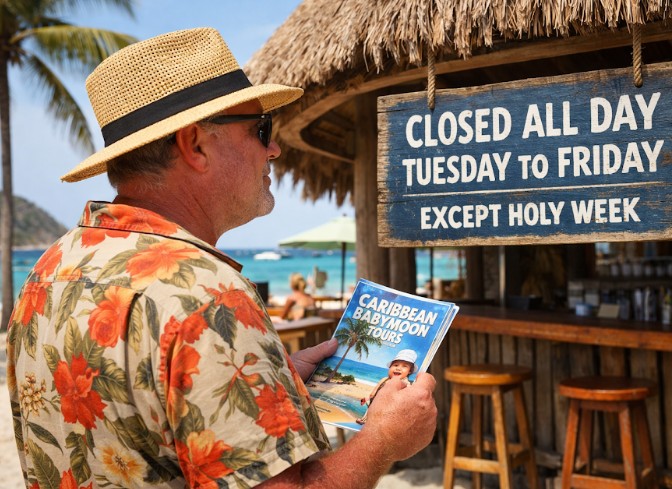 If you happen to fall into this category, you are well served, because the world has been described for you in detail, complete with lists, itineraries, and reassuring paragraphs about cobblestones, which are always presented as a feature rather than a bug.
If you do not, the situation becomes more complicated.
I was thinking about this recently while planning a summer trip with my teenage daughter and stepdaughter, and it quickly became apparent that the standard advice was of limited use, since very little is written for people who are not looking for a rest but for movement, novelty, or simply something to do that does not involve sitting in a café for two hours discussing whether the coffee is authentic.
Teenagers, for example, are not particularly interested in being transported back in time, since they are already in the present and see no reason to leave it. A cobblestone street is, to them, a surface to be crossed on the way to something else, preferably involving food, music, or a place with WiFi and chairs that are not designed to encourage posture.
At the other end of the scale, I have visited the Greek islands as a hitchhiking student with a backpack and no plan beyond reaching the next ferry, at a time when the absence of comfort was not a problem but the point. One slept where one could, ate what was available, and considered a day successful if it involved a donkey ride to a monastery and a story, even if the story began with being dropped at the wrong end of an island by a man who assured you it was close.
On at least one occasion this included sleeping in a cave on sand that turned out to be both hard and unexpectedly cold by about three in the morning, which was accepted as part of the experience, along with the vague understanding that comfort was something that would arrive later in life.
The same trip, undertaken now, would involve a different set of calculations, in which ferries would be checked in advance, accommodation would be confirmed, and the question of whether there is a handrail in the shower would take on a new and unexpectedly central importance. The romance of uncertainty fades slightly when accompanied by a suitcase with wheels that do not enjoy gravel.
The brochures, however, remain unchanged.
They continue to describe a place as though it exists in a kind of neutral state, equally suited to all visitors, when in fact the experience of that place depends almost entirely on who you are when you arrive, and what you are prepared to tolerate in exchange for the view. The phrase “something for everyone” usually means something for the person who wrote the sentence.
Beaches provide a good example, since they are presented as universally desirable– places of relaxation, sun, and sea, as though the human relationship with salt water were simple and agreed upon.
There may well be some primitive instinct at work, drawing us toward the edge of the ocean and barbecued seafood, but the practical experience is often less poetic, even if not as severe as that of Captain James Cook, who was speared, barbecued, and eaten on a beach in Hawaii. Normally it begins with warmth, proceeding to heat, and ending with a state in which one is tired, thirsty, lightly salted, and aware that the soles of one’s feet are not designed for prolonged contact with solar radiation nor hot sand.
On a recent trip to Crete, I found that the beaches in June were far too hot to be endured for long with any sense of pleasure, and that a lounge chair by the hotel pool, within easy reach of shade, a cold drink, and an apartment containing a shower, a refrigerator, and an air conditioner, represented a more sophisticated interpretation of leisure. We did spend a day at a waterpark, which offered the advantages of water without the obligations of sand, and a restaurant with no dress code, and this struck me as a reasonable compromise between instinct and comfort.
This is not limited to distant travel, but applies equally to places one already lives.
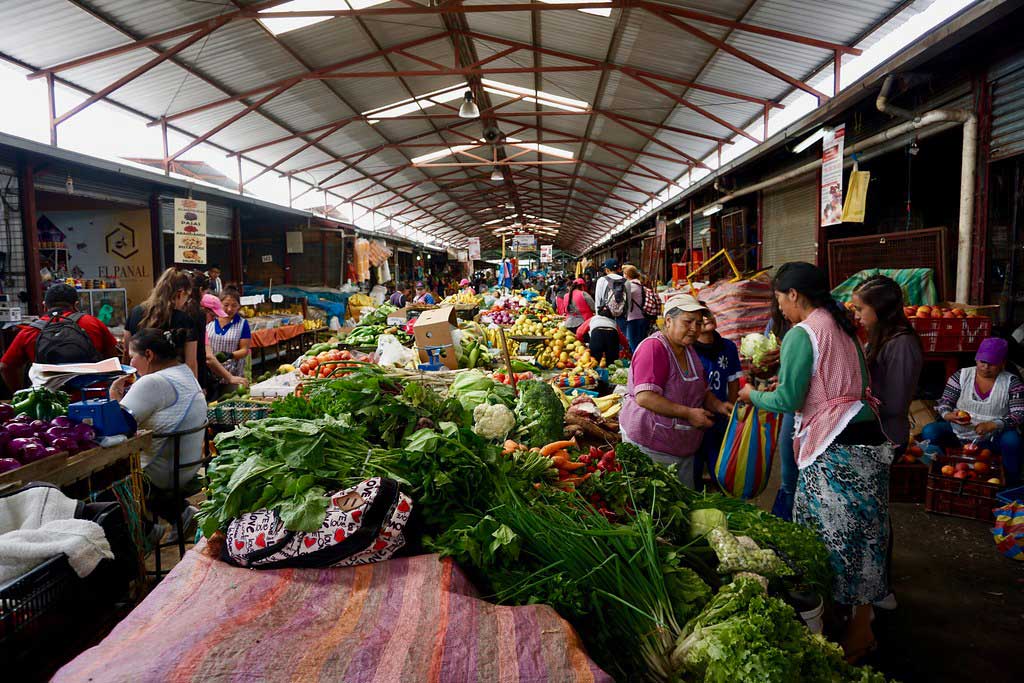
Cuenca, for example, is frequently described as a city of charming colonial architecture, cobblestone streets, and stunning churches, which is accurate but incomplete. For a visitor in search of a gentle interlude this may be enough, but for someone living here, or visiting with different priorities, the description requires adjustment.
A cobblestone street is charming until you are carrying groceries or attempting to look dignified while not falling over, a church is stunning until you have seen it three times and are now looking for somewhere to buy a light bulb, and a picturesque square is delightful until a bus passes close enough to rearrange your afternoon and your thoughts about urban planning.
None of this diminishes the place, it simply locates it.
The difficulty with brochures is not that they are wrong, but that they assume the reader, describing a version of the world that fits a particular set of expectations, and leaving everyone else to translate. Words like “tranquil,” “vibrant,” “rustic” and “authentic” begin to require footnotes.
The experienced traveler, if such a person exists, does this instinctively, reading “tranquil” and asking about noise, reading “vibrant” and asking about traffic, and reading “authentic” and wondering who is doing the authenticating, and whether they are open on Sundays.
It is, in the end, a matter of alignment.
The best destination is not the one that has been most enthusiastically described, but the one that matches the person you happen to be at the time, and that person changes, sometimes quite dramatically, while the brochures do not.
If you find yourself slightly out of step with what you have been promised, it may not be the place that is at fault. It may simply be that you are the wrong tourist.