












Authorities urge earthquake preparedness; Talks underway to revise employment of street cleaners; Bus lines to be extended; August road work planned
Bored? –
(De El Mercurio del miércoles, 22/7) Dictan taller en Museo (Workshop at Museum) – The Museo Municipal de la Paja Toquilla y el Sombrero (Rafael María Arizaga y Luis Cordero) will hold a free workshop on making decorations with straw from el 27-31/7 from 14:30-16:30. Participants will learn the basic techniques of working with this fiber which is tied to the crafts tradition in the country. If you’re interested, sign up with a private message on the social networks of the museum. Limited spaces.
(De El Mercurio del jueves, 23/7) (Regional meeting brings together ranchers on August 1) – The 3d edition of the “Sevilla Cuna Ganadera 2026” expoferia will be held el 1 de agosto, starting at 9:00 in the municipal stadium of Sevilla de Oro as part of the canton’s 34th anniversary celebration. There will be cows, producers, and businesses tied to this agricultural sector. The Ganadería San Ángel organization will have more than 70 cows in the show, and 30 stands with food, businesses, agricultural and livestock products, technology, innovations, and other activities. Víctor López Castillo is the invited judge, a well-known agronomist and specialist in dairy production, who has participated in some of the most prestigious ranching events in the world such as the World Dairy Expo in the US and the Royal Winter Fair in Canada.
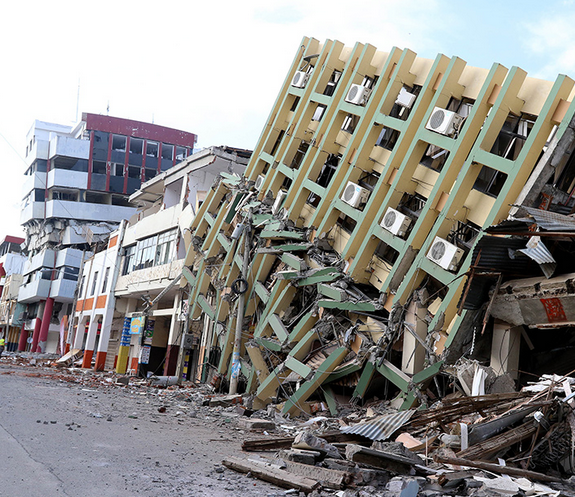
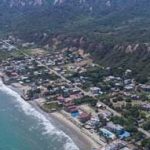
Although Cuenca’s seismic risk is low compared to coastal and northern sierra regions of the country, a major earthquake is always possible. The National Risk Management Office is urging residents and city officials to increase preparedness. The photo shows earthquake damage in Manta following the 2016 earthquake.
(De El Mercurio del sábado, 25/7) Víctor Huerta presenta su libro “Activista x Accidente” – Víctor Huerta Jouvin will launch his book, “Activista x Accidente,” (Activist x (by) Accident) el martes, 28/7 a las 17:00 in the Hotel Casa Ordóñez (Mariscal Lamar y Benigno Malo). There will be a recognition of the book el miércoles 29/7 at the Universidad Técnica Particular de Loja (UTPL). The book is about the author’s experience in 2020 when he was the victim of a kidnapping in Guayaquil after a false accusation which was used to blackmail him. After this, as part of the recuperation process he became involved in activism and the creation of the Non-Violence Project Foundation. <A note about the title where x is used as an abbreviation for “por” or “by” – as in 4×4 or xfa which is an abbreviation of porfa which is an abbreviation for por favor. You’ll see it in phone messages if your friends and contacts text you in Spanish.>
Curious? –
(De El Mercurio del miércoles, 22/7) Cambios viales previo a clases (Road changes before school starts) – The city is taking advantage of the reduction in traffic during school vacations to make changes and strengthen signage in different sectors to improve mobility before the start of the new school year. The first project will be at the intersection of Unidad Nacional and Gran Colombia near the Tranvía stop. It will eliminate the narrowing of the lanes by widening the paving to 3 lanes. The left lane will be for left turns only and the other 2 will be for vehicles heading to Remigio Crespo. <? – I can’t visualize that.>
The 2nd project will be near the intersection of De Las Américas y Ordóñez Lasso, outside of the SuperMaxi. The existing curb will be removed with studs marking the lane, and new horizontal signals to make it easier for heavy vehicles to maneuver. The 3d project is at calle Chapetone y calle Gil Ramírez Dávalos where a curb will be built to close the existing median strip. Currently there is barricade tape strung where the curb will be built. The City is also strengthening the horizontal signage for bus only lanes in the Centro Histórico. There will be red and white stripes to identify bus only lanes — no private vehicles.
(De El Mercurio del jueves, 23/7) La tercerización en la EMAC EP, fiscalizarán (Outsourcing at EMAC EP to be audited) – The Comisión del Derecho al Trabajo y la Seguridad Social (Committee on the Right to Work and Social Security) of the Asamblea Nacional, Cuenca councilmembers, and provincial authorities met in Cuenca el miércoles to analyze the situation of the workers, the ‘hormiguitas chuas,’ (little ants) who clean the city. Currently 93 park maintenance workers in groups A, B, & C work for a contractor to the city who has not paid their wages. One of the alternatives mentioned was to create an association of workers who could compete directly in the public contracting process to provide services. Juan Fernanco Vicuña, substitute general director of the Empresa Municipal de Aseo (EMAC EC) said the institution will unilaterally finiquitar (settle – your word for the day) the contract with the business involved and officialize its termination to start a new contracting process. During the session, some of the workers affected, many of whom are single mothers and seniors, told the committee they needed to be paid to afford food and housing for their families. At the end of the session, the president of the Committee on the Right to Work and Social Security said the Asamblea would start the process to audit the 3d party contracts in EMAC. He also said that outsourcing labor is prohibited by the Constitution.
(De El Mercurio del jueves, 23/7) Una contratación directa (A direct hire) – During the session of the Committee on the Right to Work and Social Security, the attorney for the workers, reported that since the creation of EMAC EP in 1998, the cleaning service has been maintained under an outsourcing system even though this method was prohibited by the Constitution of 2008. He said that no city administration has ended this method of contracting in almost 3 decades. He asked the Committee and new EMAC general director to promote direct hiring of the ‘hormiguitas chuas,’ end the contracts with middlemen, and incorporate the workers directly into EMAC, a city business.
(De El Mercurio del sábado, 25/7) Prevenir sismos es una tarea esencial (Earthquake prevention is an essential task) – <Kind of a misleading headline – if you could prevent an earthquake, you’d be richer than Elon Musk.> The main recommendations from the Secretaría Nacional de Gestión de Riesgos y Emergencias (SNGRE – National Secretariat for Risk and Emergency Management) and the Cuenca Fire Department are to stay calm and stay under a resistant structure. You should have an emergency backpack with supplies sufficient for at least 72 hours. These would include potable water, non-perishable food, medicines you habitually use, a first aid kit, and articles that allow you to maintain communication and light such as a battery radio and flashlight. Keep the backpack in an easily accessible place, preferable near the door to the house so you can grab it quickly if you have to evacuate.
According to Javier Guamán, chief of the Cuenca Fire Department, the simplest and most effective recommendation is to duck, cover and hold on. <Sounds suspiciously like the drills in case of a nuclear attack when we ducked under our desks.> He said people should get next to a resistant structure such as a column in a house or edificio. <But given the conditions of the columns after the 2016 earthquake in Manta, I’m not so sure.> He said sheltering under a desk or a doorway only applies to decades old construction with doorways that actually had lintels. Do not use elevators, stay away from windows, and keep hallways clear of stuff. <I should have moved my earthquake kit here when I left California — water, people and pet food, a way to cook or at least boil water, windup radio with flashlight/horn/red blinking light, shovel and pick, sleeping bag, various chargers, and maybe a couple of books.>
Although Cuenca’s seismic risk is low compared to coastal and central and northern sierra regions of the country, a major earthquake is always possible, SNGRE says. Studies report that two earthquakes on June 29, 1887 and September 5, 1893, with estimated intensities of 5.5 and 6 on the Reichter scale, caused widespread damage. According to SNGRE, about 43% of Cuenca sits on ground with “intermediate stiffness” due to soil type, while 57% is built on ground with “low stiffness,” with the capacity to amplify seismic vibrations.
(De El Mercurio del sábado, 25/7) 83% tienen obras en parque (Work in park at 83% completion) – The rehabilitation work at Parque Calderón is at 83% with a completion date of el 25/8. The work started in febrero and proceeded in quadrants to keep the rest of the park open. The work is currently in the last quadrant where the paving is being changed and the electrical infrastructure is being improved. The paving is andesite stone, travertine marble, and tactile paving elements <so you can feel your way with your feet or your cane if you don’t see well.> The sodium lights are being replaced with LED lights and new ducts to make future expansion or maintenance easier. There will be phone recharging points; special electrical outlets for cultural, social, and community events; and optimization of the sound system. There will also be a security camera system.
(De El Mercurio del sábado, 25/7) Suben los pasajes en Paute (Bus fare hikes in Paute) The Paute Cantonal Council approved an ordinance that increases public transportation fares to $.44 and $.22 for students, children, seniors, and disabled passengers. On the Bulán-Padrehurco route, the regular fare will be $.50 and the preferential fare $.25. The new fares will go into effect when the ordinance is published in the Registro Civil, probably about 3 weeks. The decision was made based on a technical study by EMOV EP Paute on supply and demand. It allowed a reorganization of the urban transport system and established the conditions for implementation of new routes, with the goal of increasing coverage and improving mobility to benefit the citizenry. Also incorporated was the Sistema de Ayuda a la Explotación (SAE), which allows real time monitoring of compliance with routes, frequencies, schedules, and speed limits. <No breathalyzer that will disable the driver’s ignition key if it shows alcohol?>
(De El Mercurio del lunes, 27/7) Se amplían las rutas de diez líneas de bus (Routes for ten bus lines to be extended) – The City of Cuenca is promoting a plan to improve urban transport by extending 10 bus routes to peripheral sectors of the city where there have been constant complaints from citizens about lack of service. The longer routes will benefit the Capulispamba, Altiplano, Checa, Ricaurte-Bibín, Racar, Chilcapamba, El Rosal, Cabullín, Tixán, and Octavio Cordero Palacios sectors and a 30-day testing period will begin in septiembre once the Sierra-Amazonía 2026-2027 school year starts. The extended routes will apply only in hours with the most demand – morning, noon, and evening rush hours. The same route extension method was used when the Hospital Municipal de El Valle was opened and buses extended their routes to the Guncay sector when before they only went to the parish center.
________________
Information in this column, including dates, times and locations, is courtesy of the El Mercurio newspaper. Comments between the carrots, or guillemets (< … >), are the personal opinions of the author and not part of the news translation.