












Power generating equipment gets new tax breaks; Country risk rises; Elections council prepares for El Niño and blackouts; Changes to rental law considered
Beginning October 6, privately purchased equipment that generates and stores electric power will be exempt from the Value Added Tax (VAT), import fees and the tax on the ISD tax. The new exemptions are part of President Daniel Noboa’s plan to encourage private companies and individuals to produce their own electricity.
“We need private participation in the electricity sector,” Noboa said Monday. “We are opening the door to large, medium and small investors to generate power in Ecuador,” he said, adding that private citizens can also take advantage of the tax exemptions to produce their own power and sell excess production to the government.
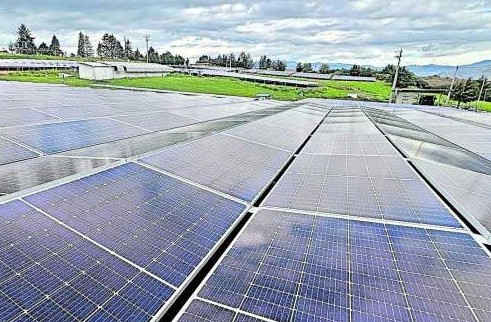
Solar power generation equipment are among the products that will be exempt from the VAT, ISD and import taxes under the new government plan.
Noboa added that steps are being taken to reduce bureaucratic hurdles to allow a “streamlined process” for approvals of private power generation projects.
Country risk rises
After several months of decline, Ecuador’s international investment risk factor is rising again. Ecuador’s Central Bank reported the risk rose 21.31 points on Friday.
According to investment bankers in Europe and the U.S., the higher risk is the result rising prices for imported fuel, the rising debt level, ongoing electrical problems, including possibilities of electric blackouts, and the anticipated impact of El Niño.
Charles Morrison, economist for Chase Bank in New York, said Monday that multiple economic issues make Ecuador a risky investment market. “In the short term, El Niño will add to the country’s economic problems, reducing exports, increasing costs in the domestic market and threatening the country’s electrical supply,” adding that the government had done little to expand and upgrade its electrical system since widespread blackouts in 2024.
Morrison predicted that Ecuador will also face “substantial repair and reconstruction costs” as a result of El Niño.
Elections council prepares for El Niño and blackouts
El Niño has already changed the date of sectional elections once and could force a second change, the National Electoral Council (CNE) said Friday. Originally scheduled for February 2027, the elections were moved forward to November 29, to avoid the worst impact of El Niño.
CNE President José Cabrera explained that the original change was made based on predictions that the most extreme weather from El Niño would occur in January and February. “Recent events indicate that the weather system is arriving earlier than expected and we are concerned about disruptions in late November,” he said
Cabrera said CNE will continue to evaluate the situation. “Our primary concern is ensuring that all citizens have the opportunity to vote and are not affected by catastrophic weather events that could keep them away from voting stations,” he said. “We are considering relocating a number of voting stations in areas that could suffer flooding.”
CNE is also purchasing high-capacity batteries to provide electrical power to voting stations in the case of blackouts. “This is also a response to El Niño and we are making certain the voting process can proceed without major disruptions.”
Assembly considers changes to rental law
The National Assembly is debating possible changes to the national Tenancy Law, with the objective of clarifying the rights of tenants and landlords. The law has not been modified in 20 years and supporters of changes say it requires “modernization” based on changing conditions.
Proposed changes by the Assembly’s Justice Commission include clarification of rental deposits and rules for their repayment; formalization of the rental contracts, either hard copy or electronic, including their registration with municipal authorities; clarification of landlord and tenant obligations regarding repairs to rental properties; and definition of penalties in cases of non-compliance.
According to proponents, the current law contains “loopholes and areas of confusion” and lacks clear definition of the rules. They also claim that many landlords and tenants use “fake names” on rental contracts, a practice that should be outlawed.
According to the national census office, 36 out of every 100 households in Ecuador are rental properties, with the total number of rentals increasing from 820,000 to 1.08 million between 2010 and 2025.