









An expat recalls his first visit to Latin American ports in 1965 as a Merchant Marine
By Jeremiah Reardon
Living on my own in New York City, at age nineteen, I yearned to see the world. When I finished the 1965 spring semester as a night business student, my boss in finance fired me from my job at Otis Elevator’s International Division. With such a recent unsettling turn of events, I wondered how I’d fare at my next job, working on a Norwegian freighter with thirty-six crew destined for South America. Ironically, working at Otis provided this golden opportunity.
Otis’ headquarters stood one block from Pier 66 on the Hudson River. On lunch break, I’d occasionally visit ships. Climbing a gang plank up to the main deck, I’d ask a crew member how to get hired. That’s how I learned about Brooklyn’s Scandinavian Shipping Office. So, after leaving Otis, I found the seamen’s office on a crowded street near Brooklyn Borough Hall.
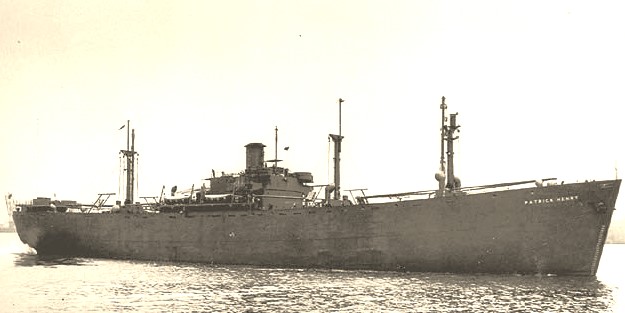
World War II Liberty Ship
The basement hall had windows on one side. A clerk sat at a desk to fill jobs listed on a blackboard alongside the ship’s name. Men of varied nationalities sat on folding chairs along the walls. Seated beside Adam Albarran from Mexico City, we struck up a conversation. “I just circled the globe. That old ship had paint peeling off the sides like sunburned skin,” he joked. A former philosophy major at the University of Wisconsin, he stood a few inches shorter than me and sported a Van Dyck beard.
After two weeks of morning and afternoon job calls, I accepted the first one offered me by the clerk. I signed on as the galley boy of the Norwegian-flagged MS Sygna, a steel-hulled World War ll Liberty ship. Allied countries built 2,710 of these merchant vessels which measured 440 feet long and carried up to 7,000 tons of cargo. My younger brother Francis had just arrived from our home outside Philadelphia and moved into my Lower East Side studio apartment. He took a clerical job I had found for him in Otis’ Lower Manhattan service department.
At a Brooklyn pier across the East River from Wall Street, I reported to Sygna’s Captain Helland as a temporary member of the Norwegian Seamen Union. About forty years old and medium height, he kept a photo of his family on his desk. On our voyage, we didn’t have much to say to each other but always greeted one another, cheerily. “Your paperwork seems to be in order, Jerry.” he said. “Let Cook know you’re here. He’s just down the hall on the left.”
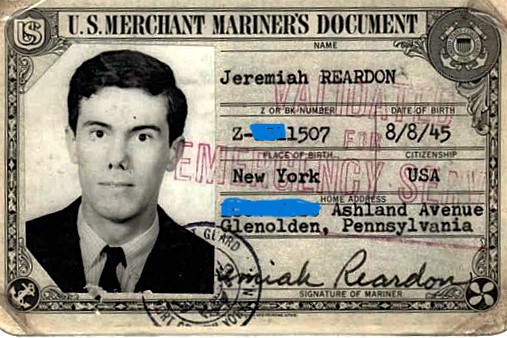
Jeremiah’s Merchant Marine card.
Cook’s cabin door stood open. I entered and extended my hand in greeting. “Welcome aboard, Jerry! This isn’t the first kitchen you’ve worked in, I hope.” Also, about forty, Cook had a bald head and a thick waist from time spent around food.
“No, Cook, I’ve had several restaurant jobs; fulltime during summer vacations at the Jersey shore and parttime as a college student,” I replied. Next, he led me down metal steps to a long corridor and showed me my quarters. I shared a cabin with the assistant cook who sat on the bottom bunk reading comics. Thor, from Norway and in his early twenties, got up and welcomed me. “You’ll use the top bunk, Jerry. Find an empty bureau drawer for your things.”
Dumping my duffel bag in a corner, I headed to the mess hall. To my surprise, Adam sat at a table under a porthole window with a couple of the crew. “Damn, Jerry, imagine that; we’re shipmates!” he said. I poured my own cup from a blackened pot and sat with them. I learned about our ship and its voyages.
The Sygna had just returned to New York City from South America. Some seamen had signed off the freighter to work on ships headed to Europe. Until our return in mid-October, our ship would anchor approximately eighteen times in Latin American ports.
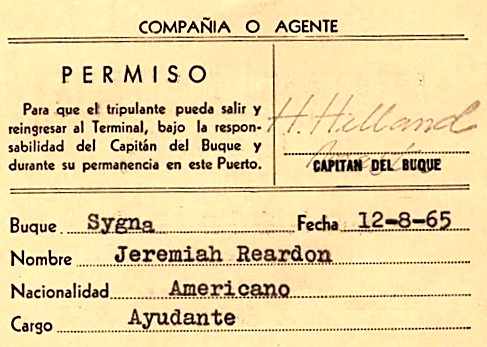
Port of Guayaquil seaman pass
At sea
With the cargo holds below deck fully loaded, the Sygna slipped from its moorings into New York Bay. I wandered aimlessly on deck in twilight following cars’ headlights on highways and bridges. I liked how our ship’s bow silently sliced through the water. The well-lit Verrazano Narrows Bridge’s immense span dwarfed us as we glided under it. Soon, land disappeared as the sea embraced our ship of steel.
My duties required me to help cook three meals daily and scrub the pile of pots. Among three dozen crew, only two women sailed with us. Helga, the Dutch radio operator’s girlfriend, had a nice smile and good looks. Anna, the girlfriend of Martin, our carpenter, appeared shy. Chubby and of medium height, she cut her straight reddish hair in bangs above green eyes. The young women worked daily in the officers’ quarters across from the ship’s bridge where seamen steered the ship. Two wood-paneled passenger cabins went unused for our voyage, lightening their workload.
As the only native-born English speaker, I enjoyed how the common language on ships is Maritime English. It’s designed to ensure clear and effective communication when at sea. Our crew hailed from Norway, Sweden, Holland, Austria, Canary Islands, Paraguay, Costa Rica and Mexico. We’d greet one another using our mates’ country name.
As sunlight streamed in the porthole across from my bunk, the deck boy knocked at the door for me to start breakfast. I peeled potatoes and made coffee before Cook and Thor joined me. Stainless-steel counters glistened above the red-orange tile floor surrounding the drain opening.
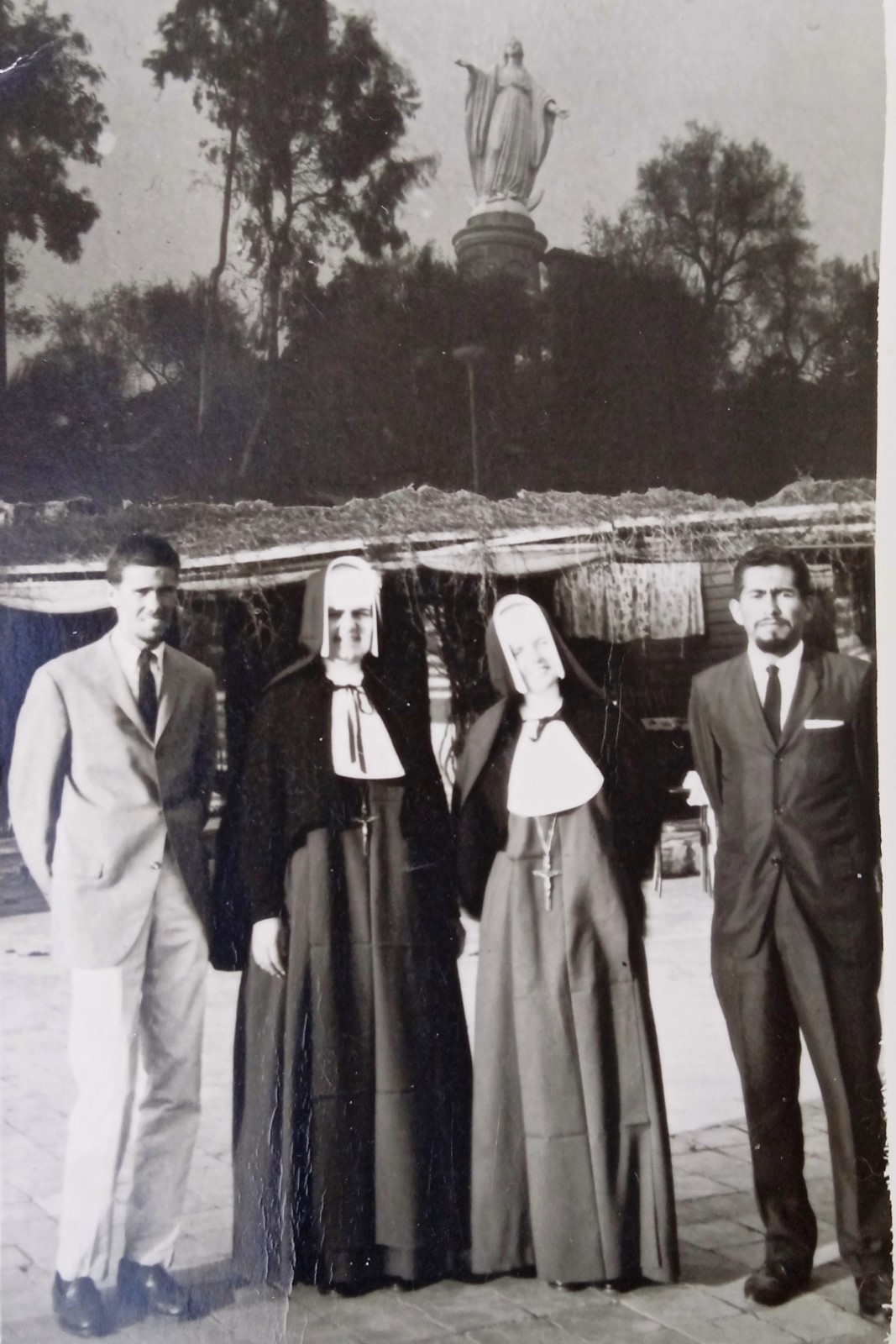
Left to right, Jeremiah, Sister M. Theresia, Sister M. Christine and Adam Albarran in Santiago.
I credited Cook for conscientiously whipping up palatable meals from New Zealand ewe as we called the lamb in our walk-in fridge. Provisions of beef exceeded the ship’s food budget due to shortages created by Chile’s March 1965 Valparaiso Earthquake. A man of few words, Cook relaxed with a cigarette at shift’s end.
Adam had hired on as an engine wiper. As the sun warmed the ship’s metal sides, the wipers wore only pants and sneakers. With rags in both hands, they surrounded the boiler and the monstrous engine to remove the sea’s salt moisture from its twin diesel motors which spun large brass propellers in the blue-green ocean. On occasion, when off duty, I’d join them for breaks where we cooled off in the propeller shaft open to welcomed sea breezes.
Pleasant weather over the next several days with calm seas assured smooth sailing. Evenings after work, I’d stroll the deck with a tiny transistor radio. Rock and roll music played on a New York station. On the fifth evening, lights flickered on the horizon. When Thor joined me, I asked, pointing, “What is that?”
“That’s Cuba,” he said. “In the other direction is Haiti. We’ll be in Panama in the morning.”
“Wow! How cool!” I said at this welcomed sight of land in the warm Carribean.
Panama Canal
I awoke the next morning to the sight of palm trees lining the Atlantic port of Colon. Quick to finish my galley chores, I approached downtown with the goal of speaking Spanish, learned from a set of books and records I bought for the voyage. Also, Thor loaned me his Spanish comics.
After a day of unloading cargo, our ship approached the nearby Canal. Sailing between and within its mammoth locks fascinated me. For entertainment we had the company of several local officials. A young one wanted to buy my blue jeans. “Cuanto cuesta?” he asked with a quick tug at one of its legs.

Guayaquil 1960’s
“No, gracias,” I replied, breaking out in laughter. Once anchored in the Pacific, each official waved back as they leaped from a swaying rope ladder onto the deck of a tugboat, joining the harbor pilot who had just guided us into the ocean. Our navy gray painted vessel soon powered its propellers and turned south into a lingering sunset of pinks, oranges and crimsons reflected upon the Pacific’s mirror.
In another day, I celebrated my twentieth birthday with my new friends in the mess. Some had skipped the last years of high school for an early start on their maritime careers. Thor told me, “Right now, half the men and women of Norway are either fishing or working aboard ships.”
At the first Pacific port, Buenaventura, Colombia, I walked alone in a city of pastel-painted buildings. Anti-US government and Esso Oil Company graffiti appeared on brick and stucco walls splashed with political party tags. I enjoyed practicing Spanish when buying a bottle of Chiante wrapped in straw. Back at sea, I shared it with shipmates at the initiation of crew crossing the Equator for the first time.
On break between meals, I marveled at Andean peaks poking above the eastern horizon. Seagulls and pelicans dove for leftovers the deck boy tossed their way. I peered down into the cargo hold and watched deckhands assist Martin who repositioned huge timber posts in preparation for docking in Guayaquil.
Steered by a harbor pilot to bring us safely to port, we entered the Guayas River’s churning brown sea and docked at tropical Puerto Maritimo, about six miles south of Ecuador’s largest city. On evenings, I joined shipmates in a taxi headed to the seedy side of downtown’s colorful waterfront. The Zona Rosa appealed to seamen and local hustlers seeking company and entertainment. Seated with friends and locals in a restaurant with a palm thatched roof, I relished meals of spicy seafood washed down with rum and cokes.

Callao 1960’s
Satiated after several days in port and cruising in sight of the Andes within ten miles of shore, I listened to music on my radio. Brazilian stations played the best, including the new hit song, “The Girl from Ipanema.” I couldn’t have been happier anywhere in the world.
Peru
My fourth country within a week, Callao bustled with port activity as we docked. Peru’s principal port had an international airport and a university. The capital, Lima, stood only a half hour drive away on Avenida Argentina to the east.
On our second day in port, I dashed through the ship’s corridors to catch up with shipmates. Callao had a soccer match that afternoon. At one steel passageway meant to block seawater, I mistimed my step and banged my forehead onto its low ceiling. With the help of a shipmate, I found a doctor at a nearby clinic. “What happened, Jerry?” my friends asked when they saw the bandage wound by the doctor across several stitches. With a shrug of the shoulders, I pointed at the offending metal obstacle.
On Sunday, the Norwegian Seaman’s Church van parked at the dock. From the portside railing, a shipmate and I watched half a dozen suit-wearing crew get in. I asked him if they were attending church. “No,” he answered. “They’re going to the hospital. They have VD.” I thought back to our evenings spent in Guayaquil’s Zona Rosa. Thank goodness they’d get medical attention with the help of the church’s minister.

Valparaiso 1960’s
Later that day, Adam and I descended on the gang plank to hail a taxi. Lima’s busy traffic had motor scooters seating families of four or five. “Adam, I can’t believe it!” I said in amazement. Downtown had broad avenues along where ostentatious homes had indigenous employees’ primitive shacks in proximity. Built haphazardly with scrap materials, this housing solution intrigued me.
Strolling Lima’s main plaza, we heard occasional gunfire coming from hillsides to the north. Alarmed and curious as everyone seemed unfazed, we questioned a passerby. “The army is fighting communist guerillas,” he told us. “Revolutionaries support the indigenous farmers who petition the government for agrarian reform.”
After several days in Callao, we sailed south and entered ports exporting copper. Destined for the Anaconda Copper Mining Company, ingots of copper six feet square and fitted at opposing diagonal corners with steel shank hooks dropped into the cargo’s hold. Either a port crane or one onboard dipped its steel cables into the dank quarters where Martin and deckhands guided its descent. Once they freed the cables, back they went to the pier or onto the barges.
Drama onboard
At night, I’d find a restaurant and hang out with locals and seamen of foreign ships and oil tankers. One night I returned to the ship with friends when the deck boy had shocking news. “Anna tried to kill herself!” he said. “Thank goodness, someone found her in time after she cut her wrist.”
What triggered her desperation involved the repeated jaunts to shore by Martin. The fair-haired carpenter of short stature liked going ashore with his buddies, but I had no inkling of a rift between the couple who lived in officer’s quarters. Afterwards, when Anna and I bumped into one another, I’d see her wrist wrapped in a bandage. Within a couple of weeks, it had healed along with their relationship.

Port of Callao seaman pass
Exploring this Latin continent became my goal. As we neared Chile my cousin, a Catholic nun teaching in Santiago, came to mind. Soon we’d arrive near the capital in Valparaiso. “I’d like to take a few days off and visit Santiago,” I said to the ship’s steward.” In his mid-forties and with wavy medium length hair, he conducted our contacts in a business-like manner.
“OK, Jerry,” he replied. “Just make sure that you let Cook know when you’ll be gone.”
Docked in our first Chilean port, the city of Arica provided a sailor’s solace with signs of prosperity and Latin culture. Mixing with the local population served as a reminder that whatever misery existed on ship, going ashore meant release from confinement. Back at sea another drama occurred, precipitated by living in such close quarters.
Ship’s Engineer usually had a dour expression most of the times I ran into him in the corridors. The assistant engineer, on the other hand, hailed me warmly. “Hey, Jerry! How’s it going?” he’d call out. “Great meal this afternoon. Thanks!”
So, when Adam joined me in the mess and said, “The assistant got into a fist fight with the engineer at work, this morning!” I felt shocked after taking for granted the camaraderie I’d enjoyed since boarding the ship in Brooklyn.
“How’s this going to go down with Captain?” I asked.
“I don’t know. Maybe the assistant will have to leave the ship and return to Norway,” Adam said.
Thankfully, tempers settled down. Engineer didn’t fire his mate. After a couple of days out at sea with the crew keeping up a facade of business as usual, the crisis came to a peaceful conclusion under Captain Helland’s watch.
I looked forward to visiting my cousin soon. Before leaving, my mother gave me the Santiago address where she sent letters to Sister Mary Theresia. I invited Adam to join me on my vacation. “Sure, Jerry, that sounds like fun. I’d love to get out of that stinking engine room,” he agreed with an eager smile.
Santiago
Valparaiso, Chile’s second largest city, featured homes built on steep hillsides. I saw no sign of the earthquake a few months earlier which claimed the lives of around four hundred, mostly in the mining town of El Cobre to the north. Downtown, a car service agency let us share a car with three other passengers for its two-hour trip to Santiago. After seeing the peaks of the Andes from miles out at sea, I felt excited to cruise on a highway climbing into Chile’s broad intermountain valley.
“Wow, Adam, what a view,” I shouted once the Latin capital appeared. At sunset, the panorama of city life nestled among the mountains thrilled me. In its suburbs, I admired manicured green lawns and sidewalks of homes illuminated by streetlamps. The driver soon pulled up to a plaza lined with palm trees. Taking our bags from the trunk, we thanked him and searched for a room.
In the morning, we found my cousin’s convent in an upscale neighborhood. Homes with broad lawns lined the street. My cousin and I greeted each other with a handshake. We’d previously met when my family greeted her at a Philadelphia pier. That trip home by ship broke up two teaching tours of six years each in Santiago. Upon concluding our visit, Sister Theresia said, “If you like, Jerry, we can meet up at a city park in the morning. We’ll ride a cable car to its summit with a great view of the city.”
The following day we met her and a fellow Philadelphia sister in Metropolitan Park. “Welcome to Santiago. I hope you like the city,” Sister Mary Christine said, warmly. Clear weather made for an enjoyable outing on San Cristobal Hill. Its panoramic view of the valley entranced me. Getting off a crowded cable car at a garden sanctuary, we strolled under the Statue of the Virgin Mary who gazed fifty-four feet above us. A photographer selling snapshots took black and white postcard photos of us, today, a valued family souvenir.
Back at the convent, a Chilean nun, Sister Lucia, offered to arrange a date for me that evening with her younger sister, Teresa, a college student. Adam would escort her friend, Maria Alicia. “Tere looks forward to practicing her English with you, Jerry,” she said.
Adam and I met up with our new friends in downtown to see a movie. Medium height like her big sister, Teresa had wavy brown hair and skin the color of pale olives. Mixed Chilean and German parentage created these attractive people living in this prosperous industrialized metropolis. We referred to her as “Blanca.”
Alicia, a couple of years older than her friend, dressed fashionably. She had darker skin, and we called her “Morena.” A recent widow and the mother of a child, she and Adam conversed in Spanish.
We choose “Der Rosenkavalier,” a comic opera by Richard Strauss over “The Sound of Music” starring Julie Andrews. The opera’s lush score and nostalgic depiction of 18th-century Vienna focuses on aristocratic intrigues and romantic relationships. To our amusement, strait-laced attendees jumped up and swore before exiting in droves at the sight of a woman in the role of the male cavalier romancing the princess.
Afterwards, we ate dinner at a restaurant whose outdoor seating afforded us glimpses of pedestrians enjoying themselves. Observing our glances in that direction, Teresa commented, “Seeing all this nightlife must be a big change after being on a ship for two months.”
Returning by bus to Valparaiso, Adam and I laughed at the ridiculous sight of our ship’s empty docking berth. We met with the harbormaster who confirmed that the Sygna had set sail the previous morning. We’d rejoin it three hundred miles south. “Here’s money the steward left for your travel,” he said. We inquired for our passports, but he told us that he didn’t have them.
We boarded a bus back to Santiago. There, we took another to Concepcion, eight hours away. Comfortably seated, Adam wisecracked, “I can’t wait to see the expression on our friends’ faces when we board ship!” I’d glance out the window to follow mountains covered with snow from my seat. Fellow passengers helped us pass the time and shared their food. Adam and I had no worry in the world.
At night, the bus pulled into a terminal which had taxis waiting. We happily located the Sygna and boarded. “Steward, the harbormaster told us that you have our passports,” I stated when popping my head into his quarters. I was stunned to learn that they had disappeared. He claimed to have left them for us in Valparaiso. Having off-loaded cargo destined for Tierra del Fuego onto another company ship, the Sygna reversed course.
Mutiny averted
Enroute to the Canal, we stopped at half of our previously visited ports. At the port of Coquimbo, Chile, payday arrived. “Not getting American dollars? What the hell?” Thor uttered upon opening his pay packet. I checked mine; same story. Accustomed to dollars for our wages, other shipmates went berserk. By day’s end, several argued with Stewart how he had given no notice to us. “Is this how we’ll continue being paid, in local currency?” they debated with the officer who held the ship’s purse strings.
Keep in mind that seamen from ships of all nationalities exchange dollars on the black market at the docks with local businessmen. Dollars get at least an additional 10% of local currency from these agents than they would at a local bank.
Well, wouldn’t you know it? In another day Stewart replaced the local bills with dollars. The unthinkable, a ship’s mutiny, came to an abrupt halt. In its place, we celebrated with beer and wine in the mess. Certainly, Steward’s duplicity made me dwell on the missing passports supposedly left behind in Valparaiso.
Lacking passports, Adam and I had no problem getting our visitor permits for those return ports. But while crossing the Canal overnight, Adam got bad news. He told me, “I won’t be allowed off ship when we get back to New York.” I had bad news of my own. Steward handed me an envelope. Mom wrote me a letter and included my Army draft notice. “Greetings!” it began. In November, along with a couple of hundred others, I’d report for my Army physical in Philadelphia accompanied by Francis.
In mid-October, MS Sygna docked in South Amboy, New Jersey, across from Staten Island, NYC. At my first opportunity to go ashore, I visited the Mexican Consulate in Manhattan to help Adam. In a couple of days, he got his visa. Then, he applied at the consulate for his replacement passport.
I had reunited with my family in Philadelphia but returned once the Sygna had repositioned in a Brooklyn berth. My friends rented a car, and we drove north along the Hudson River and visited Bear Mountain State Park, near West Point. If felt strange to travel with them so far from port. They joked and carried on like tourists, taking pictures and enjoying the beauty and solitude of the autumn wilderness.
I went back to college and avoided the draft. My merchant marine career had ended but my shipmates had worked their way into my heart. So, it shouldn’t surprise you that I’ve never forgotten them and those glorious months at sea.


Hogar Esperanza News
The Cuenca Dispatch

Week of August 23

Ecuador’s economy grew 2% during the first half of 2026 compared with the same period a year earlier, according to new Banco Central del Ecuador data.

Cuenca gets a prime view of next week’s deep partial lunar eclipse.

Ecuador’s economy grows 2% in the first half of 2026.
Property Manabi

Nice apartment banner

Property Kuralt

Fund Grace News

Fabianos Pizzeria News