













Are LED lights bad for our health? New study warns they could be the ‘new asbestos’
By Stephen Beech
LED lights could be “the new asbestos” for people exposed hours on end, leading scientists have warned.
They fear prolonged exposure to LED lighting in homes, schools, offices or hospitals could raise the risk of diabetes and other metabolic disorders.
Neuroscientist Glen Jeffery described LED technology as a “clear and present public health emergency” comparable to the toxic building material asbestos, which was widely used before its health risks were understood.
Jeffery and his University College London (UCL) colleague Bob Fosbury fear prolonged exposure to LEDs may disrupt with the way cells generate energy.
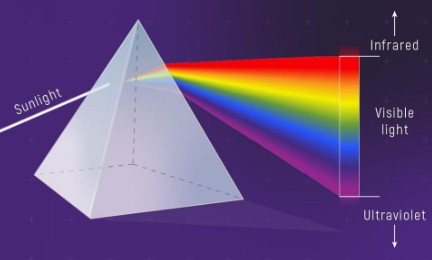
Sunlight contains a broad spectrum of wavelengths, including infrared light invisible to the human eye. Jeffery and Fosbury say that because conventional LEDs strip out much of this longer-wavelength light, people are living in a state of chronic light deficiency. (NASA, ESA, L. Hustak (STScI) via SWNS)
They advise people to spend more time outdoors in natural daylight every day.
And they say families should use at least one conventional incandescent or halogen bulb in each room to restore some of the wavelengths missing from LED lighting.
Jeffery says the body can begin responding to exclusive LED lighting within minutes.
But the concern about more serious health effects relates to repeated or prolonged exposure over time In practical terms.
Jeffery explained that the issue is less about the number of LED bulbs in a room and more about how much of the day someone spends in an LED-dominated environment with little meaningful exposure to natural daylight or longer wavelengths.
He says among the most at risk, for example, are office workers who in winter commute in darkness and spend most of the day under LEDs.
Jeffery said: “Exclusive LED lighting is detrimental in a matter of minutes.”Your body will certainly respond within a few minutes and this becomes damaging.”

Near-infrared images taken at around 800nm show how living tissue reflects and transmits wavelengths invisible to the human eye. Jeffery and Fosbury argue that these longer wavelengths can penetrate the body and play an important role in supporting mitochondrial function. (Dr. Bob Fosbury /Supplied via SWNS)
He continued: “The more serious health problems come with longer exposure, but people increasingly spend much of their time in environments deprived of natural sunlight and are therefore getting that exposure all the time.”
He explained that LED bulbs produce relatively high levels of short-wavelength blue light while containing little or no near-infrared light, which scientists believe play a key role in keeping cells functioning properly.
Conventional incandescent and halogen bulbs emit a much broader spectrum, including red and near-infrared wavelengths that are also found naturally in sunlight.
Jeffery says red and near-infrared light helps mitochondria — the structures inside cells that generate energy — function efficiently, while excessive exposure to short-wavelength blue light may impair them and contribute to disease.
He and Fosbury fear people who spend much of their lives indoors under LED lighting could experience a “chronic” form of light deficiency with potentially serious consequences for their health over many years.
Speaking to The European, Jeffery said “LED lighting is damaging mitochondria and therefore there is no question it is also damaging systemic health. This is a clear and present public health emergency, comparable to asbestos, and we need to take action. This area of research is slowly shaking out, but I feel confident enough to stick my neck out and say that it is bad, bad news.”
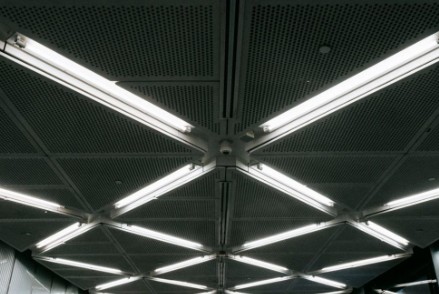
Many workers spend hours a day exposed to artificial lighting with little exposure to sunlight.
The warning follows years of government initiatives to replace traditional light bulbs with LED ones because they use substantially less electricity and last longer.
Most halogen bulbs for general household use were withdrawn from sale in Britain in 2021, by which point about two-thirds of bulbs sold were already LEDs.
The government previously estimated LEDs could use up to 80% less electricity than halogen alternatives and help cut carbon emissions by 1.26 million metric tons a year.
But the UCL researchers argue that the drive for energy efficiency may have overlooked the biological role of wavelengths that contribute little to visible illumination.
They explained that sunlight contains a broad spectrum of wavelengths, including red and near-infrared light, while incandescent and halogen bulbs also emitted substantial amounts of longer-wavelength radiation, much of it as heat. Their concerns are supported by a study by Jeffery and fellow UCL researcher Edward Barrett, published earlier this year in the journal Scientific Reports.
The study tested whether supplementing an LED-lit environment with broader-spectrum light could produce measurable effects in humans.
A total of 22 healthy adults ages between 23 and 65 took part, with half exposed to tungsten lighting containing longer wavelengths including infrared and the other half remaining under normal LED lighting. After two weeks, those exposed to the broader-spectrum light showed “significant” improvements in color-contrast vision, with the effect persisting for two months.
Although the study measured visual performance rather than disease or broader systemic health, Jeffery and Fosbury’s theory is supported by separate experiments involving fruit flies. The research showed that daily exposure to short-wavelength blue light reduced measures of mitochondrial activity by about 50%.
Research in mice found animals exposed to ordinary LED lighting became less active, gained weight and developed fatty liver disease.
The wider claim that LED lighting can cause diabetes or other systemic disease in humans remains a hypothesis, with long-term studies yet to establish such a link.
But Fosbury, an honorary professor at UCL’s Institute of Ophthalmology, said: “It was not until a decade after the introduction of the LEDs that we really became aware of the problem. “Life on earth is an antenna tuned to sunlight,” he said. “Life has evolved to utilize the sunlight that gets through the atmosphere to its maximum extent. We call it photometabolism. The human body needs components of sunlight to metabolize properly. This goes back over four billion years of evolution.”
Fosbury, who previously worked for 26 years at the European Space Agency (ESA), compares the potential problem with scurvy — and describes modern indoor environments as “infrared darkness.”
He added: “The absence of infrared light in the artificial lighting environment decreases the efficiency of your mitochondria. You’re less able to metabolize properly, over a timescale of days, weeks, months. This is what’s happening to the urban population today, all living indoors. They are living in a state of infrared darkness.”
The researchers are now exploring ways to restore the wavelengths missing from modern indoor lighting, including LEDs.
________________
Credit: Talker News