













As Ecuador observes international Labor Day, most of the country’s workers lack a living wage
As Ecuadorians celebrate Labor Day, living conditions for many of the country’s workers is deteriorating. Although the government reports unemployment stands at an historically low rate of 2.9%, it also says that only 37% of the working age population has full-time employment.
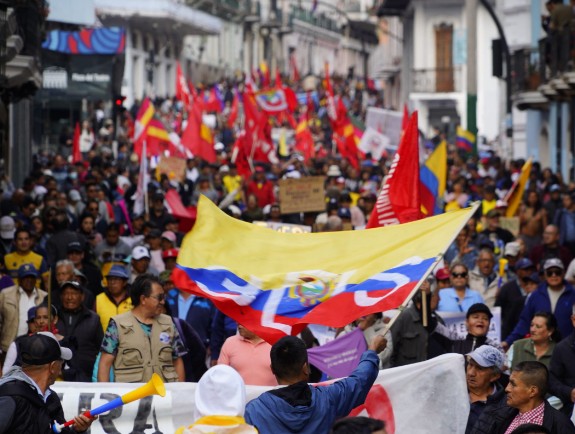
Labor Day will be celebrated today with parades in all the major cities, including Cuenca.
According to the Institute of Statistics and Census (INEC), average monthly income for workers fell from $476 to $425.50 over the past 12 months.
Many formal employers have frozen wages and reduced working hours in the last year, says INEC, while others have engaged in schemes to hire informal workers who do not receive employee benefits.
The bigger problem in the labor market, INEC and independent experts say, is the growing size of the informal market, which includes 60% to 65% of all Ecuadorian workers. Despite its size, the market generates only about 30% of the country’s gross national product.
“By looking at the numbers, you see why the informal sector pays so poorly,” says former INEC deputy director Freddy Ramos. “Its total economic return is not enough to provide even a minimum salary to its workers.”
According to the INEC, the typical worker in the informal market earns between $200 and $230 a month, far below the official minimum wage of $482.
Just as disturbing, Ramos says, is that all wages and profits of the informal market are “off the books,” providing no income to the government. “So, you have two-thirds of the labor force not paying taxes but, at the same time, taking advantage of public services such as education and health care. When you consider this, you can understand why our hospitals, clinics and schools are so poorly funded. You also understand why the national Social Security system is struggling to pay pensions and provide health services.”
Ramos adds that the high level of informality is also a factor in the country’s high crime rate. “With so many young people unable to make a living wage it’s natural that some of them turn to criminal activity,” he says.
In its recent recommendations, the International Monetary Fund (IMF) acknowledged that informal labor is a major problem throughout Latin America but said Ecuador was not doing enough to offset its effect. It said the government should increase the IVA and income taxes while it eliminates tax exemptions and subsidies. It pointed out that many countries in the region charge IVA rates of 19% to 21% while Ecuador’s is 15%.
Ramos and other economic analysts blame “rigid and unyielding” labor laws for much of the country’s under-employment crisis. “The legal system discourages businesses from hiring new employees,” he says. “Contract requirements, paperwork, high costs of termination as well as a variety of tax demands discourage legal employment. It also forces some companies to dip into the informal market.”
San Francisco University-Quito business professor Walter Rodriguez suggests a top-to-bottom review and reform of the country’s labor laws but doubts it will happen. “We need a complete overhaul based on the experiences and procedures of successful economies, but there is not the will for this to happen. There are entrenched social sectors, such as the labor unions and indigenous groups who continually resist change.”
Rodriguez adds: “This resistance is also reflected among elected officials, especially in the National Assembly, which is essentially stalemated on most labor questions.”