













Banking in Ecuador for expats: How to get your hands on your own money
Opening a bank account in Ecuador used to be one of those bureaucratic escapades involving proof of address, proof of  existence, and possibly a note from your grandmother. But things have loosened up, at least at Banco de Pichincha. I walked in with my resident’s cédula, and that was it. No utility bill, no stack of notarized documents, no chicken sacrifice required. Just the cédula, thank you very much.
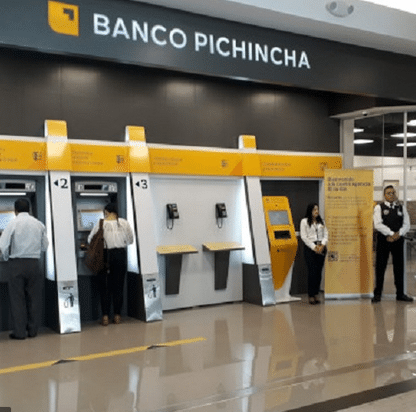 Banco de Pichincha even lets you send money directly from your U.S. debit card into your Ecuadorian account using their app. It’s slick and convenient — but don’t expect it to be free. There are percentage-based fees attached, which can nibble away at your funds faster than a guinea pig at lunch. Still, it’s another option if you don’t mind paying for the privilege of staying in your pajamas.
Now that I have a proper Ecuadorian bank account to add to the JEP account that I use for paying utilities, the next question is: how do I actually get money into it without hemorrhaging fees along the way?
My latest experiment: sending $2,000 from my stateside savings and loan to Wise (formerly TransferWise), which then shoots it over to my shiny new Banco de Pichincha account. Cost? $18. Not terrible, but not zero either. Wise is refreshingly honest about its fees, but they do still exist. And here’s the kicker: the transfers may be “free” for the recipient in Ecuador (me), but the sender — me — is always picking up the tab. So, when the app says “no fee,” it means “no fee for your cousin Jorge. You, on the other hand, will be billed accordingly.”
It might be slightly cheaper to use an ATM — especially if you withdraw the maximum allowed — but Wise has a powerful advantage: you can move two or three thousand dollars into your account without even putting your shoes on. For sofa-based banking, it’s hard to beat.
For more day-to-day cash needs, I’ve found that withdrawing $500 from a Banco de Guayaquil ATM is likely the cheapest method, at least this week. They recently raised their fee for international withdrawals to $3.50 minimum plus a few centavos for IVA, so it makes sense to withdraw the maximum allowed rather than nibbling out $100 here and there like a timid squirrel. Just know that these rules change frequently, like which side of the street people park on in El Centro.
There’s always the Charles Schwab card, of course, which refunds ATM fees and makes you feel like a financial ninja. But not everyone has one, and opening a Schwab account from abroad can be its own Kafkaesque mini-series.
The bottom line? Getting money into Ecuador is like crossing a rope bridge in a high wind. Doable, but it helps to test it with one foot before charging across with your pension. Wise works, bank accounts are easier to open than you’d think, and ATMs will keep coughing up your dollars — just not for free.
And here’s a small but useful bonus tip: if your Social Security or pension gets deposited into a U.S. bank account, you don’t have to register with the Social Security Administration as living overseas. That means you also avoid the occasional bureaucratic ritual of proving you’re still alive. One less form to fill out while you’re enjoying your coffee in the Andes.



Hogar Esperanza News

Property Kuralt

Fabianos Pizzeria News

Nice apartment banner

The Cuenca Dispatch

Week of August 23

Ecuador’s economy grew 2% during the first half of 2026 compared with the same period a year earlier, according to new Banco Central del Ecuador data.

Cuenca gets a prime view of next week’s deep partial lunar eclipse.

Ecuador’s economy grows 2% in the first half of 2026.
Property Manabi

Fund Grace News
