







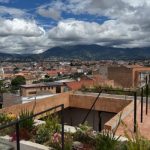











Birding in Ecuador reaches new heights
By Stan Tekiela
I just returned from leading a photo tour to Ecuador in South America. For 10 days, we trekked through cloud forests with trees covered in mosses, lichens and bromeliads that towered more than 100 feet tall. We crossed mountains at elevations of more than 13,000 feet and encountered hundreds of raging rivers and streams.
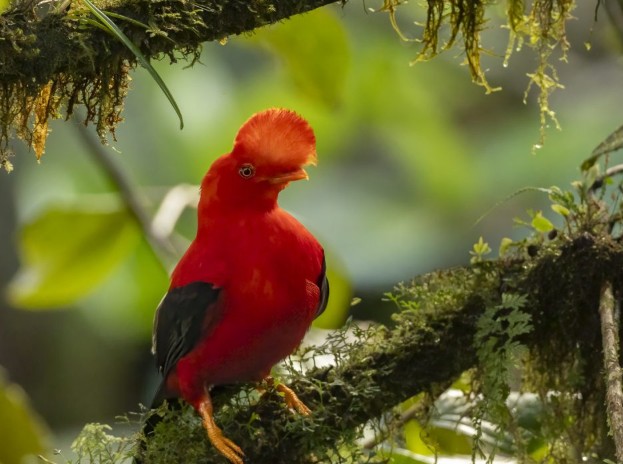
A male Andean cock-of-the-rock perches on a moss-covered branch in Ecuador. (Photos by Stan Tekiela)
I have to say, the natural beauty of Ecuador is hard to put into words. The country is only about the size of Colorado, yet I was amazed at how many different landscapes we passed through.
In a single day, we went from steamy lowland forests up to the high, windswept grasslands called páramo, where cushion plants and tough grasses hug the ground to survive the cold. We saw snow-capped volcanoes poke above the clouds, and every mountainside had a waterfall tumbling down it.
Some mornings, I would step outside to watch the clouds lift out of the valleys, revealing layer upon layer of green mountains stretching to the horizon. As a photographer, I was in heaven, and more than once I simply set my camera down to take it all in.
As much as I enjoyed the scenery, it was the wildlife that really stole the show. Ecuador is home to more than 1,600 species of birds, making it one of the richest birding destinations on the planet.
My group saw 275 different bird species in just eight days. Hummingbirds alone number around 130 species, and we photographed 52 different species. Some, like the sword-billed hummingbird, have bills longer than their bodies, while others, like the giant hummingbird, simply blew our minds with their massive size.
Toucans were a highlight for many on the trip. But the bright red Andean cock-of-the-rock was a species that I don’t believe anyone was ready to see.
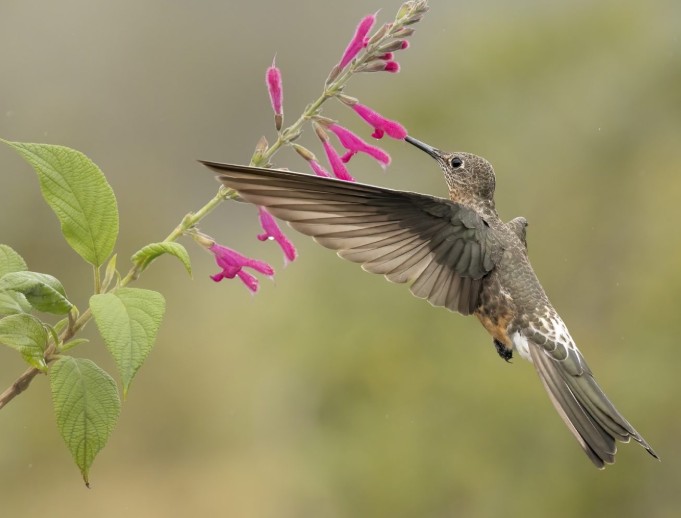
A northern giant hummingbird feeds from a pink flower in Ecuador. (Stan Tekiela)
As we did every morning, we got up extra early and drove to a remote mountain location. After a short 15-minute hike along the slopes of a thickly forested mountain, we arrived at a large blind, or what some would call a hide. This structure obscured our group from the birds.
From inside, we watched several brilliant red males gather at their lek, a traditional courtship arena, where they bowed, bobbed, hopped and let loose a raucous chorus of squawks, competing for the attention of the visiting females. However, the most dominant males generally have the greatest mating success. The other males are learning and moving up the status ladder in hopes that one day they will be the ones to do the mating.
The reddish-brown females watch the show and mate with the dominant male. Then each female leaves to build a mud nest on a rocky cliff, where she raises the young entirely on her own without any help from the male.
One day, our group drove up into the Andes Mountains to a very high elevation to see the legendary Andean condor, but first we made a stop at a hummingbird feeding station behind a local restaurant.
Several hummingbird feeders on the back deck had a variety of very hardy hummers that didn’t seem to mind the cold temperatures and the extremely high altitude.
But one hummingbird caught our attention. The giant hummingbird (Patagona peruviana) is the largest hummingbird in the world. It has a wingspan of 9 inches and a body length to match.
This may not sound large, but when you see this goliath of a hummer, it is very impressive. It is not super colorful like most other hummers, but I guess when you are that large, it’s the size that impresses, not the color.
Several times, it came gliding in on its outstretched wings, while other hummers flapped their wings constantly. It started feeding from a local wildflower.
It was so large that my camera had no problem picking it up and locking on with the focus, which produced some amazing images.
The giant hummingbird is widely distributed throughout the Andes from Ecuador through Peru to Chile at elevations of 6,000 to 10,000 feet.
Looking back on these nearly two weeks, I’m still amazed at how much we packed in. From moss-draped cloud forests and raging mountain rivers to mist-filled valleys and windswept high country, Ecuador never stopped surprising me.
Seeing 275 species of birds, photographing 52 kinds of hummingbirds, sitting quietly in a blind while brilliant red Andean cocks-of-the-rock danced and squawked for their mates, and watching the world’s largest hummingbird glide in on outstretched wings are memories I will carry with me for a lifetime.
Ecuador may be a small country, but it is a giant when it comes to natural beauty and wildlife, and I can hardly wait to go back.
Until then, I’ll be sorting through tens of thousands of images and reliving every moment.
________________
Credit: Eden Prairie News



Hogar Esperanza News

The Cuenca Dispatch

Week of October 25
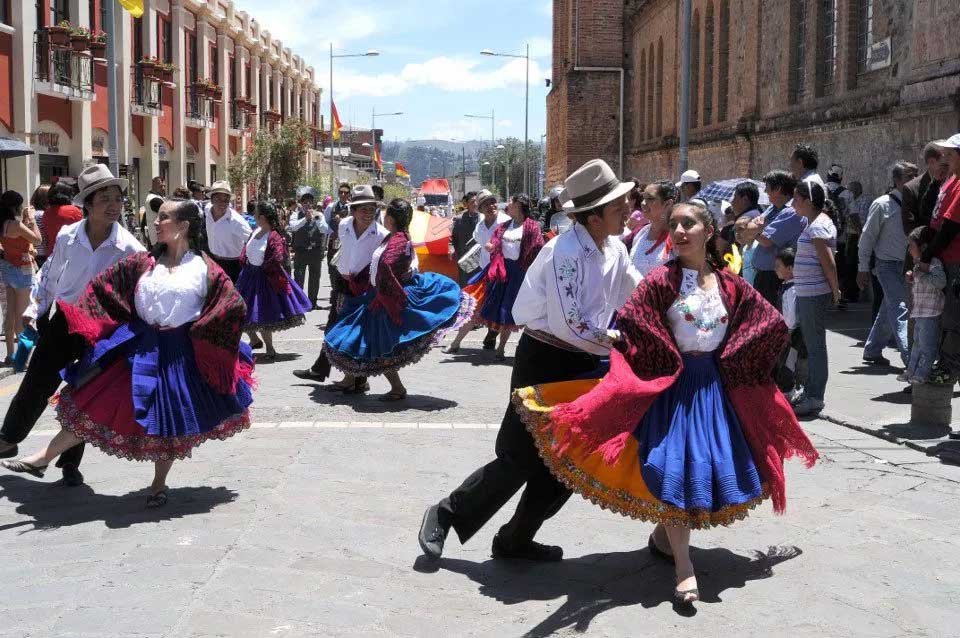
Ecuador heads into a four-day November holiday built around Cuenca’s Independence Day.

El Niño’s early rains have already affected more than 30,000 people across Ecuador.

Exporters press Constitutional Court to move three major trade agreements forward
Fund Grace News

Fabianos Pizzeria News