










Born under a bad sign
It is difficult to think of a more efficient immigration scheme. A pregnant woman obtains a tourist visa, flies to the United States, checks into a furnished apartment, gives birth in an American hospital and returns home with a newborn US citizen.
There are businesses prepared to arrange the entire operation. Their services may include accommodation, transportation, medical appointments and advice about answering questions from immigration officials. The resulting child receives an American birth certificate and may later obtain a US passport.
This is known as birth tourism, and it understandably irritates many Americans. Citizenship is supposed to signify membership of a national community, not be a souvenir collected during a maternity vacation.
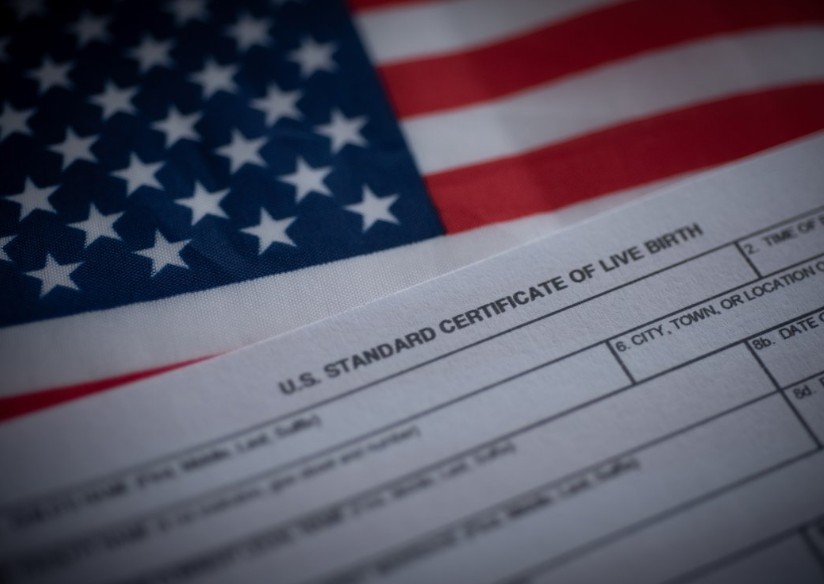 The scale of the practice, however, is remarkably uncertain. Birth certificates record the mother’s address, but not why she travelled. About 9,600 US births in 2024 were registered to mothers with foreign addresses. Broader estimates suggest that perhaps 20,000 to 26,000 women a year may travel primarily to give birth. Even the higher figure amounts to less than one percent of America’s roughly 3.6 million annual births.
Birth tourism is therefore real, but it is not an invasion. More importantly, it is not the same question as whether children born to people who live and work in America should be citizens.
A woman who flies from Beijing, Moscow or Quito shortly before delivery and leaves a few weeks afterwards has almost no connection with the United States. A Mexican construction worker who has lived in Texas for twelve years, pays rent, buys groceries and raises a family there has a very substantial connection, even if his immigration papers are not in order. A British engineer working legally in California on a temporary visa is different again.
Political arguments commonly throw all three families into the same basket. That makes a complicated argument simpler, but not more honest.
The controversy begins with the first sentence of the Fourteenth Amendment:
“All persons born or naturalized in the United States, and subject to the jurisdiction thereof, are citizens of the United States and of the State wherein they reside.”
The amendment was adopted in 1868, following the Civil War. Its immediate purpose was to establish beyond dispute that formerly enslaved people and their children were American citizens. It overturned the poisonous logic of the Supreme Court’s Dred Scott decision, which had declared that Black Americans could not be citizens.
The amendment’s authors could have written a narrow provision applying only to former slaves. They did not. They chose a universal rule based on birthplace because they wanted citizenship removed from the whims of politicians. A future Congress should not be able to decide that some unpopular racial or immigrant group did not qualify as genuinely American.
The phrase “subject to the jurisdiction thereof” created some room for argument. It excluded the children of foreign diplomats, who remain under the authority of another government, and children born to an enemy force occupying American territory. At the time, it also excluded members of self-governing Native American tribes, whose position was later changed by Congress.
It did not ordinarily exclude the American-born children of foreigners living in the country.
That was confirmed in 1898 in United States v. Wong Kim Ark. Wong had been born in San Francisco to Chinese parents who were not American citizens and were legally prevented from becoming citizens. The Supreme Court nevertheless ruled that their American-born son was a citizen.
The traditional rule was simple. If you were born within the territory and were subject to its laws, you were generally a citizen.
Critics now say that the language is obsolete because the legislators of 1868 never imagined jet aircraft, maternity hotels or organized packages offering an American passport with the hospital delivery. That much is plainly true. They also never imagined the internet, nuclear weapons or credit cards, yet constitutional principles are expected to survive inventions their authors could not foresee.
There is another problem with interpreting “jurisdiction” as requiring complete allegiance to the United States. A foreign tourist is certainly subject to American jurisdiction. If he drives at 100 miles per hour through a school zone, he cannot escape the traffic court by announcing that his allegiance is actually to Ecuador.
In June 2026, the Supreme Court reaffirmed that the Citizenship Clause covers children born in America even when their parents are present temporarily or unlawfully. Whatever one thinks of the policy, a president cannot rewrite a constitutional amendment by executive order.
This does not mean that the United States must surrender to birth tourism. It means that the sensible target is the parents’ misuse of immigration law, not the constitutional status of the child.
The visa application could ask a direct question:
“Are you pregnant, and do you expect or intend to give birth in the United States during this visit?”
A woman answering yes should not necessarily be barred. She might be two months pregnant and returning home after a fortnight’s holiday. She might be visiting family or seeking specialist medical treatment. She might already live in America on a valid work or student visa.
She could, however, be required to explain her plans, demonstrate that she can pay all medical expenses, provide evidence of continuing residence abroad and satisfy officials that obtaining citizenship is not the principal purpose of the journey.
A knowingly false answer would be visa fraud.
If deliberate birth tourism were subsequently established, the parents’ visas could be cancelled. Unpaid hospital charges could be pursued. Businesses coaching applicants to lie could be prosecuted. Most significantly, parents shown to have obtained entry through calculated deception could be prohibited from returning to the United States, perhaps permanently in the clearest cases.
The child would remain an American citizen, but the parents would receive no immediate immigration reward. A US citizen cannot sponsor parents for permanent residence until reaching the age of 21, and the parents’ earlier deception could still be considered when that time arrived.
A blanket ban on every pregnant visitor would go too far. It would exclude women who had no intention of giving birth in America, encourage intrusive questioning based on appearance and create arguments about pregnancy tests at airports. The offence is not pregnancy. It is entering under false pretences.
There would inevitably be borderline cases. Labour sometimes begins unexpectedly. Travel plans change. Medical emergencies occur. That is why severe penalties should depend upon evidence of deliberate planning or deception, not merely the fact that a foreign visitor delivered a baby.
Birth tourism presents an easily understood picture of something unfair. It is therefore politically useful to anyone wishing to attack birthright citizenship as a whole. But the remedy should fit the offence.
America does not need to weaken a constitutional protection written after slavery in order to deal with a few thousand calculated abuses of tourist visas. It needs honest questions, competent immigration officers and meaningful consequences for people who lie.
Leave the kids alone. Stamp the parents’ passports “Banned for Life.”