









Brazil discovers Chinese workers living in ‘slave-like’ conditions at car factory construction site
By Fabio Teixeira
Brazilian officials found 163 Chinese nationals working in “slavery-like conditions” at a construction site for a factory owned by Chinese electric vehicle producer BYD, opens new tab in Brazil’s Bahia state, the local labor prosecutor’s office said on Monday.
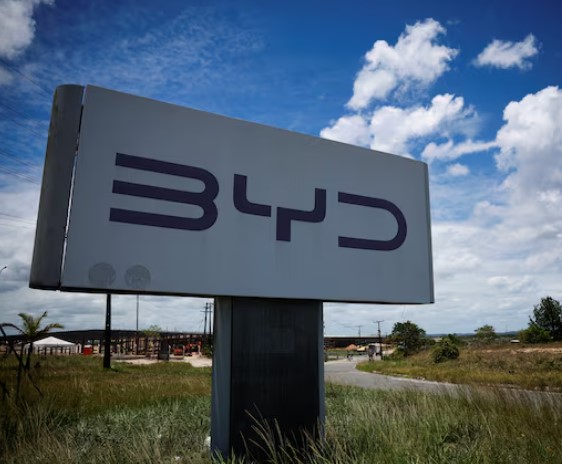
The site of a new BYD electric vehicle factory in Camacari, Brazil.
According to a Brazilian workers’ rights investigation, the workers were hired in China by another firm and brought to Brazil irregularly. They were laboring for long hours, in excess of those allowed by Brazilian law, sometimes for seven days a week, while being kept in what authorities described as degrading conditions, among other labor violations, the authorities added.
In a statement, BYD said it had cut ties with the Chinese firm that hired the workers, adding it is collaborating with authorities and providing assistance to the workers. The labor authorities did not disclose the names of the firms involved in hiring the workers.
In Brazil, “slavery-like conditions” include forced labor, but the term also covers debt bondage, degrading work conditions, long hours that pose a risk to workers’ health and any work that violates human dignity.
The workers had to request permission to leave their lodgings, and at least 107 also had their passports withheld by their employer, said labor inspector Liane Durao, adding that conditions at the work site were dangerous.
“We found that the work of… these 163 workers was carried out in slavery-like conditions,” she said at a news conference.
“Minimum safety conditions were not being met in the work environment.”
Complaints of slave-like working conditions at Chinese construction projects is nothing new in Latin America. During hydroelectric dam construction in the early 2000s, Colombia and Ecuador demanded improvements in working conditions at projects managed by Chinese companies, some of them government owned. In addition to poor treatment of Chinese workers, both countries claimed their own workers were being treated inhumanely.
Following a 2012 workers’ strike at a dam project in Ecuador, the government sent a message to the Chinese managers that “slavery may be tolerated in your country, but it is a violation of workers’ and human rights in Ecuador.”
________________
Credit: Reuters & Al Jazeera