












Brigade of ‘Covid watchers’ looks out for new cases in Quito neighborhoods
By Alexandra Valencia
Mechanic Darwin Heredia, before opening his Quito garage each morning, sends WhatsApp messages to dozens of neighbors to find out if anyone is showing symptoms of Covid-19.

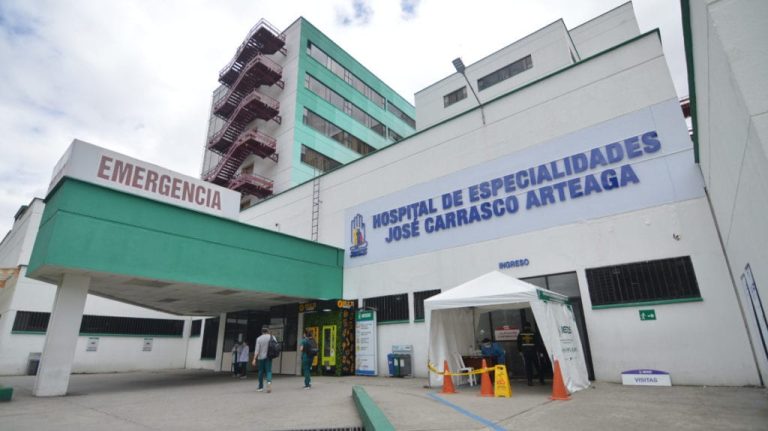
A woman is tested for Covid-19 at a Quito clinic.
If any say yes, Heredia alerts a local clinic. Public health officials will then visit the neighborhood and, if needed, begin carry out contact tracing.
Heredia is a volunteer for a Health Ministry program that since June has used a network of Quito community leaders to help it follow the spread of the pandemic that devastated Ecuador’s biggest city, Guayaquil, in the first months of the outbreak.
“My strength in this pandemic is to contribute something and prevent the deaths of neighbors, to help everyone stay well,” said Heredia, 45, a mechanical engineer in the working class Colinas del Norte neighborhood, in a telephone interview. “They call me to ask for help because there is trust, everything is confidential.”
The program has tapped around 700 community leaders in twelve neighborhoods that have been identified as high-risk areas of Quito, which has become the new epicenter of the coronavirus in Ecuador.
The capital has recorded more than 22,000 cases of the around 116,000 registered to date in the Andean country. Despite the high number, health ministry officials say the city’s fatality rate less than 20 percent that of Guayaquil.
The Covid monitoring group includes professionals, homemakers and small business owners who are respected by neighbors and have received training.
“(They) are like our information megaphones … they are going to give us the alert,” said Kattia Alminatti, head of the health ministry’s community watchdog effort. “The idea is to be timely in detecting cases that start as suspicion and even as rumors.”
More than half of the rumors reported by community watchdogs came to be identified as suspected coronavirus patients, she said.
The project seeks to reduce the reluctance to report COVID-19 symptoms out of fear of discrimination. Since July, Quito authorities have installed temporary clinics in schools and cultural centers to test those who are showing symptoms.
___________________
Credit: Rueters